

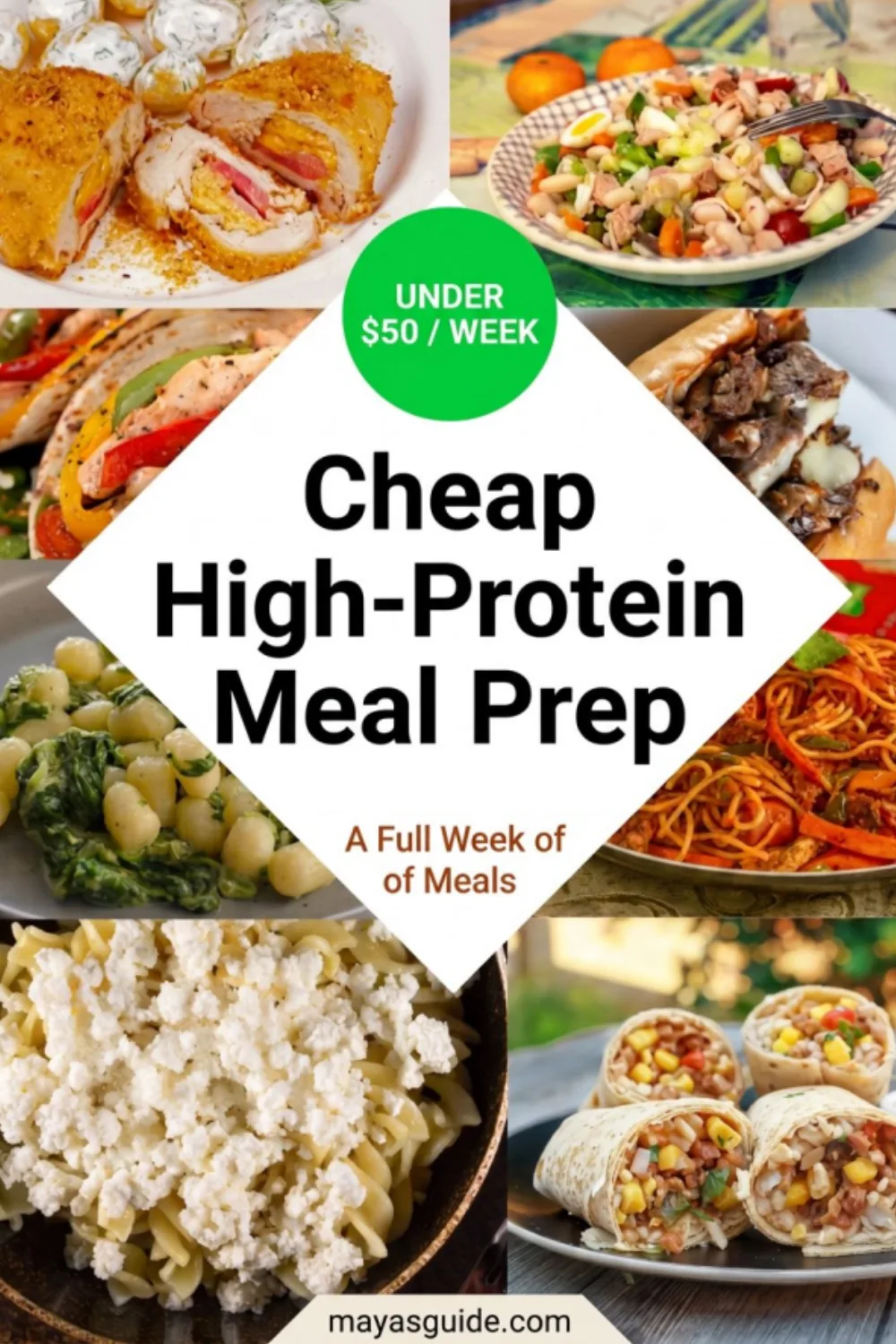
Cheap high-protein meal prep proves you don’t need a big grocery budget to eat well — with about $50 and a handful of staples like eggs, chicken thighs, beans, and Greek yogurt, you can prep a full week of high-protein meals.
Protein is usually the priciest part of a plate, but the right budget swaps let you hit 100+ grams of protein a day for just a few dollars per serving.
Want Easier High-Protein Meal Prep Like This?
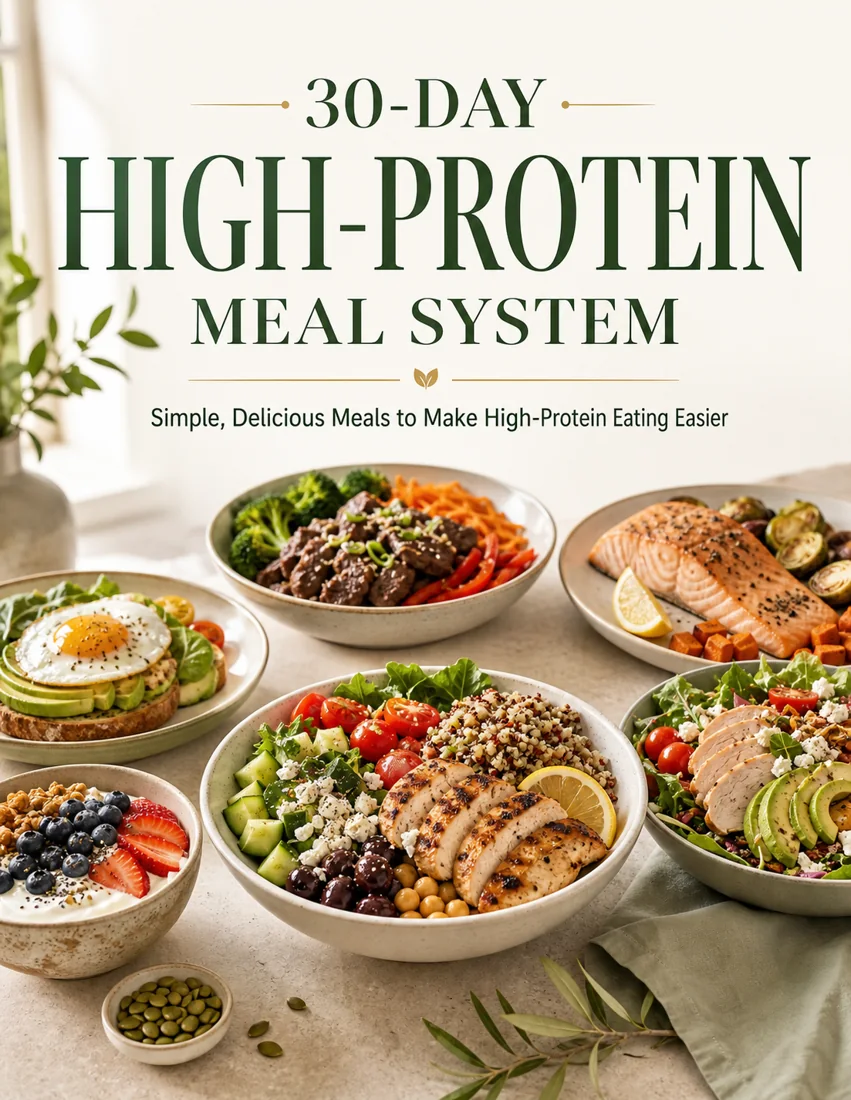
The 30-Day High-Protein Meal System gives you a full month of planned breakfasts, lunches, dinners and snacks—including high-protein meal-prep recipes with big flavor and simple steps.
Here’s exactly how to build a week of filling, high-protein meals without blowing your budget — no expensive powders or specialty items required.
What Makes This Work ✨
- ~100g+ protein a day for about $50 a week — built on the cheapest protein sources, not fancy ones.
- Filling and satisfying — high protein and fiber keep you full, so you snack less and waste less.
- Beginner-friendly — simple staples, simple cooking, and meals that mix and match all week.
- Barely any food waste — one grocery list, used fully across the week.
Big protein, small budget 💰
Eggs, chicken thighs, canned tuna, and dried beans deliver the most protein per dollar, so your money goes straight to what matters.
Simple and repeatable ⚡
Batch-cook a couple of proteins and a grain on Sunday, and the whole week falls into place for pennies per meal.
The Cheapest High-Protein Foods 🛒
The secret to cheap high-protein meal prep is knowing which foods give you the most protein per dollar. These are the budget MVPs — stock these and you’re set.
Best protein-per-dollar staples:
- Eggs — around 6g protein each, endlessly versatile
- Chicken thighs — cheaper than breast, juicier, and forgiving to cook
- Canned tuna — ~20g protein a can for around a dollar
- Dried or canned beans & lentils — cheap plant protein plus fiber
- Greek yogurt (big tub) — buying the large container is far cheaper per serving
- Cottage cheese — high protein, low cost, great for snacks
- Tofu — inexpensive, high-protein, and takes on any flavor
- Peanut butter & oats — cheap protein and staying power for breakfasts
How to Meal Prep on a Budget 👩🍳
Keep it simple: batch two cheap proteins, one big-batch grain, and frozen veggies, then assemble all week.
- Batch-cook chicken thighs. Season and bake or pan-cook a big batch of thighs to 165°F (the USDA safe minimum for poultry). Thighs cost less than breast and stay juicy even after reheating.
- Cook a big pot of beans or lentils. Dried beans are the cheapest protein there is — a bag costs a couple of dollars and makes several servings. Canned works too when you’re short on time.
- Make a batch of rice or oats. A bag of rice stretches across the week for pennies a serving, and oats cover cheap high-protein breakfasts with yogurt or peanut butter.
- Lean on frozen vegetables. Frozen veggies are cheaper than fresh, never go bad, and steam in minutes — the ultimate budget prep hack.
- Portion protein snacks. Hard-boil a batch of eggs and portion the Greek yogurt and cottage cheese so there’s always a cheap protein bite ready.
- Assemble mix-and-match meals. Combine a protein, a grain, and veggies into bowls, and rotate the seasoning so the same cheap staples never taste boring.
Your $50 High-Protein Week 📅
Here’s a sample week built from one budget grocery run. (Costs are estimated — actual prices vary by region, store, and sales.)
The ~$50 grocery list (estimated): 1–2 dozen eggs, ~3–4 lb chicken thighs, 4 cans tuna, a bag of dried lentils or beans, a large tub of Greek yogurt, oats, a bag of rice, 2–3 bags of frozen veggies, peanut butter, cottage cheese, and bananas or apples.
A typical day:
- Breakfast: Greek yogurt with oats and banana, or eggs with toast (~25–30g protein)
- Lunch: tuna or chicken thigh over rice with beans and frozen veggies (~40g protein)
- Dinner: chicken or lentils with rice and veggies (~35g protein)
- Snacks: hard-boiled eggs, cottage cheese, or peanut butter on toast (~15–20g protein)
That lands most people around 100–120g of protein a day, from a grocery run in the $50 range.
Budget Pro Tips 💡
Buy chicken thighs instead of breast. Thighs are consistently cheaper per pound, they’re nearly impossible to dry out, and they still pack serious protein — the single best swap for cutting your protein budget (and they taste better, too).
Buy the big tub of Greek yogurt, never the single cups. Per serving, the large container costs a fraction of the individual cups, and you can portion it yourself into reusable containers.
Cook dried beans instead of canned when you can. A bag of dried beans costs about the same as one or two cans but makes several times as much — it’s the cheapest protein and fiber you can buy.
Lean on frozen produce. Frozen veggies are picked at peak ripeness, cost less than fresh, and don’t spoil, so you’re not throwing money in the trash when life gets busy.
Season creatively so cheap staples don’t get boring. The same chicken, rice, and beans can be taco-spiced one day and teriyaki-glazed the next — a few dollars of spices is what keeps budget prep sustainable.
Common Budget Mistakes ⚠️
Buying expensive “protein” products. Fancy bars, powders, and pre-made high-protein snacks cost far more per gram than eggs, tuna, and beans. Stick to whole-food staples and your dollar stretches much further.
Letting fresh produce rot. Buying more fresh veggies than you’ll use is wasted money. Lean on frozen, and only buy the fresh produce you’ll actually eat that week.
Skipping the batch cook. Buying cheap ingredients but not prepping them means you’ll cave and order takeout. The savings only happen if you actually cook the batch — set aside an hour and get it done.
Storage & Shelf Life ❄️
Store cooked chicken, beans, and assembled meals in the fridge for up to 4 days, per USDA FoodSafety.gov (cooked poultry is safe 3–4 days at 40°F or below). Hard-boiled eggs in the shell keep about a week, and Greek yogurt and cottage cheese last well past prep day, so they’re perfect budget staples.
Cooked chicken, beans, soups, and rice all freeze beautifully for up to 2–3 months, so if you buy protein on sale, cook and freeze it in portions — that’s how you lock in a low price and always have cheap protein ready. Thaw overnight in the fridge and reheat gently.
Ways to Customize This 🔄
Swap in whatever protein is cheapest that week — ground turkey, canned salmon, or tofu all work with the same staples. For a fully plant-based, ultra-cheap version, lean on beans, lentils, tofu, eggs, and oats for your protein. Add extra fiber and volume with more frozen veggies and beans, like the meals in my high fiber meal prep.
Turn the same staples into flavored bowls — a squeeze of lime and taco seasoning makes a budget taco bowl, or teriyaki turns it into a rice bowl like my chicken rice bowl meal prep.
Make it gluten-free with rice, potatoes, and corn tortillas instead of bread, and use tamari in place of soy sauce.
Cheap High-Protein Snacks 🍽️
Some of the most affordable protein bites: hard-boiled eggs, cottage cheese, Greek yogurt, peanut butter on toast or a banana, a can of tuna on crackers, or edamame. A homemade smoothie with yogurt, oats, and peanut butter is a filling, cheap protein snack. For a low-cost snack-style lunch, see my taco meal prep bowls. To drink, water and homemade iced tea keep costs at zero.
Common Questions ❓
Q: Can you really eat high-protein for under $50 a week?
A: Yes — by building meals around the cheapest protein sources like eggs, chicken thighs, canned tuna, and beans, most people can hit 100g+ of protein a day in that range. Exact costs depend on your area and current prices, so treat $50 as a target, not a guarantee.
Q: What’s the cheapest source of protein?
A: Eggs, dried beans and lentils, and canned tuna deliver the most protein per dollar, with chicken thighs close behind. Buying in bulk and cooking from scratch stretches your budget even further.
Q: Can I meal prep the whole week for cheap?
A: Absolutely — one grocery run, an hour of batch cooking, and mix-and-match meals is the whole strategy. Cooking in batches is exactly what makes eating cheaply sustainable.
Q: How do I keep cheap meals from getting boring?
A: Rotate the seasonings. The same chicken, rice, and beans can be Mexican, teriyaki, or Cajun depending on the spices, and a few dollars of seasonings goes a very long way.
Q: Do I need protein powder?
A: No — whole foods like eggs, yogurt, tuna, and beans are cheaper per gram of protein than most powders. Powder is optional, not necessary, for a high-protein budget.
Nutrition Facts 📊
Here’s the approximate nutrition for one representative budget meal (chicken thigh, rice, beans, and frozen veggies), calculated from USDA food-composition values using Atwater factors. (Estimated — verify in WP Recipe Maker before publishing.)
- Calories: ~550 kcal (estimated)
- Protein: ~40g (estimated)
- Carbohydrates: ~55g (estimated)
- Dietary Fiber: ~8g (estimated)
- Total Sugars: ~4g (estimated)
- Total Fat: ~18g (estimated)
- Saturated Fat: ~5g (estimated)
- Sodium: ~600mg (estimated)
- Cholesterol: ~130mg (estimated)
Macro Breakdown (% of calories)
- Protein: ~29%
- Carbs: ~40%
- Fat: ~29%
Math check: (40×4) + (55×4) + (18×9) = 160 + 220 + 162 = 542 ≈ 550 ✓
Diet Tags
This recipe is: High-Protein, Budget-Friendly. Easily made Gluten-Free (rice-based) or Plant-Based (swap chicken for beans and tofu).
Allergens
Varies by meal. Common across the plan: Eggs, Fish (tuna), Milk (Greek yogurt, cottage cheese), Peanuts (peanut butter), Wheat (bread/toast). Check each meal against your allergies.
Nutrition Notes
Built on the cheapest protein sources, this approach comfortably reaches 100g+ of protein a day for around $50 a week. Chicken thighs, eggs, tuna, and beans do the heavy lifting, and frozen veggies add fiber for pennies. Costs and nutrition are estimates that vary by region and portions.
The Bottom Line 🎯
Eating high-protein on a budget comes down to a few smart choices: build meals around the cheapest protein sources — eggs, chicken thighs, canned tuna, and beans — buy the big tubs and dried bags instead of single servings, lean on frozen veggies, and actually cook the batch you bought.
Do that, and 100+ grams of protein a day for about $50 a week is genuinely doable, no expensive powders required. Rotate your seasonings so it never gets boring, and you’ve got affordable, filling meal prep you can stick with.
If you want a full week of budget-friendly, high-protein meals planned and portioned with a grocery list, my Weekly Meal Planner Bundle makes it effortless.
Weekly Meal Planner Bundle — a full week of meals planned and portioned so you eat well without overspending. Inside: printable weekly menus, a categorized grocery list, and a prep schedule built for real life. Get it here.
Nutrition and cost are estimates and vary by brand, region, and portion.
Stop figuring out your protein meals one day at a time
This recipe solves today. The 30-Day High-Protein Meal System solves the whole month—planned, shopped and prepped for you.
- ✓ 30 days of high-protein breakfasts, lunches & dinners
- ✓ Weekly grocery lists & meal-prep guidance
- ✓ High-protein snacks and treats with big flavor
- ✓ Simple ingredients, clear steps, built-in variety


Pingback: Meal Planning for One: The Solo System That Cuts Waste
Pingback: Meal Planning for Two: The Honest Guide for Couples
Pingback: Frugal Meal Planning for 2: The $50/Week System
Pingback: Budget Meal Planning Family of 6: The Bulk-Cooking Guide
Pingback: Budget Meal Planning Family of 4: The $150/Week Guide
Pingback: Meal Planning Using Same Ingredients: The Stacking System
Pingback: Meal Planning for College Students: Dorm-Room Guide
Pingback: Meal Planning for Beginners: 6-Step System That Works