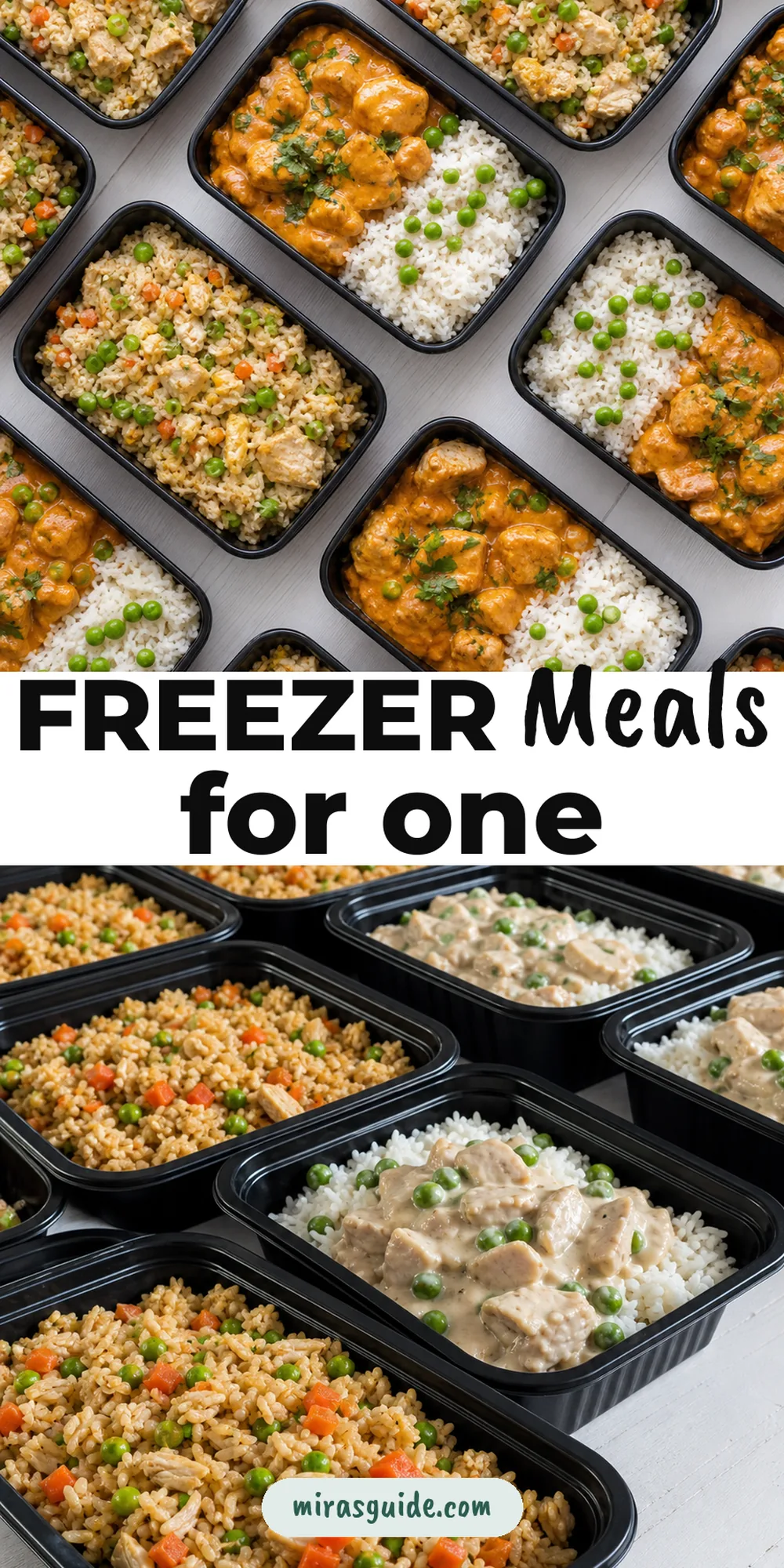
Freezer meals for one are a different discipline from batch cooking for a family. A four-serving recipe means four identical dinners in a row for a household of one, and most freezer advice — big bags, family pans, bulk shopping — actively works against you. This is the single-serving version: how to portion, what actually freezes well in small quantities, and how to keep variety without cooking twelve different things.
Why Solo Freezer Cooking Is Its Own Skill 🥄
- Portioned for one, not divided by four — no eating the same chili five nights running.
- Variety without waste — a mix of single servings means you choose what you want each night.
- Built for the microwave — 90-second reheats, not a 40-minute oven bake.
- Bulk buying actually works here — you can break down a family pack of chicken into eight single servings.
- Cost per meal drops sharply — home-portioned single servings undercut almost any prepared single-serve meal.
- Freezer space is manageable — single servings stack densely in a standard freezer.
Recipe at a Glance
Assembly: 2–3 hours for 20 single servings
Yield: 20 single-serving meals
Freezer life: 3 months for best quality
Reheat: 90 seconds to 3 minutes
Difficulty: Easy
Method: Single-portion freezer assembly
The Solo Rules 🛒
Cooking for one shouldn’t mean four nights of the same dinner.
28 Days of Dinners Planned for You hands you a month of weeknight dinners with the shopping list already written—no more 5pm decisions.
1. Portion before you cook, not after
The mistake most solo cooks make is cooking a four-serving recipe and then trying to freeze the leftovers. That works, but you end up with four identical portions of one dish. Instead, cook two recipes in one session and portion both into single servings — you get eight meals with real variety from the same amount of effort.
2. These containers beat bags for single servings
Bags are efficient for family-size portions but awkward for one. The containers that work best:
- Wide-mouth half-pint and pint jars — for soups, stews, and curries. Reheat in the jar.
- Small rectangular containers (1–2 cup) — for casseroles and grain dishes. Shallow means fast reheating.
- Silicone muffin cups — for portioned sauces, pesto, or single servings of anything you want to pop out frozen.
- Quart freezer bags — for rice, single portions of shredded meat, and smoothie packs.
3. Rice and grains freeze brilliantly in single portions
Cooked rice frozen flat in a quart bag in a one-cup portion reheats in 60 seconds with a splash of water. This is one of the highest-value habits in solo cooking: cook a big batch of rice once, freeze it in single servings, and every future meal has a base ready. The same works for quinoa, farro, and barley.
4. Shallow containers reheat evenly — deep ones don’t
A frozen block of stew in a deep container takes 6–8 minutes and needs stirring, and the middle is still cold when the edges are boiling. The same food spread thinly in a wide container heats through in 90 seconds. Portion shape matters as much as portion size.
5. Buy family packs and break them down
Solo cooking is where bulk buying pays off most. A family pack of chicken breast portioned into eight single servings, individually frozen, costs meaningfully less per meal than buying singles — and you can pull out exactly one whenever you want.
Freeze raw chicken and beef in single portions with the marinade. This is the highest-leverage habit in this article: portion raw protein into single servings in bags, add a marinade or seasoning, freeze flat. On the day you cook, thaw one bag and you have a seasoned protein ready to pan-cook in ten minutes.
Cook rice, pasta, and grains separately. None of them freeze well in the meal itself — they absorb all the sauce and turn to paste. Keep them as separate single-serve bags.
Keep the sauce generous. Single portions lose moisture faster on reheating, and a meal that’s slightly saucy reheats far better than one that’s exactly right at serving temperature.
Equipment
- Wide-mouth glass jars (half-pint and pint)
- Small shallow rectangular containers (1–2 cup)
- Silicone muffin trays
- Quart freezer bags
- Marker and masking tape
20 Single-Serving Meals 👩🍳
Soups and stews (8) — reheat in 2 minutes
- Chicken and vegetable soup
- Beef and barley stew
- Lentil soup
- Split pea soup
- Turkey chili
- Black bean soup
- White bean and kale stew
- Butternut squash soup
Protein mains (6) — reheat in 90 seconds
- Shredded salsa chicken
- Pulled pork
- Beef taco filling
- Teriyaki chicken thighs
- Coconut chickpea curry
- Meatballs in marinara
Grab-and-go (6) — no reheating at all, or 45 seconds
- Burritos, individually wrapped
- Egg muffins
- Breakfast sandwiches
- Energy balls
- Oat bars
- Frozen smoothie packs
Plus the base
Cooked rice, quinoa, or farro portioned into one-cup bags. Not a meal on its own, but the thing that turns any of the six protein mains into dinner in under three minutes.
The Two-Recipe Session
The most efficient solo approach is two recipes per session, each making four single servings — eight meals from about 90 minutes. Because both cook at once (one in the slow cooker, one on the stovetop, or both in the oven), the hands-on time is closer to 40 minutes. Do this twice a month and you have sixteen varied meals without ever cooking the same dinner four nights running.
Why the Technique Works
Freezing damages food through ice crystal formation, and the size of those crystals depends on how fast the food freezes. Small portions freeze much faster than large ones — a single serving in a shallow container freezes solid in about 90 minutes, while a family-size block takes six hours or more. Fast freezing produces small crystals that do less mechanical damage to cell walls, which is why single-portion freezer meals consistently taste better than portions cut from a big frozen block of the same food. The reheating logic mirrors it: heat has to travel from the outside in, and a shallow portion has a much shorter distance to the center. So single servings don’t just solve the variety problem — they’re genuinely the best-tasting way to freeze food, which is a rare case where the convenient option is also the better one.
Cooking Tips & Expert Advice
- Portion raw protein with marinade before freezing. It’s the highest-value solo habit — seasoned protein ready to cook in ten minutes.
- Freeze rice in one-cup portions. Sixty seconds in the microwave with a splash of water.
- Use shallow containers. They reheat in a third of the time of a deep block.
- Leave headspace in jars. Two inches for anything liquid, or the expanding contents will crack the glass.
- Cool completely before freezing. Warm food in a sealed container creates steam, which becomes ice crystals and freezer burn.
- Label with the date and reheat time. “Chili — 2 min — 9/28” is what you need three weeks later.
- Keep an inventory list. With single servings it’s easy to lose track of what’s buried.
- Freeze in a flat layer on a sheet pan first when using bags — flat portions stack like files.
- Rotate variety deliberately. Don’t make four of the same meal; make two of two different ones.
Variations & Substitutions
- Dairy-free: most soups and stews here are already dairy-free; use coconut milk in creamy ones.
- Gluten-free: skip the burritos and barley; use GF tamari and check broths.
- Lower sodium: no-salt-added canned goods, rinse your beans, and use herbs and vinegar instead of salt.
- Higher protein: add a scoop of unflavored protein to soups, or pair each portion with a hard-boiled egg or Greek yogurt on the side.
- Vegetarian: the soups, chili, curry, and egg muffins are already meatless — that’s eight of the twenty.
- No microwave: all soups and stews reheat in a small saucepan in 5 minutes; add a splash of water.
- Batch of ten: pick two recipes, make five servings of each, and you’re covered for a week and a half.
Serving Suggestions
Keep a bag of frozen rice, a bag of salad greens, and good bread in the house. Those three items turn any single serving into a full meal in under five minutes. For soups, a piece of toast and a spoon of Greek yogurt swirled in at serving makes it feel deliberate rather than like reheated leftovers.
Storage, Freezing & Reheating
Freeze single servings for up to 3 months at 0°F for quality. Reheat from frozen in the microwave — 90 seconds to 3 minutes depending on portion size and density, stirring once halfway. Heat until steaming throughout. Jars should be reheated without a lid and without going straight from freezer to a hot microwave on full power; let them sit on the counter for five minutes first to avoid thermal shock. Thaw chicken and beef portions overnight in the refrigerator before cooking.
Troubleshooting
Why is the middle still cold after 3 minutes? The portion is too deep. Freeze in a shallower container or spread the food out before freezing.
Why did my glass jar crack? No headspace, or it went straight from freezer to high heat. Leave 2 inches and let it temper on the counter for five minutes.
Why does everything taste bland after freezing? Freezing mutes seasoning. Season a little more generously when cooking and add salt or acid at the table.
Why is my rice mushy after thawing? It wasn’t cooled properly before freezing. Spread cooked rice on a sheet pan to cool quickly, then portion.
Why do I end up with too much of one meal? You cooked a four-serving recipe and froze the leftovers. Cook two different recipes per session instead, and portion both into singles.
❓ FAQ
Is it worth cooking for one at all? Yes — the economics are better than prepared single-serve meals, and the food tastes considerably better. The key is portioning before eating rather than freezing leftovers.
How do I avoid eating the same thing four nights in a row? Never freeze four servings of the same recipe. Make two recipes per session and portion both into singles, so your freezer holds choices rather than a block.
Can I freeze raw marinated chicken in single portions? Yes, and it’s the most useful habit in solo cooking. Freeze flat, thaw overnight, and cook in ten minutes.
What about bread? Slice it, freeze it with parchment between slices, and toast from frozen. A whole loaf won’t keep for one person otherwise.
How often should I do a session? One 90-minute session every two weeks, averaging eight meals each, keeps a solo freezer stocked indefinitely.
Do I need special equipment? No. Wide-mouth glass jars, a few small containers, and quart bags cover everything here.
Nutrition, Allergens & Dietary
Per serving, most of these land between 300 and 500 calories with 20–30g of protein. Allergens vary: dairy in the creamy soups and egg dishes; gluten in the burritos, barley, and breakfast sandwiches; soy in the teriyaki and taco fillings; nuts in the energy balls. Eight of the twenty are meatless. Check labels on broths and sauces for both sodium and gluten. Nutrition figures are estimates.
Final Thoughts
Cooking for one rewards a slightly different habit than cooking for a family: you portion before you eat, not after. Freeze in shallow single servings, keep rice and raw marinated protein stocked, and always make two recipes rather than four servings of one. That’s the whole system — and it’s the difference between a freezer that feeds you and one that fills up with the same dinner you’re already tired of.
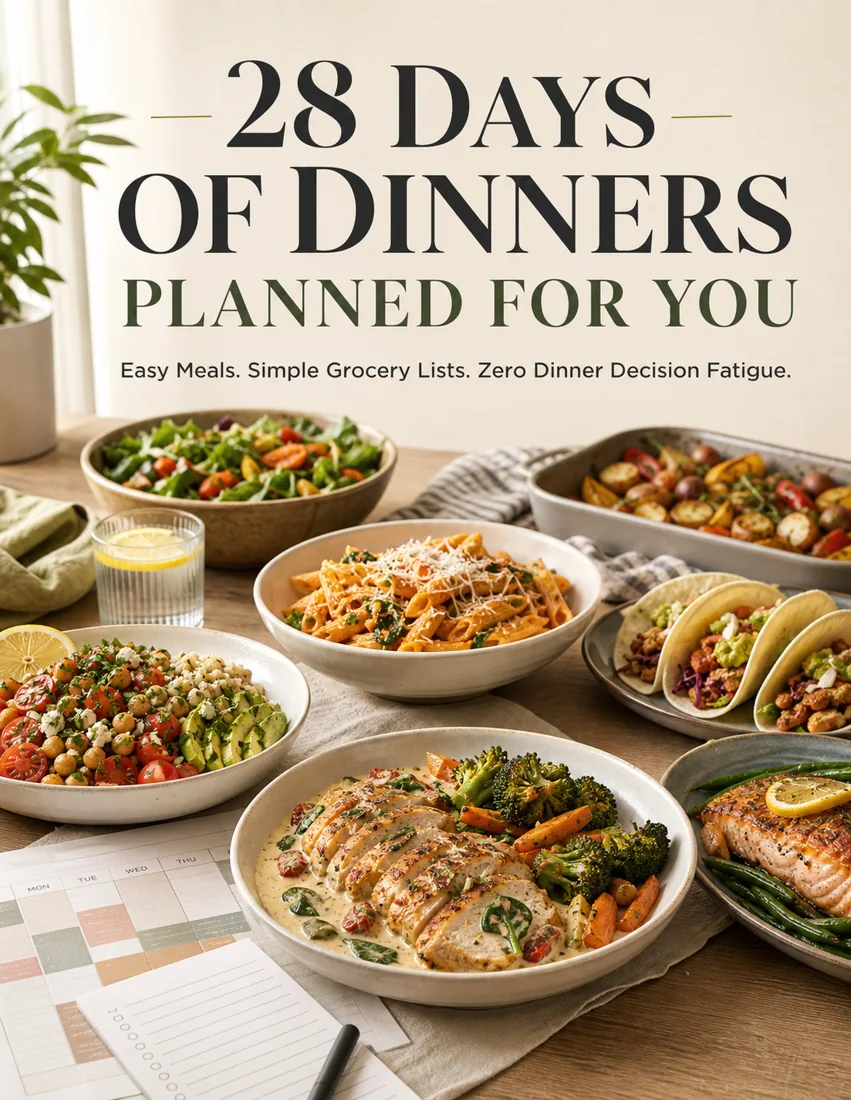
Once these run out, what’s for dinner next month?
Twenty single servings is a solid solo stash. 28 Days of Dinners means never deciding at 6pm again.
- ✓ 28 weeknight dinners, already chosen
- ✓ One shopping list per week
- ✓ Portioned and practical
- ✓ Built for solo cooking