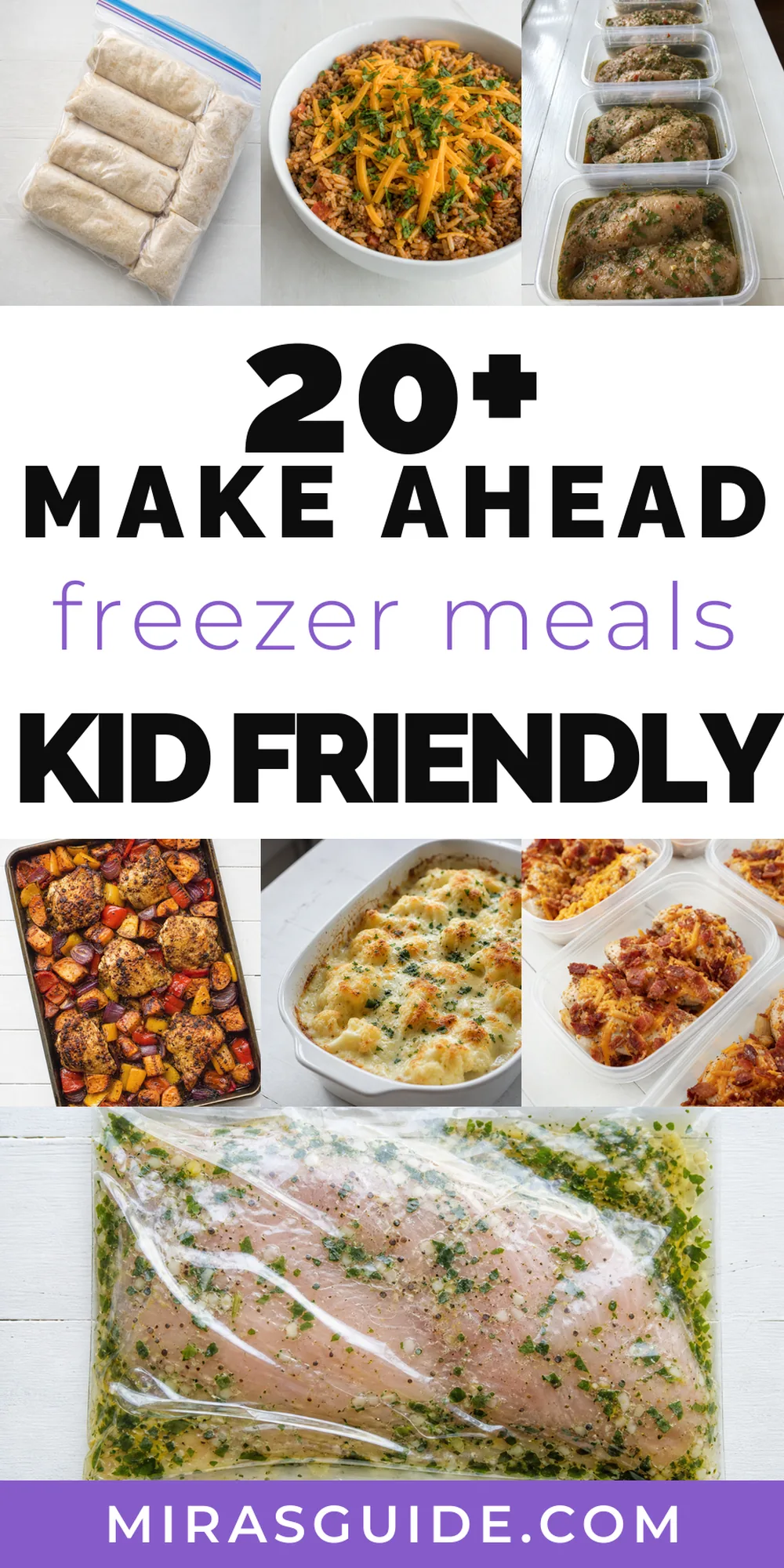
Kid-friendly freezer meals fail for reasons that have nothing to do with nutrition. The food gets rejected because the sauce is too strong, the pieces are the wrong size, or two ingredients are touching. These are built around what actually gets eaten: mild flavors, familiar shapes, separate components, and vegetables that are cooked in rather than served alongside where they can be picked out and negotiated over.
Why These Meals Get Eaten 🧒
- Mild by default — flavor that a five-year-old will accept, not one they’ll negotiate over.
- Familiar shapes and textures — pasta, muffins, nugget-style pieces, rice bowls.
- Vegetables worked in — grated, pureed, or diced small enough that they become part of the dish.
- Components that can be separated — for the phase when everything must not touch.
- Reheat in 90 seconds — dinner happens fast, which is when kids are actually hungry.
- Freezes in kid portions — smaller than adult servings, so nothing goes to waste.
Recipe at a Glance
Assembly: 2–3 hours for 16 meals plus snacks
Yield: 16 kid-portion dinners + 4 snack batches
Freezer life: 3 months for best quality
Reheat: 90 seconds to 2 minutes
Difficulty: Easy
Method: Kid-portion freezer assembly
The Rules That Actually Determine Success 🛒
Dinner kids will actually eat, ready in 90 seconds.
28 Days of Dinners Planned for You hands you a month of weeknight dinners with the shopping list already written—no more 5pm decisions.
1. Kid portions are smaller than you think
A child’s serving is roughly a quarter to a third of an adult’s — around ½ to ¾ cup of a main dish, not a full bowl. Freeze in small containers, because a too-large portion is off-putting in itself, and uneaten food gets reheated repeatedly. Use 4-ounce and 6-ounce containers, and keep a few larger ones for older kids.
2. Mild doesn’t mean bland
Skip the heat, keep the flavor. Children reject bitter, spicy, and sour — but they accept savory, buttery, and slightly sweet very readily. Build flavor with:
- Butter and olive oil
- Mild cheese — cheddar, mozzarella, Parmesan
- Sweet vegetables — carrots, sweet potato, corn, peas
- Gentle herbs — basil, oregano, parsley, dill
- A small amount of garlic and onion, well cooked
3. Hide vegetables by grating or pureeing, not by dicing
Diced vegetables get picked out. Grated or pureed vegetables disappear. Grated carrot and zucchini vanish into pasta sauce, meatballs, and muffins. Pureed cauliflower and squash blend invisibly into cheese sauces and mac and cheese. This isn’t deception — it’s the same dish with a texture that doesn’t trigger a search-and-destroy response.
4. Keep the components separable when you can
Many children go through a phase where foods touching is an actual problem. Where possible, freeze the sauce separately from the pasta, or the topping separately from the base. It takes one extra container and eliminates a whole category of refusal.
5. Texture matters as much as taste
Children often reject food for texture rather than flavor — slimy, stringy, or rubbery. Freezing and reheating can change texture, so favor dishes that stay consistent: pasta bakes, muffins, smooth sauces, and soft meatballs rather than shredded meat, which turns stringy.
Reheating temperature matters for safety and for acceptance. Reheat to steaming (165°F for anything with meat), then let it sit for a minute before serving. Food that’s too hot gets rejected; lukewarm food gets rejected for being cold. The window is narrow.
Add cheese at the end, not in the freezer. A sprinkle of fresh cheese on a reheated portion makes it feel like a new dish and adds protein without much effort.
Dip solves more meals than sauce does. Kids who reject a sauce poured over food will often eat it as a dip on the side. Freeze single portions of mild sauces in silicone muffin cups and pop one out with any meal.
Equipment
- 4-oz and 6-oz freezer containers — kid-portion sizes
- Muffin tin — for egg cups, mini meatballs, and portioned sauces
- Silicone muffin tray — for freezing single portions of sauce
- Quart freezer bags — for individually-frozen muffins and bars
- Marker and masking tape
The 16 Meals 👩🍳
Pasta and noodles (4)
- Hidden-veg mac and cheese — pureed cauliflower or squash blended into the cheese sauce. Freeze in 6-oz portions.
- Mini meatball pasta bake — small meatballs with grated carrot and zucchini mixed in, par-cooked pasta, mild tomato sauce.
- Buttered noodles with chicken — plain buttered noodles with diced chicken breast; sauce frozen separately for the picky phase.
- Chicken and broccoli Alfredo (mild) — blended cottage cheese sauce instead of heavy cream, grated Parmesan, small broccoli florets.
Mild mains (4)
- Chicken and rice bowls — mild, soft, with finely grated carrot cooked into the rice.
- Mini turkey meatloaves — baked in a muffin tin, with grated zucchini and onion worked in.
- Chicken nugget-style bites — diced chicken breast coated in a light crumb, baked and frozen; reheat in the oven rather than microwave to keep them crisp.
- Shepherd’s pie cups — ground beef and vegetables under mashed potato with pureed cauliflower blended in, portioned in a muffin tin.
Soups and stews (3) — for kids who like them
- Mild tomato soup with hidden veg — blended carrots, red pepper, and tomato; a cheese toastie on the side.
- Chicken and stars soup — mild chicken broth with small pasta, carrots, and diced chicken.
- Mild beef and vegetable stew — very small pieces, soft vegetables, gentle seasoning.
Breakfast and handhelds (5)
- Egg and cheese muffins — reheat two in 45 seconds; a reliable protein source when nothing else is accepted.
- Banana oat mini muffins — naturally sweet, no added sugar needed beyond the banana.
- Breakfast burritos, kid-sized — smaller tortillas, egg and cheese, frozen individually.
- Pancake sticks — silver-dollar pancakes cut into strips, frozen with parchment between; reheat in a toaster.
- Cheese quesadilla wedges — freeze flat with parchment, reheat in a skillet or microwave.
Snack batches (4)
- Mini banana muffins
- Oat and applesauce bars
- Sweet potato and cheese bites
- Frozen yogurt drops or fruit-and-yogurt pouches
Why the Technique Works
Children’s food preferences are driven substantially by neophobia — a normal developmental reluctance toward unfamiliar flavors and textures that peaks somewhere around ages two to six. That’s why “just try it” fails so reliably, and why the strategies here work in a different way. Grated and pureed vegetables don’t set off the visual recognition that triggers refusal, while the dish keeps the familiar taste and texture the child already accepts. Mild seasoning avoids the bitterness and heat sensitivity that children have more of than adults — young children have a higher density of taste buds and a natural aversion to bitter compounds. And small portions reduce the perceived size of the task in front of them, which matters more than most adults expect. None of this is manipulation; it’s accommodating a developmental stage while still feeding them vegetables.
Cooking Tips & Expert Advice
- Grate vegetables rather than dicing. Carrot and zucchini grate into meatballs, pasta sauce, and muffins invisibly.
- Puree cauliflower or squash into cheese sauce. It’s the single easiest vegetable addition that goes unnoticed.
- Freeze in 4-oz and 6-oz containers. Kid portions, matching what actually gets eaten.
- Keep sauce separate when you can. One extra container prevents a whole category of refusal.
- Serve dips instead of poured sauces. Kids accept sauces on the side far more often than over the food.
- Reheat to steaming, then wait a minute. Too hot and too cold are both rejected.
- Freeze muffins and bars individually first. Two hours on a sheet pan, then bag, so they don’t fuse.
- Let them add fresh cheese at the table. It makes a reheated portion feel new and adds protein.
- Label with the portion size and reheat time. Anyone — partner, grandparent, babysitter — should be able to heat dinner without asking.
- Keep a couple of “always accepted” meals in the freezer. Every child has two or three. Always have those stocked for the hard nights.
Variations & Substitutions
- Dairy-free: use coconut milk and dairy-free cheese in the creamy dishes; the tomato soup and chicken and rice bowls adapt easily.
- Gluten-free: use GF pasta, GF oats, and corn tortillas; check the broth and pasta sauce labels.
- Vegetarian: meals 1, 9, 12, 13, 15, 16, and all the snacks are already meatless.
- Older kids: increase portions to 8-oz containers and add mild heat to the adult portions rather than the kids’.
- More vegetables: double the grated carrot and zucchini in the meatballs and pasta sauce; nobody will notice.
- Lower sodium: no-salt-added tomato products and unsalted butter; kids’ palates adjust quickly to less salt.
- No microwave: bake pasta dishes covered at 350°F for 20 minutes, or reheat on the stovetop with a splash of water.
Serving Suggestions
Serve in small bowls with a spoon, and put one safe, familiar food on the plate alongside anything new — a piece of bread, some fruit, a few crackers. That’s not bribery; it’s the standard approach to reducing pressure around a meal. For dips, a small spoon of sauce on the side of the plate works better than a squeeze bottle poured over the top.
Storage, Freezing & Reheating
Freeze in kid portions for up to 3 months at 0°F for quality. Reheat single portions in the microwave for 90 seconds to 2 minutes, stirring once halfway and letting it sit a minute before serving. Heat to steaming throughout — 165°F for anything containing meat. Muffins and bars thaw at room temperature in about 20 minutes or reheat in 20 seconds. Nugget-style bites are better reheated in a toaster oven or air fryer than a microwave, which makes them rubbery. Leftovers keep 4 days refrigerated; never reheat the same portion more than once.
Troubleshooting
Why won’t my child eat the reheated version when they liked it fresh? Reheating changes texture, and texture drives refusal more than flavor does at this age. Favor dishes that stay consistent — pasta bakes, muffins, smooth sauces, and soft meatballs — rather than anything that turns stringy or rubbery.
Why do they pick the vegetables out? They’re visible. Grate or puree them instead of dicing, and work them into the sauce or the meat rather than serving them separately.
Why is the food rejected as soon as it’s served? Temperature. Too hot or too cool both trigger refusal. Aim for steaming, then a minute of rest.
Why did the nuggets turn rubbery? Microwaved. Reheat breaded items in a toaster oven or air fryer at 350°F for 8 minutes.
Why did my muffins fuse together? They were bagged before being frozen individually. Two hours on a sheet pan first.
Why did my child eat it once and then refuse it? That’s normal for this age and not a sign the recipe failed. Keep it in rotation without pressure and it often comes back around.
❓ FAQ
How small should portions be? For ages two to six, roughly ½ to ¾ cup of a main dish — about a quarter to a third of an adult serving. Use 4-oz containers for younger children and 6-oz for older ones.
Is hiding vegetables dishonest? It’s a widely used and well-supported approach for this age group. The goal is getting the vegetable eaten while the child is in a phase where visible vegetables trigger refusal. Keep offering visible vegetables alongside too.
Can I make these for a baby starting solids? Not as written. Babies starting solids need specific textures and no added salt, and these recipes are designed for toddlers and older children. Check with your pediatrician for infant-specific guidance.
How long do kid portions keep? Three months at 0°F for quality. They stay safe longer, but texture declines and children notice.
What if my child is a very picky eater? Keep two or three “always accepted” meals stocked in the freezer at all times, and serve new things alongside a familiar food rather than replacing it.
Can I double the vegetable content? Yes, in most of these. The grated and pureed additions can be increased by half without changing the texture noticeably, though you may need a little extra sauce.
Nutrition, Allergens & Dietary
Most of these land between 200 and 350 calories per kid portion with 10–18g of protein, depending on the recipe and age of the child. Allergens vary: dairy appears in most of the pasta and cheese dishes; gluten in the pasta, noodles, and breadcrumbs; eggs in the egg muffins and pancakes; wheat in the tortillas. Vegetarian options include the mac and cheese, tomato soup, egg muffins, muffins, bars, quesadillas, and pancakes. Sodium content depends on your canned goods and cheese — check labels if that matters. Nutrition figures are estimates.
Final Thoughts
Kid-friendly freezer cooking is mostly a packaging and texture problem, not a recipe problem. Grate the vegetables instead of dicing them, keep the seasoning mild and the portions small, freeze the sauce separately when you can, and always keep two “guaranteed yes” meals in the freezer for the nights when nothing else works. Do that and dinner stops being a negotiation.
Once these run out, what’s for dinner next month?
Sixteen meals the kids will eat, stocked. 28 Days of Dinners handles the nights nothing gets past them.
- ✓ 28 weeknight dinners, already chosen
- ✓ Shopping lists done for you
- ✓ Everyday ingredients
- ✓ Weeknight-realistic recipes