

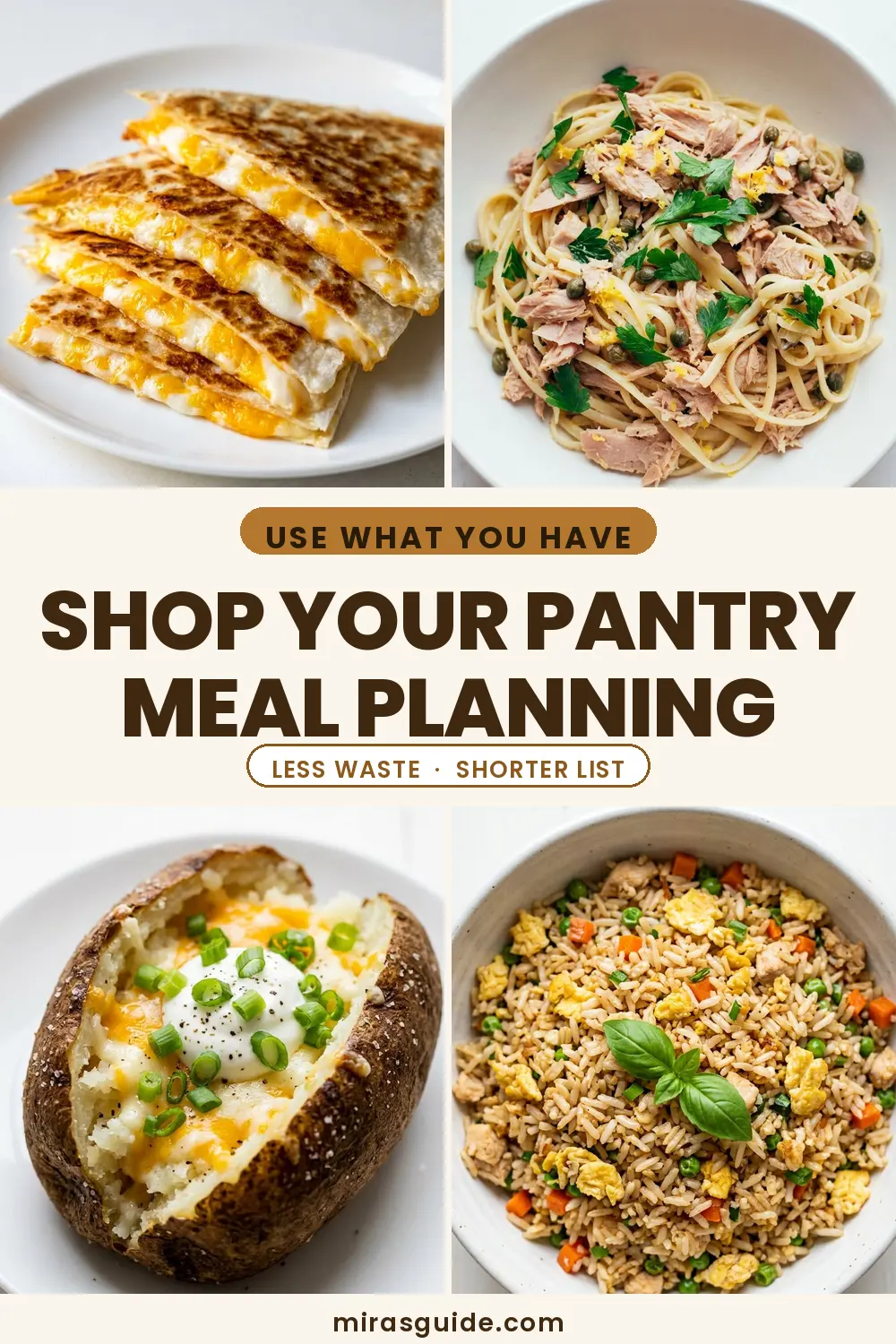
Shop your pantry meal planning is the single most under-used habit in home cooking — and it’s one of the fastest ways to reduce both your grocery bill and food waste. EPA estimates food waste costs each U.S. consumer about $728 per year. EPA’s planning and shopping tips also recommend checking your refrigerator, freezer, and pantry before shopping so you can plan around what you already have and avoid duplicate purchases. This guide walks you through the exact 15-minute weekly system — pantry audit, meal planning around what you have, then buying only what’s missing — that can help families spend less without changing anything else about how they eat. No apps required. No “pantry challenge” restrictions. Just a proactive weekly habit that can start reducing waste immediately.
⚠️ Disclaimer: This meal plan is for general informational purposes only. Always consult your doctor before starting any new diet, especially if you have a medical condition, are pregnant, or nursing.
Why “Shop Your Pantry First” Beats Every Other Budget Hack 🧭
Most budget cooking guides push the same tired advice: shop the sales, buy generic, use coupons. All fine — but they miss the biggest leak in your grocery budget.
Don’t Want to Plan Every Dinner Yourself?
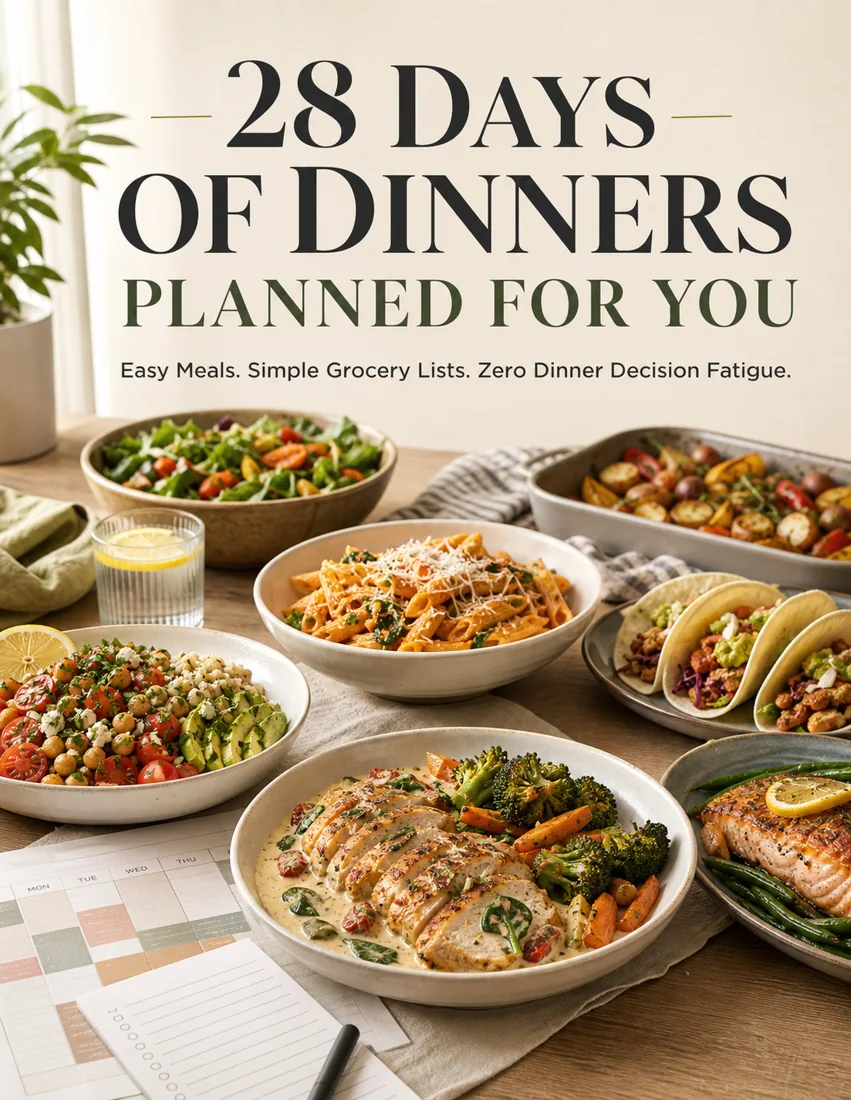
28 Days of Dinners Planned for You gives you 28 days of dinners, grocery lists and prep guidance already organized for you.
Plan My Next 28 Dinners →Where families actually waste money: – 🔁 Duplicate purchases — buying tomato sauce when you have 3 jars already – 🥫 Forgotten pantry items — that bag of quinoa expiring in 6 months – 🥩 Freezer graveyards — meat wrapped and forgotten under the frozen peas – 🥬 Perishable overbuying — 2 heads of lettuce that go bad by day 5 – 🎨 “Just in case” ingredients — that avocado you might use
Every one of these gets solved by ONE habit: shopping your pantry before you shop the store.
The math is simple. If your household throws out $30-50/week in duplicates and forgotten food (typical for most families), a 15-minute weekly pantry audit saves you $1,500-2,600/year. No lifestyle changes. No coupons. Just visibility.
What “Shop Your Pantry” Actually Means 💡
Shop your pantry meal planning is a specific weekly workflow — not a “pantry challenge” (that’s a separate strategy where you eat down your pantry for 2-4 weeks straight). It’s a permanent habit:
- 🔍 Look before you shop — 15-minute audit of pantry + fridge + freezer
- 📋 Plan meals around what you already have — not around new recipes
- 🛒 Buy ONLY what’s missing — a small, focused grocery list
- 🧊 Rotate stock — use older items first (FIFO — first in, first out)
Do this every week, and your grocery bill drops 20-30% within a month. Your food waste drops even faster.
The 5-Step Shop Your Pantry System 🗓️
Step 1 — The 15-Minute Weekly Pantry Audit
Every Sunday (or whatever day you shop), spend 15 minutes doing this:
🥫 Pantry (5 min): – Open every cabinet – Note what’s opened, half-used, or expiring soon – Scan for duplicates (do you have 4 jars of pasta sauce?) – Check dry goods — beans, rice, pasta, oats, flour
🧊 Fridge (5 min): – Check every shelf, including the back – Note perishables that need to be used within 3-4 days – Check open jars, condiments, dairy – Move anything about to expire to eye level
❄️ Freezer (5 min): – Note any meat that needs to be used or freezer-burned – Check pre-made meals from previous batch cooking – Note frozen vegetables + fruit inventory – Move older items to the top for immediate use
Write it all down — a simple notes-app list works. This audit takes 15 minutes MAX once you have the habit. Skip it, and you’ll spend 10x that in wasted grocery money.
Step 2 — Plan Meals Around What You Already Have
Now flip the traditional meal-planning approach on its head. Instead of picking recipes → then shopping for ingredients, you:
- Look at your audit list
- Pick meals that USE what’s already in your kitchen
- Build the rest of the week around those meals
Example audit reveals: – 3 cans of black beans – 1 lb of frozen chicken thighs – Half a head of cabbage – 2 boxes of rice – Open jar of salsa – Some tortillas going stale
That’s a full dinner: Chicken + black bean + cabbage tacos with salsa. Grocery add-ons needed: nothing you don’t already have. That meal costs $0 in new groceries.
Do this for 3-4 meals per week. Even if 2-3 meals require additional shopping, you’ve knocked out 50-60% of your grocery bill using inventory you’d otherwise waste.
Step 3 — Master The “What Can I Make With This?” Skill
The single biggest barrier to shop-your-pantry cooking is not knowing what to make with random ingredients. Build these mental templates:
🥫 If you have canned beans + a grain + a vegetable → you have a bowl/burrito/soup – Black beans + rice + frozen corn = burrito bowl – Chickpeas + pasta + spinach = pasta dish – Cannellini + potatoes + kale = white bean soup
🍗 If you have any protein + any grain + any vegetable → you have a stir-fry or grain bowl – Chicken + rice + broccoli = simple bowl – Ground beef + pasta + tomatoes = pasta night – Eggs + tortillas + cheese = quesadilla dinner
🍞 If you have bread + cheese + protein → you have sandwiches, quesadillas, or grilled cheese + tomato soup
🍚 If all you have is grains + a canned protein → you have fried rice or a can-based pasta – Rice + eggs + soy sauce + frozen veg = fried rice – Pasta + canned tuna + olive oil + lemon = tuna pasta
🥔 If you have potatoes → you have baked potato bar (add whatever toppings exist: cheese, beans, salsa, sour cream, broccoli)
Once these templates click, “I have no food” becomes “I have 5 dinner options right here.”
Step 4 — Buy ONLY What’s Missing (The Short Grocery List)
After planning meals around your inventory, write your grocery list. It should be much shorter than your usual list. Include ONLY:
- ✅ Fresh produce you’re low on
- ✅ Missing ingredients for planned meals
- ✅ Weekly perishables (milk, eggs, bread, yogurt)
- ✅ Sale items to stock up on (only if you have space + will use)
Do NOT include: – ❌ Duplicates of anything already in your pantry (check the audit list!) – ❌ “Just in case” produce you don’t have a meal planned for – ❌ Aspirational ingredients for recipes you might make someday – ❌ Impulse items you didn’t plan
A good shop-your-pantry grocery list has 8-15 items, not 30-50. If your list is longer than 15 items, you missed something in the audit.
Step 5 — Rotate Stock (FIFO) So Nothing Gets Forgotten Again
The reason your pantry keeps building up mystery cans and forgotten items is stock rotation. Grocery stores and restaurants solve this with FIFO (First In, First Out):
🎯 The FIFO 3-Zone Method:
| Zone | Where | What Goes There |
|---|---|---|
| Active Zone | Eye-level, front of shelf | Opened items + anything expiring this month |
| Rotation Zone | Mid-shelf, behind Active | Full stock, not yet needed |
| Reserve Zone | Top shelf or back | Long-shelf-life backstock |
Every time you unpack groceries, new items go to the BACK (Reserve/Rotation zones). Old items move FORWARD to the Active zone. This one habit prevents the “surprise, this is expired” moment forever.
A Sample Week: Shop Your Pantry Meal Plan 📋
Let’s walk through a real week. Here’s a sample pantry audit and how it becomes a meal plan.
🔍 Sunday Audit Reveals:
Pantry: – 1 box whole-wheat pasta (open) – 3 cans black beans – 1 can chickpeas – 1 can diced tomatoes – 1 jar pasta sauce (half-used) – 1 lb rice (open) – Rolled oats (large container)
Fridge: – 1 lb chicken thighs (need to use by Tue) – Half a head of cabbage – 2 tomatoes, 1 cucumber – Eggs (6 left) – Cheddar cheese (small block) – Greek yogurt (half tub)
Freezer: – 1 bag frozen broccoli – 1 bag frozen mixed veg – 1 pre-made portion of chili (from last month’s batch) – Bread (half loaf, frozen)
🗓️ The 5-Dinner Plan (Uses Almost All Inventory)
| Day | Dinner | Uses (from inventory) |
|---|---|---|
| Mon | 🍗 Roasted chicken thighs + rice + frozen broccoli | Chicken (use fresh), rice, frozen broccoli |
| Tue | 🌮 Chicken tacos (uses Mon’s chicken) + black beans + cabbage slaw | Leftover chicken, 1 can beans, cabbage, cheese |
| Wed | 🍝 Pasta with chickpeas, spinach, and garlic (adds spinach) | Pasta, chickpeas, jar sauce |
| Thu | 🍲 Freezer chili (from previous batch) + toast | Frozen chili + frozen bread |
| Fri | 🍳 Breakfast for dinner: eggs + toast + fruit | Eggs, bread, whatever fruit you have |
🛒 Grocery List (Only What’s Missing):
- 1 bag baby spinach — $2
- 3 lemons — $2
- 2 bananas — $1
- 1 head lettuce — $2
- 1 gallon milk — $3
- Total: ~$10-12 for the week’s fresh additions
The rest of the week is fed by inventory you already paid for. Cost of the week’s dinners: ~$10 in new groceries, plus using $30-40 worth of pantry/freezer stock you would have wasted anyway.
That’s the shop-your-pantry payoff. Save $50-80/week vs your usual grocery run, without eating any less well.
Common Shop-Your-Pantry Mistakes ⚠️
- Skipping the audit “because you know what you have.” You don’t. Every single week produces surprises. Fix: do the 15-minute audit every week, no exceptions.
- Only auditing the pantry, ignoring fridge + freezer. That leftover roast chicken from Sunday is about to become waste. Fix: all three: pantry + fridge + freezer.
- Planning meals THEN checking inventory. Reverse the order. Fix: inventory first, meals second, grocery list last.
- Buying “just in case” produce. That aspirational bag of kale for salads you might make. Fix: every produce item must map to a specific planned meal.
- Ignoring the FIFO rule. New groceries always go in front, so old stuff never gets used. Fix: new items to the BACK, old items to the FRONT.
- Doing a one-time “pantry cleanout” but not making it weekly. That’s a challenge, not a habit. Fix: make it a permanent weekly ritual — 15 min every Sunday.
The Shop-Your-Pantry Foundation Pantry 📦
For this system to work long-term, keep a base of versatile staples that combine well with whatever fresh items you have on hand.
🥫 The Versatile Pantry Base
- Grains: Rice, oats, whole-wheat pasta, whole-grain bread/tortillas
- Legumes: Canned beans (black, chickpeas, kidney, cannellini) — 4-6 cans stocked
- Proteins: Eggs, canned tuna, canned salmon, peanut butter
- Flavor makers: Onions, garlic, canned tomatoes, olive oil, soy sauce, vinegar, hot sauce
- Spices: Salt, pepper, cumin, chili powder, garlic powder, Italian seasoning
- Baseline sweet: Honey, cinnamon
With these staples + whatever fresh items you have, you can make 20+ different meals without complex recipes. Every meal boils down to: staple + protein + vegetable + flavor.
❄️ The Versatile Freezer Base
- Frozen vegetables (spinach, broccoli, peas, mixed veg, stir-fry mix)
- Frozen fruit (berries, bananas)
- Portioned raw chicken thighs or ground meat
- Pre-made freezer meals (soup, chili, casserole)
- Bread (freeze the day you buy)
🧊 The Weekly Fresh Rotation
- Eggs, milk, cheese, yogurt (weekly essentials)
- 1-2 anchor proteins for the week
- 3-5 fresh vegetables (in-season, long shelf life)
- Fresh fruit (bananas, apples, in-season)
With this base + weekly audit + weekly meal plan, you shop your pantry every week automatically.
FAQ
How is “shop your pantry” different from a “pantry challenge”?
Frequency + duration. A pantry challenge is a short-term event (1-4 weeks) where you eat down your pantry without shopping, then rebuild it. Shop your pantry meal planning is a permanent weekly habit — 15-minute audit every week, plan meals around inventory, buy only what’s missing. The challenge is a project; shopping your pantry is a lifestyle.
How much can I actually save with this system?
$50-200/month typically. For an average family throwing out $30-50/week in duplicates and forgotten food, the audit → plan → buy-what’s-missing cycle recovers most of that within a month. Bigger households save more. Families going from “no system” to “weekly audit” often see $1,500-2,600/year in reclaimed grocery money.
What if my pantry is a mess right now?
Start with a one-time reset. Pull everything out of your pantry (yes, everything). Group by category (grains, canned goods, spices, snacks). Toss anything expired or that you’ll never use. Reorganize using the FIFO 3-zone method (Active/Rotation/Reserve). Takes 1-2 hours. Then the weekly 15-min audit maintains it. See our beginner Sunday meal prep plan — it starts with exactly this kind of kitchen reset.
Do I need an app or software?
No — a notes app on your phone works fine. Fancy inventory apps (KitchenPal, NoWaste, Cooklist) exist and are useful for larger households, but the 80% of the benefit comes from the manual audit + short grocery list habit. Start free with notes. Upgrade only if you find yourself wanting more automation.
What if I hate eating leftovers?
Change the format, not the food. Same roasted chicken becomes: bowl Monday → wrap Tuesday → fried rice Wednesday → soup Thursday. Different sauces + different vehicles = feels like a new meal. Shop-your-pantry cooking is EXACTLY this — you’re intentionally reusing ingredients in different formats to prevent waste.
How is this different from “meal planning when your fridge is empty” or “meal planning using same ingredients”?
Different intents, related strategies: – 🎯 Shop your pantry meal planning = proactive weekly habit (this article) – 🚨 Meal planning when your fridge is empty = emergency mode (nothing to cook with, need survival strategies) – 🔁 Meal planning using same ingredients = strategic ingredient stacking (intentionally buying ingredients that repeat across meals)
All three fight food waste + save money, but from different angles. This article is the ongoing habit; the others are situational strategies.
How do I convince my family to do this?
Don’t tell them, just do it. For the first 4 weeks, you handle the audit + planning yourself. Point out one specific win each week (“Remember Wednesday’s chili? That was $0 in new ingredients — pulled from the freezer we forgot about”). After families see 1-2 months of savings + less food waste, most partners/roommates buy in quickly.
Your Next Step 👉
Pick ONE thing to try this week — not five. My honest suggestion:
- This Sunday, spend 15 minutes doing the pantry + fridge + freezer audit.
- Write it all down in your phone notes.
- Plan 3-4 meals using items on that list.
- Grocery list only for what’s missing — commit to buying 15 items or fewer.
- Track the savings.
That’s it. That’s your first shop-your-pantry week.
Once the weekly audit becomes automatic (usually 2-3 weeks), add the FIFO 3-zone reorganization. If you want to combine this system with structured cooking, our beginner Sunday meal prep plan walks through prepping 5 meals in one afternoon — pair it with shop-your-pantry planning for maximum savings.
Shop your pantry meal planning isn’t about restriction or extreme frugality. It’s about using what you’ve already bought before buying more. Do that, and you’ll recover $500-2,000/year in reclaimed grocery money — while cutting food waste in half.
Stop wondering what’s for dinner
This article covers tonight. 28 Days of Dinners Planned for You covers the next 27—decided, shopped and prepped.
- ✓ 28 dinner recipes for real weeknights
- ✓ 4 weekly grocery lists, done for you
- ✓ Simple prep guidance for smoother evenings
- ✓ Leftover strategy & emergency dinners


Pingback: Meal Planning Using Same Ingredients: The Stacking System
Pingback: Meal Planning When Your Fridge Is Empty: Emergency System
Pingback: Zero Waste Meal Planning: The Weekly System That Works