

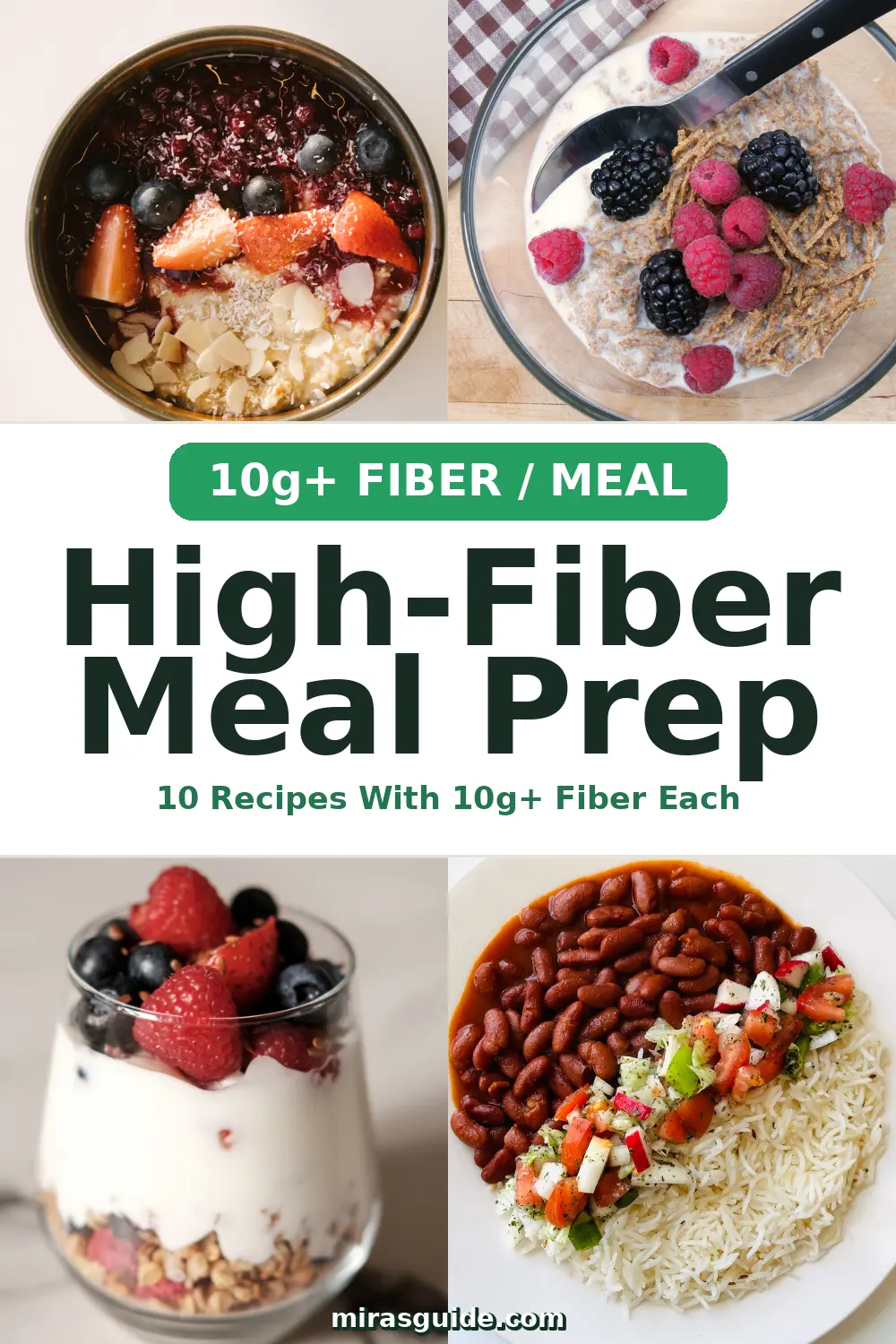
High fiber meal prep is the easiest way to hit your fiber goal without choking down a dry bran muffin — these 10 make-ahead recipes each pack 10 grams or more of fiber, from hearty bean bowls to creamy chia pudding.
Fiber keeps you full for hours, steadies your energy, and supports digestion, yet most people get barely half of what they actually need. This roundup fixes that with genuinely delicious, prep-friendly meals.
Want Easier High-Protein Meal Prep Like This?
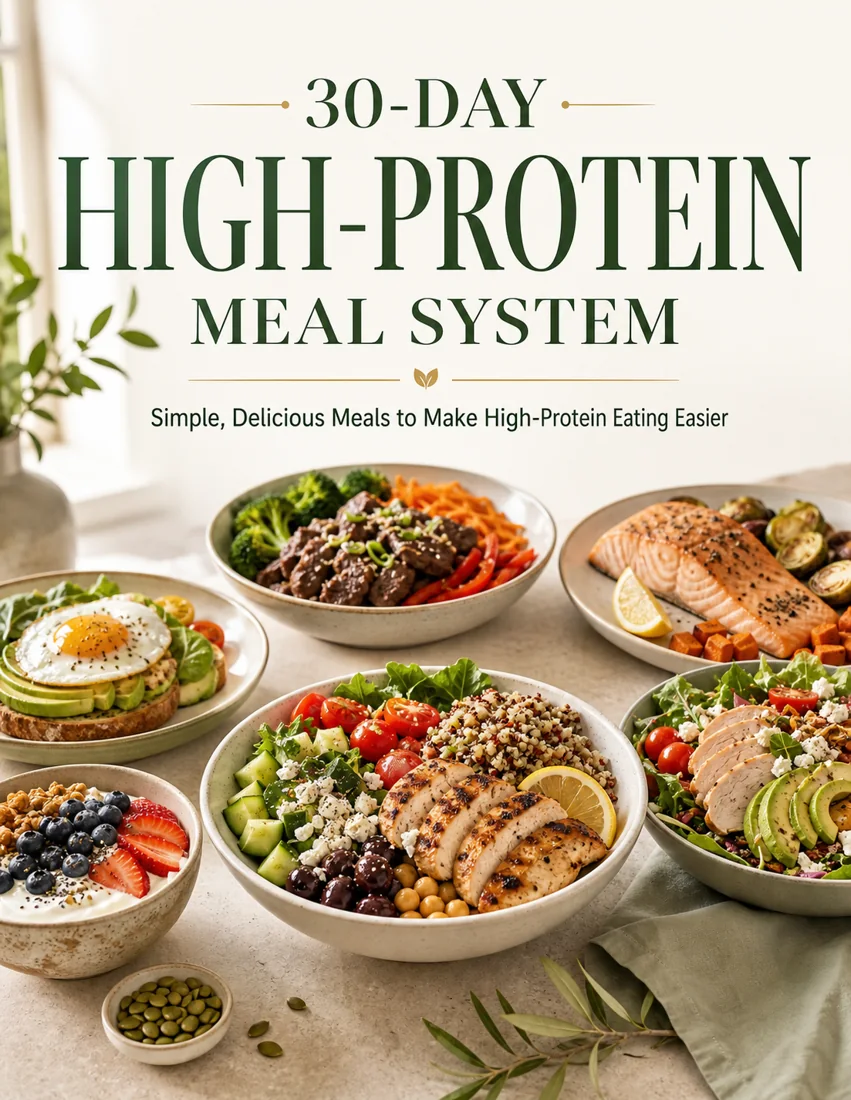
The 30-Day High-Protein Meal System gives you a full month of planned breakfasts, lunches, dinners and snacks—including high-protein meal-prep recipes with big flavor and simple steps.
Here’s exactly how to build a week of high-fiber lunches and breakfasts you’ll look forward to.
Why High-Fiber Meal Prep Works 🎯
- 10g+ fiber per recipe — a real dent in the ~25–38g daily target most people miss.
- Keeps you full longer — fiber slows digestion, so you’re satisfied instead of snacky by 3pm.
- Built on cheap staples — beans, oats, and lentils are some of the most affordable foods there are.
- Prep-friendly by nature — most high-fiber foods actually taste better after a day in the fridge.
Filling without heavy ✨
Fiber-rich meals feel satisfying without being greasy or overly rich, so you get comfortably full, not weighed down.
Great for gut health and energy ⚡
Steady, fiber-fueled energy beats the spike-and-crash of low-fiber refined meals — and your digestion will thank you.
What to Stock 🛒
Hitting 10g of fiber per meal is easy once your kitchen is stocked with the right staples. Beans and lentils are the powerhouses, whole grains and veggies build the base, and seeds and fruit top things off.
Fiber all-stars:
- Legumes: black beans, chickpeas, lentils, kidney beans, edamame
- Whole grains: oats, quinoa, farro, barley, brown rice, whole-grain bread
- High-fiber veggies: sweet potato, broccoli, Brussels sprouts, artichokes, carrots
- Fruit: raspberries, blackberries, apples, pears, avocado
- Seeds & nuts: chia, flax, almonds
How to Hit 10g of Fiber per Meal 👩🍳
The formula is simple: build each meal around a legume or whole grain, add veggies or fruit, and finish with seeds. Here’s the batch-prep flow.
- Cook a big pot of beans or lentils. Rinse and simmer dried lentils or beans, or just drain canned ones. This is your fiber backbone for bowls, soups, and salads all week.
- Batch a whole grain. Cook quinoa, farro, or barley — all high-fiber grains that hold up for days and add another 3–5g of fiber per serving.
- Roast fiber-rich veggies. A tray of sweet potato, broccoli, and Brussels sprouts adds fiber and flavor and reheats beautifully.
- Prep seeds and fruit. Portion chia and flax for oats and puddings, and wash berries and apples for grab-and-go fiber.
- Assemble and rotate. Combine a legume, a grain, and veggies into bowls, or use the specific recipes below. Aim to combine two or three fiber sources per meal to clear 10g easily.
The 10 High-Fiber Meal Prep Recipes 🍲
Each of these hits at least 10g of fiber per serving.
1. Black Bean & Sweet Potato Bowls (~15g fiber). Roasted sweet potato, black beans, brown rice, avocado, and salsa. A meal-prep classic that’s naturally vegan and filling.
2. Lentil Soup (~14g fiber). Lentils, carrots, celery, and tomatoes simmered with cumin. It gets better every day and freezes perfectly.
3. Chickpea Quinoa Salad (~12g fiber). Chickpeas, quinoa, cucumber, tomato, and a lemon-olive oil dressing. Great cold, no reheating needed.
4. Overnight Oats with Chia & Berries (~12g fiber). Oats, chia seeds, and raspberries in yogurt or milk. A five-minute high-fiber breakfast.
5. Three-Bean Chili (~15g fiber). Black, kidney, and pinto beans with tomatoes and spices. Batch a big pot and freeze half.
6. Roasted Veggie & Farro Bowl (~11g fiber). Farro topped with roasted Brussels sprouts, sweet potato, and a tahini drizzle.
7. Avocado & Black Bean Toast (~11g fiber). Whole-grain toast with mashed avocado and seasoned black beans. Fast and satisfying.
8. Barley & Mushroom Bowl (~10g fiber). Chewy barley with sautéed mushrooms, spinach, and garlic — hearty and earthy.
9. Edamame Brown Rice Buddha Bowl (~11g fiber). Brown rice, edamame, shredded carrot, and cabbage with a sesame-ginger dressing.
10. Raspberry Chia Pudding (~13g fiber). Chia seeds soaked in milk, layered with raspberries. A dessert-like high-fiber snack.
Pro Tips for Success 💡
Increase your fiber gradually and drink plenty of water. Jumping from low fiber to very high fiber overnight can cause bloating, so ramp up over a week or two and keep water handy — fiber works best with adequate hydration (this genuinely matters).
Combine two or three fiber sources per meal. A single food rarely hits 10g on its own, but a bowl with beans, a whole grain, and veggies clears it easily, so think in combinations rather than relying on one “high-fiber” item.
Keep the skins on. A lot of a fruit or vegetable’s fiber lives in the peel, so leaving the skin on your apples, sweet potatoes, and pears is an effortless way to boost the total.
Add chia and flax to almost anything. A tablespoon of chia adds around 4–5g of fiber, so stirring it into oats, yogurt, smoothies, or puddings is one of the easiest fiber upgrades there is.
Don’t drown fiber in refined add-ons. Building a beautiful high-fiber bowl and then topping it with sugary sauces works against you — lean on herbs, citrus, tahini, and olive oil for flavor instead.
Common Issues & Fixes ⚠️
Bloating or discomfort. You likely increased fiber too fast or aren’t drinking enough water. Ramp up gradually over a couple of weeks and stay well-hydrated, and the discomfort usually settles as your body adjusts.
Meals that aren’t filling despite the fiber. You may be short on protein. Pair the fiber with a protein like eggs, chicken, Greek yogurt, or extra beans so the meal actually keeps you full.
Grain or bean bowls turning mushy. Overcooked grains or over-dressed salads are usually the culprit. Cook grains just to tender, keep dressings separate until serving, and store everything in airtight containers.
Storage & Shelf Life ❄️
Store cooked beans, grains, and assembled bowls in the fridge for up to 4–5 days in airtight containers — most high-fiber staples like lentils, quinoa, and roasted veggies actually hold up better than delicate proteins, per general USDA FoodSafety.gov storage guidance. Keep dressings and fresh toppings separate so salads and bowls stay crisp.
Soups, chili, and cooked beans freeze exceptionally well for up to 3 months, making them perfect for batch-cooking. Overnight oats and chia pudding keep for 4–5 days in the fridge (no freezing needed). Add fresh fruit and seeds when serving so they stay at their best.
Ways to Boost the Fiber Even More 🔄
Stir extra beans, edamame, or a spoon of chia into any bowl to push the fiber higher, and swap white rice for brown rice, quinoa, or barley for an easy few extra grams. Add a side of berries or a pear to round out any meal toward 15g+.
Make any recipe higher in protein by adding chicken, eggs, tofu, or Greek yogurt — a combo that pairs perfectly with a bowl like my chicken rice bowl meal prep. For an eating pattern that naturally runs high in fiber, see my anti-inflammatory meal prep.
Keep it plant-based and gluten-free by leaning on beans, lentils, quinoa, and certified GF oats — high-fiber eating is naturally friendly to both.
What to Serve With These 🍽️
These meals are filling on their own, but a side of fruit, a handful of almonds, or a cup of veggie soup rounds them out. Hummus with veggie sticks makes a great high-fiber snack between meals. For a warm, cozy pairing on cold days, try my mason jar noodle soup meal prep loaded with extra veggies. To drink, water and unsweetened tea keep things light and support digestion.
Common Questions ❓
Q: How much fiber should I eat per day?
A: General guidance is around 25g a day for women and 38g for men, though most people get far less. These recipes make hitting that target much easier by delivering 10g+ per meal.
Q: Can I meal prep these ahead of time?
A: Yes — beans, grains, soups, and roasted veggies all store and reheat beautifully for 4–5 days, and many actually taste better after a day. Keep fresh toppings and dressings separate until serving.
Q: Will eating more fiber cause bloating?
A: It can if you increase it too quickly. Ramp up gradually over a week or two and drink plenty of water, and your body adjusts as it gets used to the higher intake.
Q: Are these recipes filling enough for a full meal?
A: Fiber is very filling, but pair it with protein — beans, eggs, chicken, or yogurt — to make each meal a satisfying, balanced plate that holds you until the next one.
Q: What are the highest-fiber foods to keep on hand?
A: Beans, lentils, chickpeas, chia and flax seeds, raspberries, avocado, whole grains like barley and oats, and veggies like Brussels sprouts and sweet potato are all fiber powerhouses.
Nutrition Facts 📊
Here’s the approximate nutrition for one representative high-fiber meal (a black bean and sweet potato bowl), calculated from USDA food-composition values using Atwater factors. Fiber per recipe ranges from about 10 to 15g. (Estimated — verify in WP Recipe Maker before publishing.)
- Calories: ~450 kcal (estimated)
- Protein: ~18g (estimated)
- Carbohydrates: ~65g (estimated)
- Dietary Fiber: ~16g (estimated)
- Total Sugars: ~10g (estimated)
- Total Fat: ~12g (estimated)
- Saturated Fat: ~2g (estimated)
- Sodium: ~500mg (estimated)
- Cholesterol: ~0mg (estimated — plant-based version)
Macro Breakdown (% of calories)
- Protein: ~16%
- Carbs: ~58%
- Fat: ~24%
Math check: (18×4) + (65×4) + (12×9) = 72 + 260 + 108 = 440 ≈ 450 ✓
Diet Tags
This recipe is: High-Fiber, Vegan, Vegetarian, Dairy-Free, Gluten-Free (as the bowl above). Easily made higher-protein with added chicken, eggs, or yogurt.
Allergens
Varies by recipe. Common across the roundup: Wheat (whole grains/bread), Tree nuts (almonds), Soy (edamame, tofu), Milk (yogurt in some). Check each recipe against your allergies.
Nutrition Notes
Each recipe delivers at least 10g of fiber — a meaningful step toward the 25–38g daily target — mainly from beans, whole grains, seeds, and produce. Pair these with a protein to make them fully balanced, and increase fiber gradually with plenty of water. Values are estimates and vary by recipe.
The Bottom Line 🎯
Getting enough fiber doesn’t require willpower or bland “diet” food — it just takes stocking beans, whole grains, seeds, and produce, and combining two or three of them per meal.
Batch a pot of lentils, a grain, and a tray of roasted veggies on Sunday, and clearing 10g of fiber per meal becomes automatic. You’ll feel fuller, more energized, and your digestion will run smoother — all from cheap, prep-friendly staples.
Start with a couple of these recipes, ramp up gradually with plenty of water, and let the habit build. If you’d like a full week of balanced, high-fiber meals planned and portioned for you, my Weekly Meal Planner Bundle makes it effortless.
Weekly Meal Planner Bundle — a full week of wholesome, balanced meals planned and portioned for you. Inside: printable weekly menus, a categorized grocery list, and a prep schedule built for real life. Get it here.
Nutrition is an estimate and varies by brand and portion.
Stop figuring out your protein meals one day at a time
This recipe solves today. The 30-Day High-Protein Meal System solves the whole month—planned, shopped and prepped for you.
- ✓ 30 days of high-protein breakfasts, lunches & dinners
- ✓ Weekly grocery lists & meal-prep guidance
- ✓ High-protein snacks and treats with big flavor
- ✓ Simple ingredients, clear steps, built-in variety



Pingback: Meal Planning for Women Over 40: The Midlife Framework
Pingback: Clean Eating Meal Plan: The Honest Whole-Food System
Pingback: Prediabetic Meal Plan Ideas: The Honest A1C Reversal Guide
Pingback: Wegovy Meal Plan Vegetarian: Plant-Based Framework
Pingback: Mounjaro Meal Plans Vegetarian: Plant-Based Framework
Pingback: Viral Hot Honey Ground Beef Bowl (High-Protein)