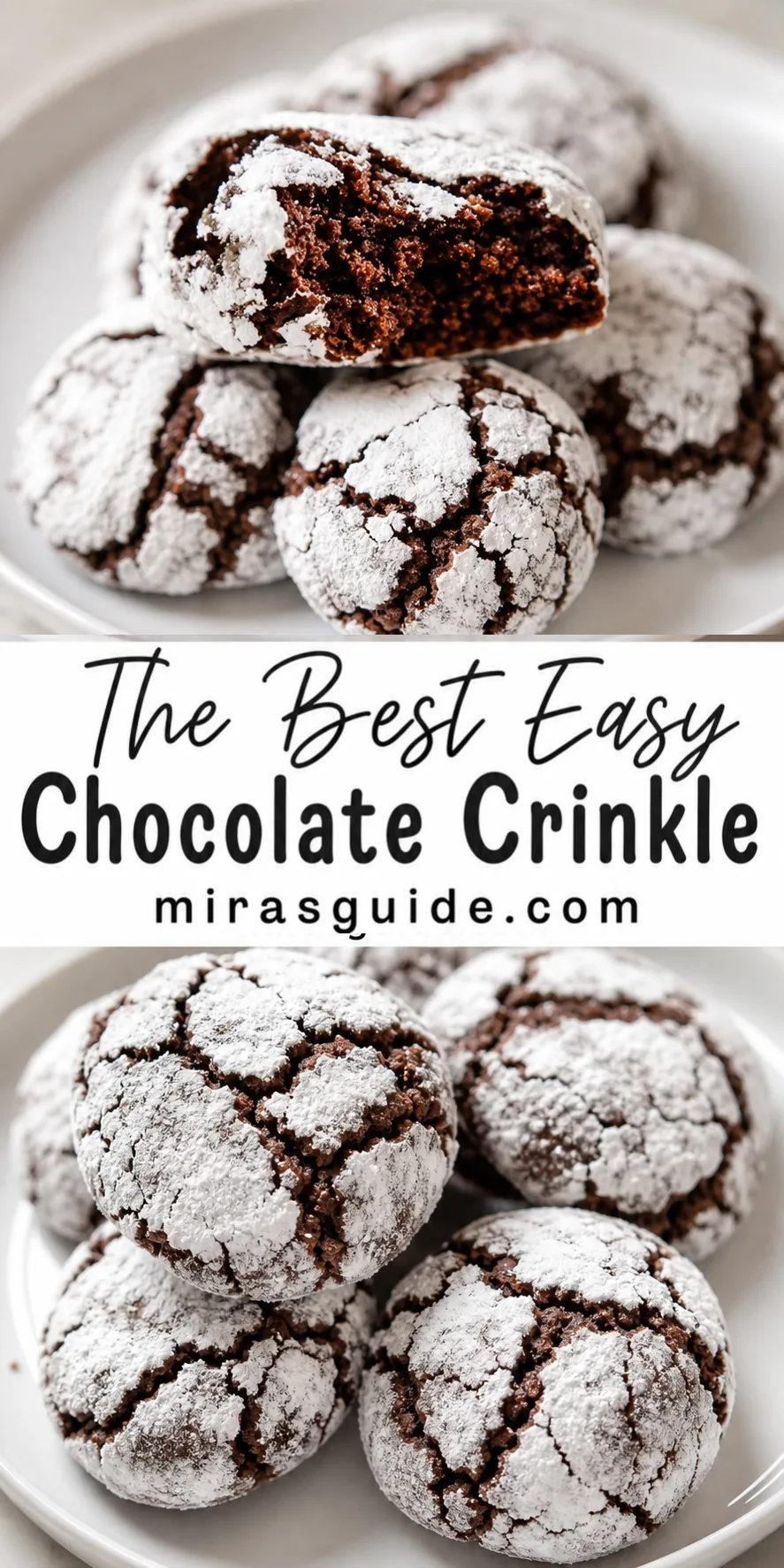
Chocolate crinkle cookies are the Christmas-tin classic for a reason: fudgy brownie-rich centers hidden under dramatic white sugar snowcaps that crack open as the dough spreads. The only technique that matters is a fully chilled dough — cold dough is what holds those striking cracks instead of melting them flat, and it’s also what converts simple pantry cocoa into cookies that look hand-decorated.
Why You’ll Love These Chocolate Crinkles ❄️
- Brownie texture in cookie form — chewy, fudge-middle, never cakey.
- The double-sugar coat — granulated then powdered: the granulated layer bakes into a shell that holds the powdered snow in place instead of absorbing it.
- Chill-ahead dough — make the dough a day or two before; it bakes thicker from cold.
- All-pantry ingredients — cocoa, oil, sugar, eggs, flour. Nothing fancy, everything essential.
- Impressive by default — the crinkle does the decorating; they look bakery-boxed with zero decoration time.
Recipe at a Glance
Prep: 20 minutes
Chill: 4 hours minimum (overnight ideal)
Bake: 10–12 minutes
Yield: about 30 cookies
Difficulty: Easy
Method: Chilled dough, rolled + double-rolled in sugar
Want More Show-Stopping Cookies Like This?
The Ultimate Easy Dessert Vault gives you 50 easy desserts organized by craving, occasion and prep style—including holiday cookies, brownies-in-a-cookie and festive bakes.
Ingredients 🛒
- 2 cups all-purpose flour, spooned and leveled
- ¾ cup unsweetened cocoa powder (Dutch-process or natural both good)
- 2 teaspoons baking powder
- ½ teaspoon fine salt
- 1 cup vegetable oil (or canola)
- 2 cups granulated sugar, plus ¾ cup for rolling
- 4 large eggs, room temperature
- 2 teaspoons vanilla extract
- 1 cup powdered sugar, for rolling
Oil is a deliberate choice: butter makes a firmer, crumblier crinkle; oil keeps the center chewy and brownie-like after cooling and through the next day. Don’t substitute melted butter unless you like the flavor trade-off enough to accept a cakier cookie.
The two sugars do different jobs: roll every ball in granulated first (it creates a thin dry barrier), then powdered (for looks). Skipping the granulated layer lets the powdered sugar melt into the dough and fade — you get pasty grey cookies instead of bold white caps.
How to Make Them 👩🍳
1. Whisk the dries
Whisk the flour, cocoa, baking powder and salt in a large bowl. Cocoa holds visible lumps; break them apart with a fork in the whisking so the dry mix is uniform before the liquids arrive.
2. Emulsify the sugar and oil
In a second bowl, whisk the oil and 2 cups granulated sugar for a full minute — it won’t fully combine and that’s fine; you’re distributing the sugar into the oil. Beat in the eggs one at a time (the mixture goes progressively lighter and gelatinous) then the vanilla.
3. Bring the dough together
Fold the dry ingredients into the wet until you have a thick, glossy dough that pulls from the bowl. It will look wet — this is right now, not a problem. It cannot be scooped wet; it must chill.
4. Chill — the whole identity of the cookie
Cover tightly and refrigerate at least 4 hours, ideally overnight. The dough must be firm enough to roll into balls without sticking heavily to your hands. This rest also hydrates the flour fully — which is why chilled crinkle cookies bake fudgier than same-day ones.
5. Roll and double-coat
Preheat the oven to 350°F and line two baking sheets. Scoop tablespoons of dough (about 25 g), roll quickly into balls, roll in granulated sugar all over, then roll a heavy snow of powdered sugar over that. Don’t be shy with the second coat — a thin dusting disappears during baking.
6. Bake just past the dough-stage
Space 2 inches apart and bake 10–12 minutes. The surfaces crack in the first 7–8 minutes; the cookies are done when the cracks are matte-set but the centers still shiver when you nudge the sheet. They finish on the hot pan — pulling firm-from-oven yields dry cookies by evening.
7. Pan-rest, then rack
Let cookies sit on the sheet 5 minutes (they’re the most fragile right now) then transfer to a wire rack. Cooled crinkles keep a clean brownie chew for days.
Why the Technique Works
The signature pattern is physics: cold, thick dough sits high going into the oven, the powdered top set into a shell early, and then as the interior finally warms it spreads through that shell, fracturing it across the fissures the heat exposes. Oil-rich dough spreads at controlled pace, which is the difference between bold isolated cracks and cracked-mud patterns. Your visual result is decided entirely before the oven in three moves: chill well, granulated first, heavy powder second.
Tips & Expert Advice
- >Dough too soft for balls = longer chill, dust your hands with powdered sugar between cookies, and return the bowl to the fridge between pans.
- Cookies flat in oven = under-chilled dough or an over-hot sheet; bake the second batch on a cooled pan.
- Crackle too flat/too wide = thin powdered coat; roll more heavily. This cookie forgives everything except shyness with the outside sugar.
- Freeze-baked cookies spread differently — baked crinkles freeze beautifully in a tin. Frozen-dough balls bake straight from the freezer with 1 extra minute.
Variations & Substitutions
- Mint crinkles: ½ teaspoon peppermint extract in the dough — the holiday classic upgrade.
- Espresso: 1 tablespoon instant espresso powder into the cocoa for mocha depth (coffee quietly improves chocolate flavor).
- Red velvet crinkle: the Christmas-favorite sibling — red gel coloring, 2 tablespoons vinegar, vanilla swap.
- Half chocolate chips: folded-in ½ cup updated chips stay visible through the crinkle.
- Brownie-butter: swap half the oil for melted butter for a butter flavor-forward path and slightly firmer bite.
Serving Suggestions
Cold milk beside warm-from-the-oven crinkle cookies is genuinely the best moment of the recipe. On trays, they anchor Christmas tins because the visual contrast never gets old — and a light dusting of extra powdered sugar over the cooled cookies refreshes the snow look for gift boxes.
Storage & Freezing
Airtight tin at room temperature 4–5 days; they remain chewy because of the oil base. Freeze baked cookies layered with parchment up to 3 months; thaw at room and re-dust powdered sugar if the snow faded. The dough balls (uncoated) freeze 2 months — thaw an hour, then roll in the sugars.
❓ FAQ
Can I skip the chill? You can ba You can bake them soft-doughy, but they spread flat, the cracks come out thin, and the powdered sugar melts into them instead of staying white. There is no good shortcut; chill.
Why powdered then granulated — or is it backwards? Granulated first (the thin shield), powdered second (the snow). Reversed order melts the powder into the dough.
My tops were pale instead of white. Old powdered sugar absorbs moisture and coats thin; use a fresh bag and coat thickly.
Same-batch some-thin, some-thick? Inconsistent scoop size — a 1-Tbsp cookie scoop evens everything out.
Final Thoughts
Chocolate crinkle cookies give away the most visual drama per pantry dollar in the entire Christmas-cookie rotation. Thoroughly chill the dough, coat the snow generously, and the cracking does the showing off for you — the grin when the first tray comes out is why these never leave the December list.

Have an easy dessert ready for every craving & occasion
You found tonight’s crinkle cookie recipe. Now imagine having 50 easy desserts at your fingertips whenever a craving hits.
- ✓ 50 easy dessert recipes in one vault
- ✓ Organized by craving, occasion & prep style
- ✓ Cookies, bars, cakes, no-bake & frozen treats
- ✓ Simple ingredients, clear steps