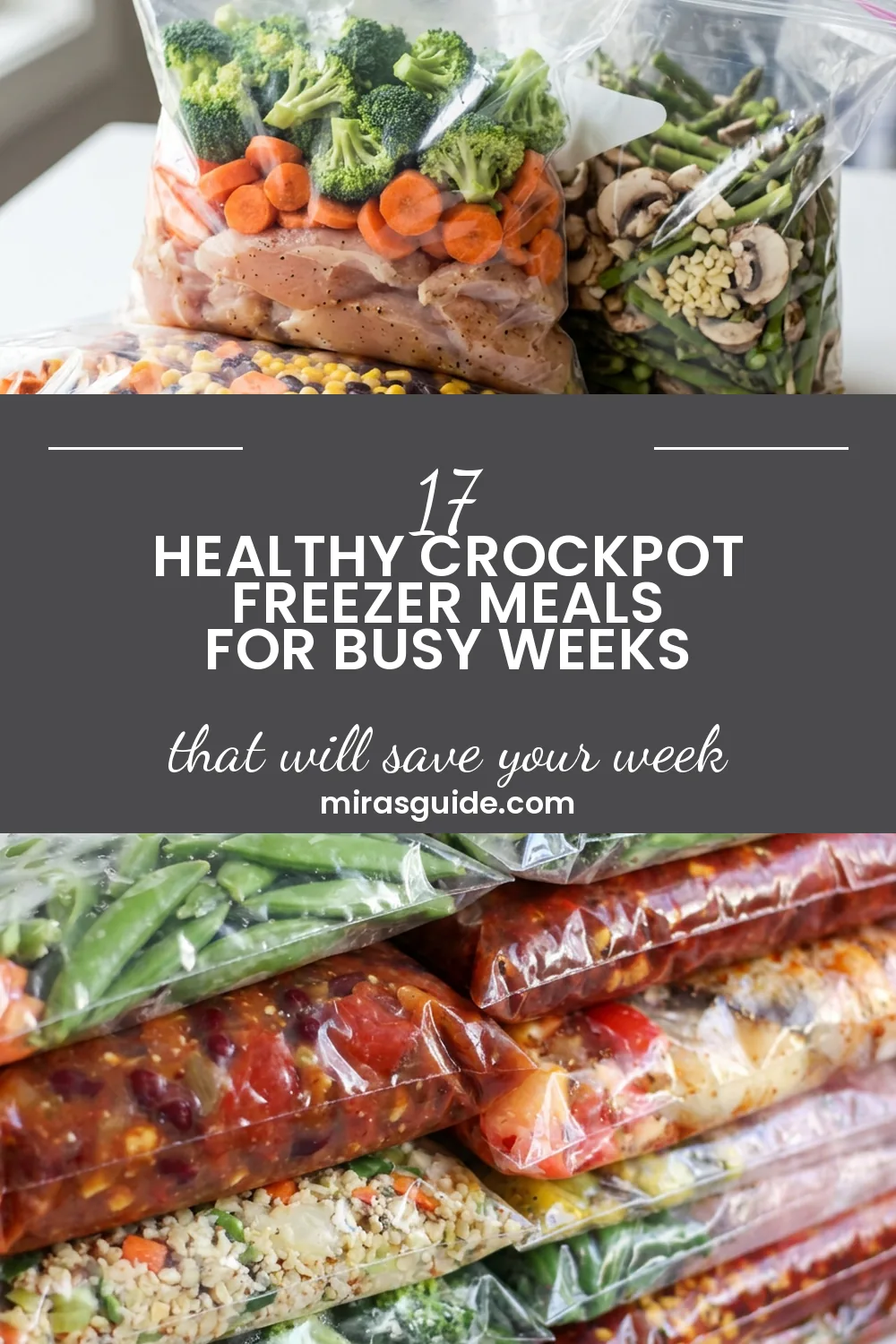
Healthy crockpot freezer meals are the difference between a freezer full of food and a freezer full of dinner: bags assembled in advance, built on lean protein and vegetables, and cooked straight in the slow cooker on a night when nobody wants to think. The point isn’t just convenience — it’s that you control the sodium, the sugar, and the portions, which is exactly what you give up when you buy pre-made frozen dinners.
Why You’ll Love This System 🥗
- You set the sodium, not a factory — commercial frozen entrées routinely run 600–900mg of sodium per serving. Yours runs whatever your recipe calls for.
- Vegetables are built in, not garnished on — every plan below has vegetables as a structural layer, not a side dish.
- Lean proteins stay lean — chicken breast, lean ground beef, pork tenderloin, and beans, with no breading or frying.
- Portions are yours to set — you decide whether a bag serves 4 or 6.
- The work happens once — two hours of assembly becomes ten dinners.
- Cheaper than frozen entrées — protein bought on sale and portioned yourself usually lands well below the per-serving price of prepared meals.
Recipe at a Glance
Assembly time: About 2 hours for 10 meals
Freezer life: 3 months for best quality
Cook time: 4–8 hours per meal, depending on the recipe
Yield: 10 freezer bags, 4–6 servings each
Difficulty: Easy
Method: Freezer-to-slow-cooker assembly
Ingredients 🛒
Tired of 5pm panic?
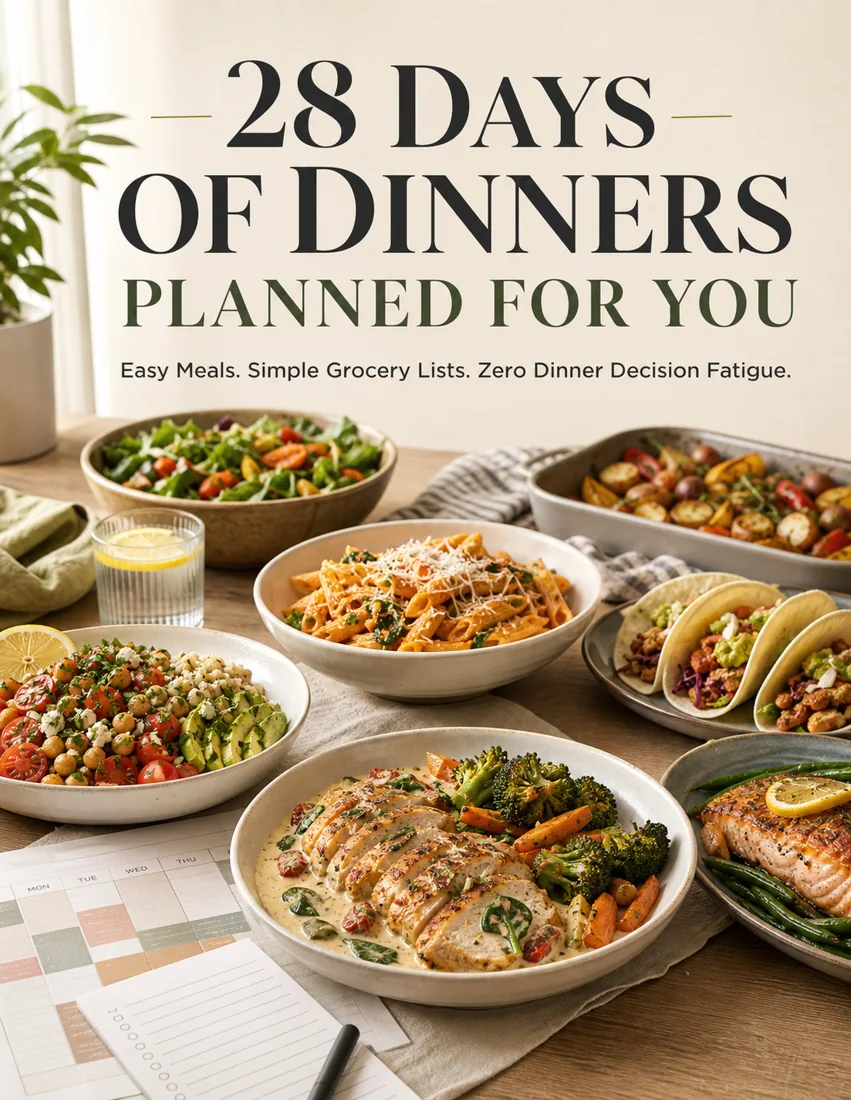
28 Days of Dinners Planned for You hands you a month of weeknight dinners with the shopping list already written—no more 5pm decisions.
This isn’t one recipe, so the ingredient list is a framework. Every healthy crockpot freezer meal is built from four components in roughly these proportions.
The component framework
- Protein (1½–2 lbs per bag): chicken breast or thighs, lean ground beef or turkey (browned first), pork tenderloin, beef chuck, or beans and lentils for meatless versions
- Vegetables (4–6 cups per bag): onions, bell peppers, carrots, celery, zucchini, green beans, cauliflower, broccoli, mushrooms, tomatoes
- Sauce or liquid (1–1½ cups per bag): crushed tomatoes, low-sodium broth, coconut milk, salsa, or a yogurt-based sauce — enough to cover the base, not to drown it
- Seasoning (1–3 tablespoons): dried herbs, spices, minced garlic, ginger, or a spice blend
Vegetables that freeze well in a slow cooker bag: onions, carrots, celery, bell peppers, mushrooms, green beans, cauliflower, butternut squash, and canned tomatoes all hold up. They’re sturdy enough to survive both the freezer and four hours of slow cooking without dissolving.
Vegetables that don’t: zucchini, summer squash, and broccoli turn to mush. If you want them, add them in the last 30 minutes of cooking instead of freezing them in the bag — or use them in recipes where a soft texture is fine, like a curry or a soup.
Potatoes are the one controversial ingredient. Raw potatoes frozen in a bag can turn grainy and slightly sweet because freezing damages their cell walls. They work in braised, saucy dishes where they’re surrounded by liquid, but they’re the ingredient most likely to disappoint. If you’re unsure, add fresh potatoes on cooking day instead.
Dairy splits when frozen. Cream, milk, and yogurt separate into grainy flecks after freezing and don’t fully recombine with heat. Stir dairy in at the very end of cooking, after the slow cooker is off, rather than freezing it in the bag.
Use low-sodium broth. Slow cookers concentrate flavors because there’s almost no evaporation. Regular broth that tastes fine in a pot becomes intensely salty after six hours in a sealed environment.
Equipment
- Freezer-safe zip-top bags (gallon size) — the standard for freezer meals. Use heavy-duty or freezer-specific bags, not storage bags with thinner plastic.
- Large rimmed bowl or a bag holder — to hold the bag open while you fill it.
- Permanent marker and masking tape — for labeling. This matters more than it sounds.
- Cutting board and a sharp knife — the bulk of the work is chopping.
How to Build 10 Healthy Plans 👩🍳
These ten plans follow the framework above and each serves 4–6. Write the name, date, and cook time on each bag before you fill it — labeling after the fact is where freezer meals go wrong.
1. Lemon herb chicken and green beans
1½ lbs chicken breast, 4 cups trimmed green beans, 1 cup low-sodium chicken broth, 2 tablespoons lemon juice, 1 tablespoon dried oregano, 1 tablespoon minced garlic, salt and pepper. Cook: 4 hours on low. Finish: stir in ½ cup Greek yogurt off the heat.
2. Turkey and vegetable chili
1½ lbs lean ground turkey (browned), 1 can diced tomatoes, 1 can kidney beans, 1 cup corn, 1 bell pepper, 1 onion, 2 tablespoons chili powder, 1 tablespoon cumin. Cook: 6 hours on low.
3. Coconut chickpea curry
2 cans chickpeas, 1 can light coconut milk, 2 cups cauliflower florets, 1 onion, 2 tablespoons curry powder, 1 tablespoon minced ginger, 1 cup low-sodium vegetable broth. Cook: 5 hours on low. Finish: stir in fresh spinach.
4. Salsa chicken and peppers
1½ lbs chicken breast, 1½ cups salsa, 2 bell peppers, 1 onion, 1 teaspoon cumin, 1 teaspoon smoked paprika. Cook: 4 hours on low, then shred. Serve: over rice or in lettuce cups.
5. Beef and barley stew
1½ lbs beef chuck, 2 cups carrots, 2 cups celery, 1 onion, 1 can diced tomatoes, 1 cup low-sodium beef broth, ½ cup pearl barley, 1 tablespoon dried thyme. Cook: 8 hours on low.
6. Ginger soy chicken with broccoli
1½ lbs chicken thighs, ½ cup low-sodium soy sauce, 2 tablespoons rice vinegar, 1 tablespoon minced ginger, 1 tablespoon honey, 1 onion. Cook: 5 hours on low. Finish: steam broccoli separately and fold in.
7. Mediterranean white bean chicken
1½ lbs chicken breast, 2 cans cannellini beans, 1 can diced tomatoes, 2 cups spinach (added at the end), 1 tablespoon dried oregano, 2 tablespoons lemon juice, 1 tablespoon olive oil. Cook: 5 hours on low.
8. Pork tenderloin with apples and onions
1½ lbs pork tenderloin, 2 sliced apples, 2 onions, 1 cup low-sodium chicken broth, 1 tablespoon Dijon mustard, 1 teaspoon dried rosemary. Cook: 5 hours on low.
9. Lentil and vegetable soup
1½ cups dried brown lentils, 4 cups low-sodium vegetable broth, 2 carrots, 2 celery stalks, 1 onion, 1 can diced tomatoes, 2 teaspoons Italian seasoning. Cook: 6 hours on low.
10. Chicken and cauliflower rice bowl base
1½ lbs chicken breast, 4 cups cauliflower florets, 1 cup low-sodium chicken broth, 2 tablespoons taco seasoning, 1 bell pepper. Cook: 4 hours on low, then shred and fold in ½ cup Greek yogurt.
Assembly order for every bag
Put the protein in first, then the vegetables, then pour the liquid over the top, then scatter the seasoning on last. Liquid last means the seasoning sits on top and gets distributed through the bag as it freezes rather than sinking and clumping. Press out as much air as possible before sealing — air is what causes freezer burn, and freezer burn is what makes a meal taste like a freezer. Lay the bags flat to freeze on a sheet pan so they stack compactly once solid.
Why the Technique Works
The reason slow-cooker freezer meals work at all comes down to one quirk of slow cooking: almost no liquid evaporates. A Dutch oven on the stove loses a third of its liquid over two hours; a sealed slow cooker loses almost nothing. That’s why the liquid in a freezer bag should come to about a third of the way up the contents rather than covering everything — the vegetables and meat will release their own water as they cook, and that released liquid is what actually braises the meal. Add too much at the start and you get soup. This same sealed environment is why low-sodium broth is essential and why seasoning should be measured carefully: there’s no evaporation concentrating your seasonings, so what you put in is what you get.
Cooking Tips & Expert Advice
- Brown ground meat before freezing. It’s not just flavor — raw ground meat that sits in a slow cooker for hours while it comes up to temperature spends a long time in the temperature range where bacteria multiply. Browning it first means it’s already cooked and safe.
- Label every bag with the name, date, and cook time. Six weeks from now, a frozen block of brown-red sauce is unidentifiable.
- Freeze flat, then stack. A bag frozen flat takes up a fraction of the space and thaws evenly.
- Thaw overnight in the fridge before cooking. It’s the safest method and it keeps the cook time predictable. Cooking from frozen is possible — add 2 hours on low — but the outer edges overcook while the center is still cold, and the food sits in the danger zone longer.
- Squeeze out the air. Press the bag flat on the counter and roll it from the bottom before sealing.
- Don’t fill a bag more than two-thirds. Contents expand as they freeze and a full bag bursts or fails to seal.
- Keep a running inventory. Tape a list to the freezer door and cross meals off — the single most effective habit for actually eating what you made.
Variations & Substitutions
- Meatless: swap every chicken or beef for two cans of beans or 1½ cups of dried lentils. Cooking times stay the same.
- Lower carb: replace rice and barley with cauliflower rice added at the end of cooking, and double the non-starchy vegetables.
- Higher protein: increase the protein to 2 lbs per bag and add ½ cup of Greek yogurt at the end for each meal.
- Lower sodium: use no-salt-added canned tomatoes and beans, and replace broth with water plus herbs.
- Spicier: add 1 teaspoon of cayenne or a minced chipotle pepper; slow cooking mutes heat, so you need more than you think.
- Instant Pot version: cook the same frozen bags under pressure for 25–30 minutes with a natural release, adding an extra ½ cup of liquid.
Serving Suggestions
Each of these is a main, not a complete meal. Round them out with a quick starch — rice, quinoa, whole wheat noodles, or crusty bread — and a simple salad. Meals 1, 4, 7, 9, and 10 are the easiest to serve over grains; 5 and 8 are best with potatoes or bread to soak up the sauce.
Storage, Freezing & Reheating
Freeze assembled bags flat for up to 3 months at 0°F for the best quality. Food frozen solid stays safe indefinitely, but texture and flavor degrade — chicken in particular gets stringy past three months. Thaw overnight in the refrigerator, not on the counter; if you’re short on time, a sealed bag in cold water thaws in about an hour. Cook leftovers within 4 days, refrigerated. Reheat gently on the stove or in the microwave, adding a splash of broth if the sauce has thickened.
Troubleshooting
Why is my freezer meal watery? Too much liquid went in the bag, or the vegetables released more water than expected. Use about a third of the contents in liquid and reduce by half a cup next time.
Why did the sauce taste flat after cooking? Slow cooking dulls dried herbs and spices over several hours. Add a fresh pinch of seasoning in the last 30 minutes, and finish with acid — lemon juice or vinegar — which brings back the brightness heat destroys.
Why did the dairy curdle? It was frozen in the bag. Add dairy at the very end, off the heat, and stir it in gradually.
Why did the chicken come out stringy and dry? It overcooked. Chicken breast is done at 165°F, which often happens in 3–4 hours on low, not 8. Use a thermometer the first time you make each meal and note the actual time for your slow cooker.
Why is the bag leaking in the freezer? The bag was overfilled, or the seal caught liquid. Keep bags two-thirds full and wipe the seal area dry before closing.
❓ FAQ
Can I cook these from frozen? Yes, but thaw them if you can. Cooking from frozen adds about 2 hours and produces unevenly cooked results, with dried-out edges and a cold center. A fridge thaw overnight is the better habit.
How long do freezer meals actually last? Three months for good quality, though they stay safe far longer at 0°F. Past three months, expect texture loss rather than spoilage.
Can I use frozen vegetables instead of fresh? Yes, and they save real time. Add them straight to the bag without thawing — frozen vegetables are blanched before freezing, so they hold up in the slow cooker and won’t turn to mush.
Do I need to thaw the bag if I’m using an Instant Pot? No, and it’s actually the best use for frozen bags. Add ½ cup of extra liquid and cook 25–30 minutes under pressure with a natural release.
Is this cheaper than buying frozen dinners? Usually, yes — particularly if you buy protein on sale and portion it yourself. Exact savings depend entirely on your grocery prices and what you’d otherwise buy.
How many people does one bag serve? Four to six, depending on whether you’re serving it alone or with a starch alongside. Most of these are designed to be stretched with rice or bread.
Nutrition, Allergens & Dietary
Nutrition varies substantially by meal and by your specific ingredient choices — the biggest variables are the protein’s fat content and whether the canned goods are salt-added. Most of these land between 300 and 450 calories per serving with 25–35g of protein. Allergens depend on your choices: soy appears in the ginger soy chicken, dairy in the recipes that finish with yogurt. Several plans are naturally gluten-free; use certified gluten-free broth and check your spice blends. Nutrition figures are estimates.
Final Thoughts
The framework matters more than the specific ten meals: protein, vegetables, about a third of the way up in liquid, seasoning on top. Once you’ve assembled a batch or two, you stop following this list and start improvising from what’s on sale that week. That’s the point — a system you can run, not a recipe you have to look up.
Once these run out, what’s for dinner next month?
You just stocked ten healthy dinners. When they run out, 28 Days of Dinners covers the next month.
- ✓ 28 weeknight dinners, already chosen
- ✓ One shopping list per week
- ✓ Everyday ingredients, no specialty store
- ✓ Built for busy weeknights