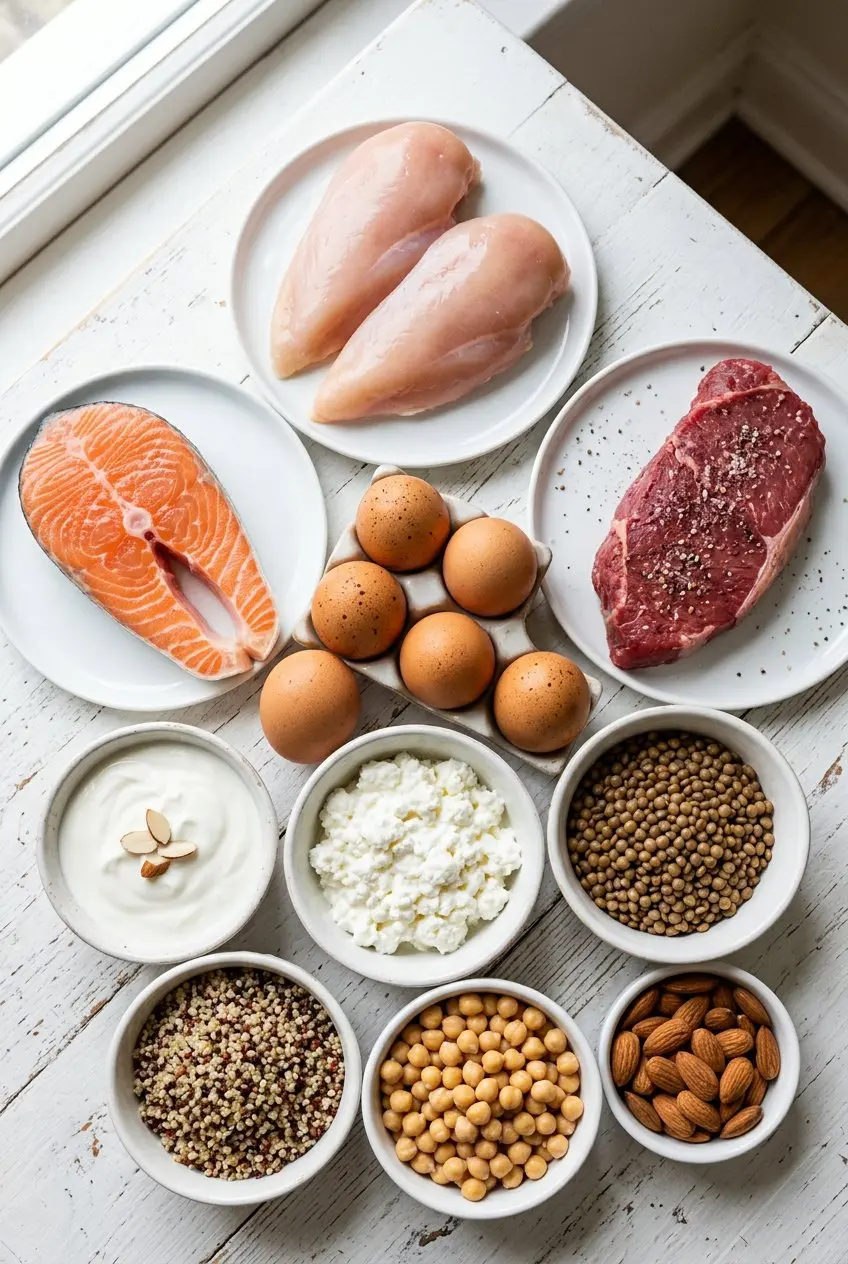
A high-protein foods list is the cheat sheet that makes hitting your protein goals simple — a go-to reference of the best protein sources, how much protein each delivers, and how to build them into meals.
Whether you’re building muscle, losing fat, or just staying full, knowing your highest-protein options takes the guesswork out of every grocery trip and plate. This list covers lean meats, seafood, dairy, eggs, and plant proteins, with protein amounts for each.
Want High-Protein Eating Planned for You?
The 30-Day High-Protein Meal System gives you a full month of planned breakfasts, lunches, dinners and snacks—including 30 days of high-protein meals already organized for you.
Here’s exactly what to eat to hit your protein, organized so you can shop and build meals with confidence.
Why Protein Matters ❤️
- Keeps you full — protein is the most satisfying macro, curbing hunger.
- Builds and protects muscle — essential for strength and a toned look.
- Supports fat loss — high protein preserves muscle in a calorie deficit.
- Fuels recovery — helps your body repair after workouts and daily activity.
Lean Meats & Poultry 🍗
- Chicken breast — ~26g protein per 3 oz (cooked)
- Turkey breast — ~25g per 3 oz
- Lean ground turkey (93%) — ~22g per 3 oz
- Lean beef (sirloin, flank) — ~24g per 3 oz
- Pork tenderloin — ~22g per 3 oz
Seafood 🐟
- Tuna (canned) — ~20g per 3 oz
- Salmon — ~22g per 3 oz
- Shrimp — ~20g per 3 oz
- Cod / white fish — ~19g per 3 oz
- Tilapia — ~21g per 3 oz
Eggs & Dairy 🥚
- Greek yogurt (nonfat) — ~17g per cup
- Cottage cheese — ~14g per ½ cup
- Eggs — ~6g each
- Milk — ~8g per cup
- Cheese (cheddar, mozzarella) — ~7g per oz
- Whey/casein protein powder — ~20–25g per scoop
Plant Proteins 🌱
- Lentils — ~18g per cooked cup
- Chickpeas — ~15g per cooked cup
- Black beans — ~15g per cooked cup
- Edamame — ~17g per cup
- Tofu — ~10g per ½ cup
- Tempeh — ~17g per 3 oz
- Quinoa — ~8g per cooked cup
Easy Protein Add-Ins ➕
Sprinkle these onto meals to boost protein fast: hemp seeds (~10g per 3 tbsp), a scoop of protein powder in oats or smoothies, chia seeds, nutritional yeast, or a boiled egg on top of almost anything.
How Much Protein Do You Need? 📊
A common target is 0.7–1 gram of protein per pound of body weight for those active or aiming to build muscle or lose fat — for many people that’s around 100–150g a day. Spread it across meals (aim for 30–40g each) for the best results. (Individual needs vary — this is general guidance, not medical advice.)
Tips for Hitting Your Protein 💡
Start with protein at every meal. Build each plate around a protein source first, then add veggies and carbs — it’s the easiest way to hit your target.
Keep high-protein staples stocked. Chicken, eggs, Greek yogurt, canned tuna, and protein powder make hitting your numbers automatic.
Use add-ins to close the gap. If you’re short at the end of the day, a scoop of protein or a boiled egg tops you off fast.
Combine plant proteins. If you’re plant-based, mix sources (beans + grains) across the day to cover all your amino acids.
Prep protein in bulk. Batch-cook chicken, beef, or turkey so a high-protein meal is always ready to go.
Common Questions ❓
Q: What foods are highest in protein?
A: Lean meats, poultry, fish, eggs, Greek yogurt, cottage cheese, and protein powder are the most protein-dense. Among plants, lentils, edamame, tofu, and tempeh lead.
Q: How much protein should I eat per day?
A: A common range is 0.7–1g per pound of body weight for active people or those building muscle or losing fat — often 100–150g a day. Individual needs vary.
Q: What are the best plant-based proteins?
A: Lentils, chickpeas, black beans, edamame, tofu, tempeh, and quinoa. Combining different sources across the day covers all essential amino acids.
Q: Do I need protein powder?
A: No, but it’s a convenient way to hit your target — one scoop adds 20–25g fast. You can absolutely reach your goal with whole foods alone.
Protein Per 100 Calories: The Real Ranking 📊
Total protein per serving only tells half the story. What matters for most goals is protein density — how much protein you get per calorie spent. Here is roughly how common sources rank:
- Egg whites — about 21g protein per 100 calories (the highest of any whole food)
- White fish (cod, haddock) — roughly 20g per 100 calories
- Shrimp — around 19g per 100 calories
- Chicken breast — about 18g per 100 calories
- Non-fat Greek yogurt — around 17g per 100 calories
- Cottage cheese (low-fat) — about 14g per 100 calories
- Lentils — roughly 8g per 100 calories
- Almonds — about 3.5g per 100 calories
This is why nuts, while genuinely nutritious, are a poor way to hit a protein target — you would eat 1,000 calories to get 35g. Use them for fats and fibre, and get your protein elsewhere. For a deeper breakdown of the leanest options, see my low-calorie high-protein foods list.
Budget-Friendly Protein 💰
High protein does not have to mean expensive. Pound for pound, these deliver the most protein per dollar:
- Eggs — still the cheapest complete protein in most supermarkets
- Dried lentils and beans — pennies per serving, plus fibre
- Chicken thighs — cheaper than breast and far more forgiving to cook
- Canned tuna and sardines — long shelf life, no prep
- Cottage cheese — consistently cheaper per gram of protein than most yogurts
- Frozen edamame — a complete plant protein that keeps for months
If cost is the main constraint, my cheap high-protein meal prep plan builds a full week around exactly these staples.
Protein for Vegetarians and Vegans 🌱
Plant proteins are generally less protein-dense and, apart from soy and quinoa, lower in one or more essential amino acids. That is not a problem in practice — you do not need to combine proteins at every meal, only across the day.
- Tofu (firm) — about 17g protein per cup, complete protein
- Tempeh — roughly 31g per cup, plus fermented gut benefits
- Edamame — about 18g per cup
- Lentils — around 18g per cooked cup, with 15g fibre
- Seitan — about 25g per 100g (contains wheat gluten)
- Greek-style soy yogurt — a useful swap for dairy
Aim slightly higher on plant-based diets — plant protein is absorbed a little less efficiently than animal protein.
How to Spread Protein Across the Day ⏰
Most people load nearly all their protein into dinner and get very little at breakfast. Spreading it out keeps you fuller and supports muscle maintenance better than one large hit.
A practical target is 25–35g at each main meal, plus a protein-containing snack if you need one. Breakfast is usually the weak point — eggs, Greek yogurt, or cottage cheese fix it in minutes. For grab-and-go options, see my high-protein snacks list.
A Note on Protein Supplements 🥤
Powders and shakes are convenient, not magic. They are simply a fast, cheap source of protein when whole food is impractical — useful after training or on a rushed morning. Whole foods bring fibre, vitamins, and satiety that a shake does not, so treat supplements as the gap-filler rather than the foundation.
Final Thoughts ❤️
A high-protein foods list is the simple reference that makes hitting your protein goals effortless — lean meats, seafood, dairy, eggs, and plant proteins, with the numbers to build any meal around.
Keep the highest-protein staples stocked, start every plate with a protein source, use add-ins to close the gap, and aim for 30–40g per meal. With this cheat sheet, every grocery trip and plate gets easier.
If you want your exact protein target calculated and a full week of high-protein meals mapped out, my Macro Method makes hitting your numbers effortless.
Macro Method — hit your protein and calorie goals without the math. Inside: a protein/calorie calculator, macro-friendly meal templates, and a full library of high-protein recipes. Get it here.
This is general guidance, not personalized nutrition advice — adjust to your own needs.
Stop figuring out your protein meals one day at a time
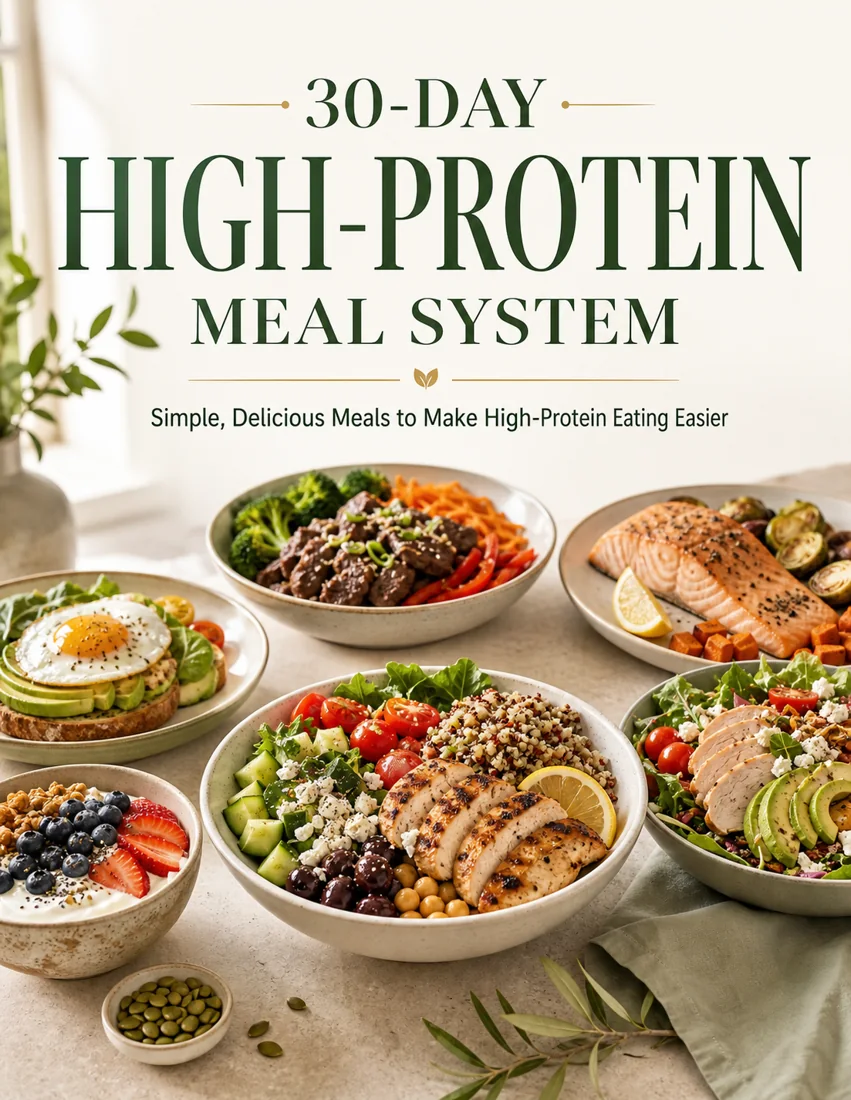
This recipe solves today. The 30-Day High-Protein Meal System solves the whole month—planned, shopped and prepped for you.
- ✓ 30 days of high-protein breakfasts, lunches & dinners
- ✓ Weekly grocery lists & meal-prep guidance
- ✓ High-protein snacks and treats with big flavor
- ✓ Simple ingredients, clear steps, built-in variety