

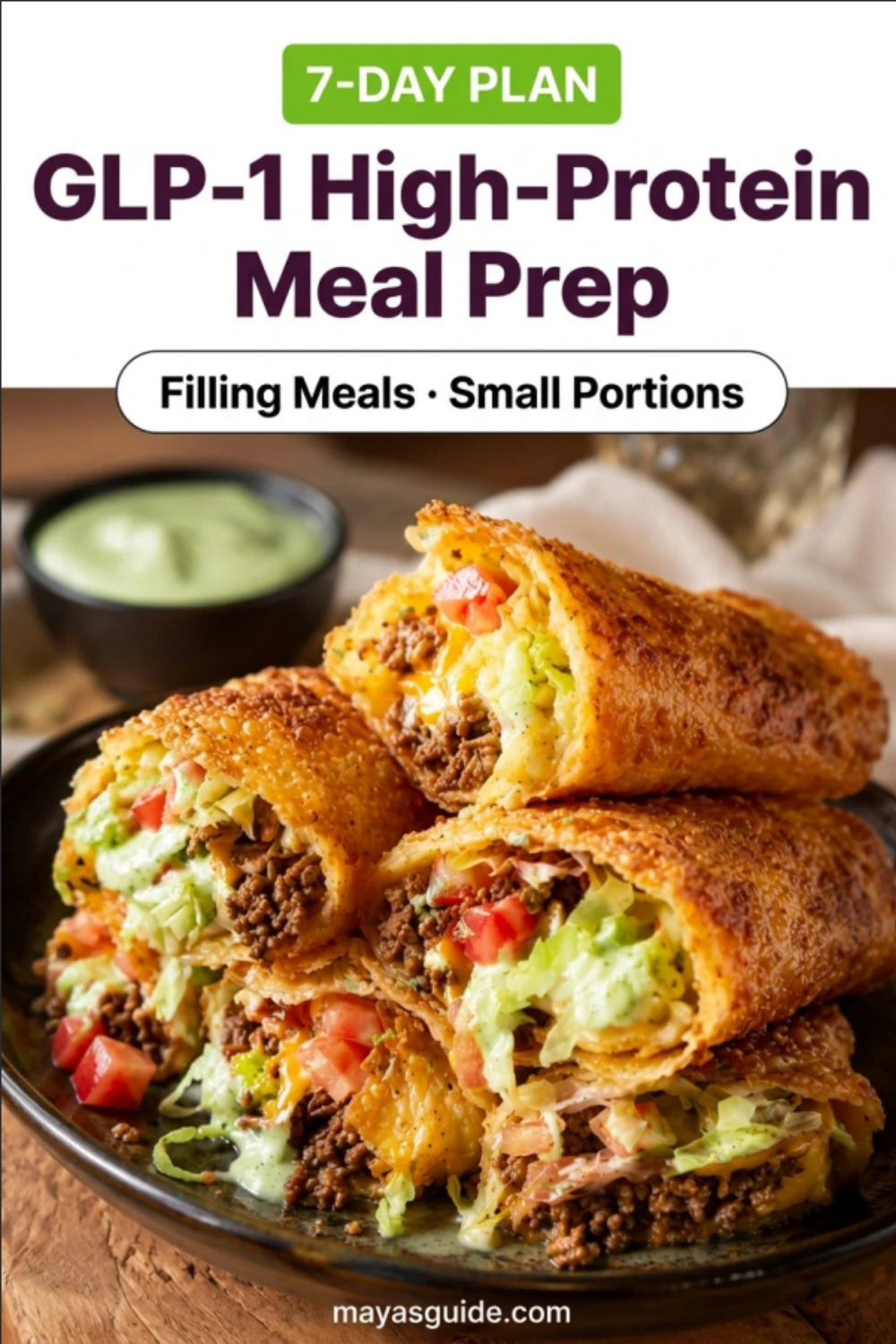
GLP-1 friendly high-protein meal prep is all about making every bite count — when medications like Ozempic and Wegovy shrink your appetite, the food on your plate needs to deliver serious protein and nutrients in smaller portions.
This easy 7-day plan gives you high-protein meals designed to help protect your muscle, keep you satisfied, and stay gentle on your stomach.
Want Easier High-Protein Meal Prep Like This?
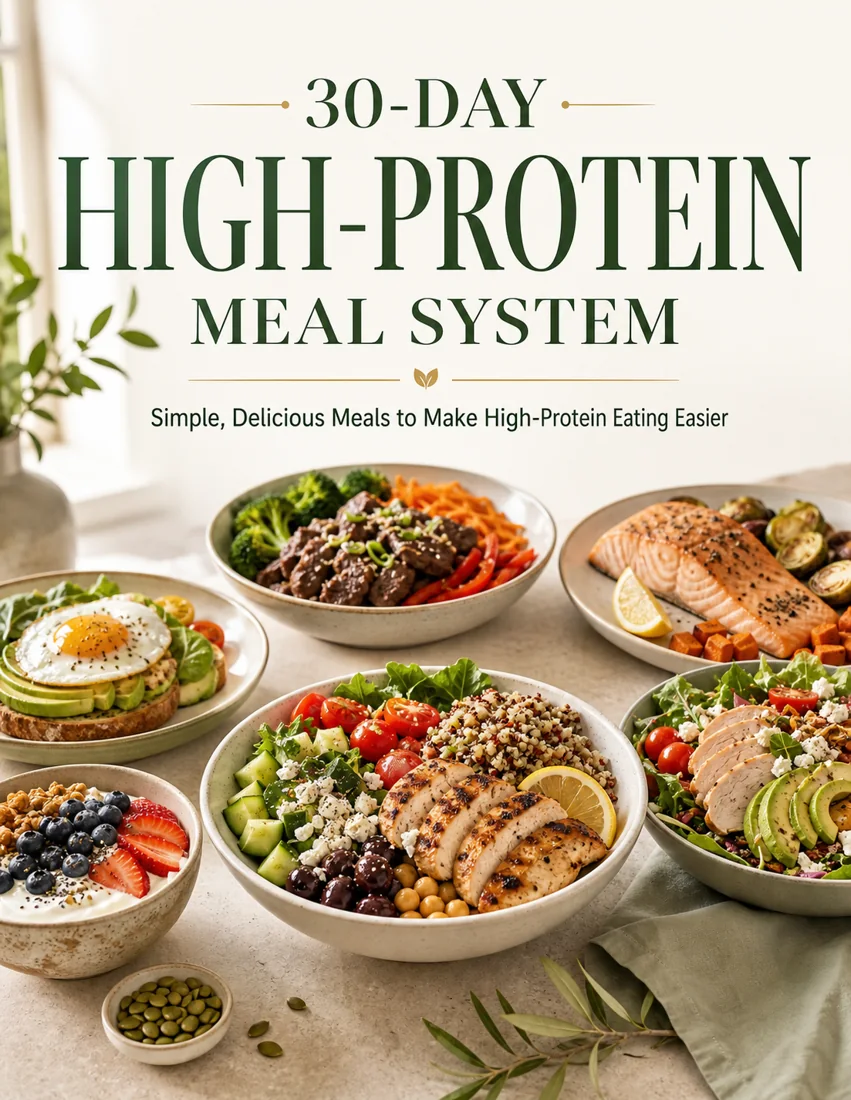
The 30-Day High-Protein Meal System gives you a full month of planned breakfasts, lunches, dinners and snacks—including high-protein meal-prep recipes with big flavor and simple steps.
Here’s exactly how to prep a week of GLP-1 friendly lunches and dinners that actually support your goals — no complicated recipes, just simple, nutrient-dense food.
Why This Approach Works So Well 🎯
- Protein-first — protects lean muscle during rapid weight loss, which is the biggest nutrition priority on a GLP-1.
- Small but mighty portions — since your appetite is lower, every meal is nutrient-dense instead of bulky.
- Gentle on your stomach — lean proteins and cooked veggies are easier to tolerate when nausea hits.
- Fiber and hydration built in — helps with the constipation that GLP-1 meds commonly cause.
Built for a smaller appetite ✨
On a GLP-1, you fill up fast, so this plan front-loads protein and fiber so a few bites still leave you nourished (not just full).
Simple, repeatable, real food ⚡
No exotic ingredients or all-day cooking — just batch-cooked proteins and veggies you can mix and match all week.
What to Keep Stocked 🛒
The whole plan runs on a handful of GLP-1 friendly staples. Lean proteins are the backbone, high-fiber carbs and non-starchy veggies round things out, and you keep rich, greasy, and heavily fried foods to a minimum since they tend to worsen nausea.
Lean proteins:
- Chicken breast, ground turkey, lean beef
- Salmon, cod, shrimp, canned tuna
- Eggs, Greek yogurt, cottage cheese
- Tofu, edamame, and a good protein powder
High-fiber carbs (smaller portions):
- Quinoa, oats, lentils, beans
- Sweet potato, berries
Non-starchy veggies (cooked = gentler):
- Zucchini, spinach, green beans, carrots, bell peppers
Healthy fats (moderate):
- Avocado, olive oil, a small handful of nuts
Hydration:
- Water, low-sodium broth, and electrolytes — aim to sip all day
How to Meal Prep for GLP-1 👩🍳
The strategy is simple: batch-cook a few proteins and veggies, then assemble small, protein-forward plates all week.
- Batch two proteins. Cook a big batch of two lean proteins (say chicken breast and ground turkey) to 165°F, or bake salmon to 145°F. Having protein ready is what makes protein-first eating effortless.
- Roast a big tray of veggies. Toss zucchini, green beans, carrots, and peppers with a little olive oil and roast until tender — cooked veggies are gentler on a sensitive stomach than raw.
- Cook one high-fiber carb. Make a pot of quinoa or lentils for the week. You’ll use small portions, so a little goes a long way.
- Prep grab-and-go protein snacks. Portion Greek yogurt, cottage cheese, hard-boiled eggs, or edamame so there’s always an easy protein bite when your appetite is low.
- Assemble in small portions. Build each meal protein-first (about half the plate), then add veggies and a small scoop of carbs. Start with less than you think you need — you can always eat more.
- Store and rotate. Portion meals into containers and keep the plan flexible, so you can eat what sounds tolerable that day rather than forcing a set meal.
Your 7-Day GLP-1 Meal Prep Plan 📅
Each day is protein-forward with fiber and gentle veggies. Portions are smaller by design — listen to your appetite.
Day 1 — Breakfast: Greek yogurt with berries and chia. Lunch: grilled chicken, quinoa, roasted veggies. Dinner: baked salmon, green beans, a small sweet potato. Snack: cottage cheese.
Day 2 — Breakfast: egg and veggie muffins. Lunch: turkey and hummus bowl with cucumber. Dinner: chicken and veggie stir-fry with a small scoop of rice. Snack: protein shake.
Day 3 — Breakfast: high-protein oats. Lunch: tuna and chickpea salad. Dinner: lean beef and veggie skillet. Snack: edamame.
Day 4 — Breakfast: cottage cheese with fruit. Lunch: chicken and veggie soup. Dinner: baked cod, zucchini, quinoa. Snack: Greek yogurt.
Day 5 — Breakfast: protein smoothie (yogurt, spinach, berries, protein powder). Lunch: shrimp and veggie bowl. Dinner: turkey meatballs with marinara over zucchini noodles. Snack: hard-boiled eggs.
Day 6 — Breakfast: scrambled eggs with spinach. Lunch: salmon salad. Dinner: mild chicken and lentil curry. Snack: cottage cheese with berries.
Day 7 — Breakfast: high-protein overnight oats. Lunch: a “leftovers bowl” from the week. Dinner: tofu or chicken stir-fry. Snack: protein shake.
Pro Tips for Success 💡
Hit your protein target first at every meal, before the carbs or veggies. On a GLP-1 you’ll fill up quickly, and if you eat the protein first, you protect your muscle even on the days you can only manage a few bites (this is the single most important habit).
Eat slowly and stop at the first sign of fullness. GLP-1 meds slow how fast your stomach empties, so eating too fast is the fastest route to nausea. Put the fork down between bites and give the fullness signal time to catch up.
Keep meals lean and lower-fat. Rich, greasy, and fried foods sit heavily and often trigger nausea on these medications, so favor grilled, baked, and roasted preparations over anything deep-fried or creamy.
Prioritize fiber and water to stay regular. Constipation is one of the most common GLP-1 complaints, so lean on beans, lentils, berries, and veggies, and sip water consistently throughout the day rather than chugging it at meals.
Have easy protein on hand for low-appetite days. Some days a full meal feels like too much — that’s when a protein shake, Greek yogurt, or a couple of hard-boiled eggs keeps your protein up without overwhelming you.
Managing Common GLP-1 Side Effects ⚠️
Nausea after eating. This usually means the portion was too big or too rich. Shrink your portions, slow down, and stick to bland, lean foods on rough days — crackers, broth, plain chicken, and rice are easier to tolerate. Always discuss persistent nausea with your healthcare provider.
Constipation. Low food volume plus dehydration is the usual cause. Increase fiber gradually with beans, berries, and cooked veggies, and make sure you’re drinking enough water throughout the day.
Low appetite and skipped protein. When nothing sounds good, liquid protein is your friend. A shake or a yogurt smoothie delivers 20–30g of protein without the effort of a full plate, which helps protect your muscle.
Storage & Meal Prep Tips ❄️
Store cooked proteins and prepped meals in the fridge for up to 4 days, following USDA FoodSafety.gov guidance (cooked chicken, beef, and fish are safe 3–4 days at 40°F or below). Batch-cook on one or two days and keep components separate so you can assemble small, appealing plates based on how you feel that day.
Freeze extra cooked protein and soups for up to 2–3 months — they’re perfect for low-appetite days when you don’t want to cook. Thaw overnight in the fridge and reheat gently. Keep single-serve protein snacks (yogurt, cottage cheese, hard-boiled eggs) stocked so there’s always an easy option within reach.
Ways to Customize This Plan 🔄
Make it vegetarian by leaning on tofu, edamame, Greek yogurt, cottage cheese, lentils, beans, and eggs for protein — plant proteins still hit the muscle-protecting goal when you combine them. Make it dairy-free by swapping in plant-based yogurt, tofu, and extra lean meats or fish.
Scale the portions to your appetite and your provider’s guidance — some people do well with three small meals, others with five mini-meals. For more high-protein meal ideas to slot into this plan, try my chicken rice bowl meal prep or my salmon rice bowl meal prep.
Adjust the spice and richness to what your stomach tolerates that week — mild and simple during rough patches, more flavorful when you’re feeling good.
High-Protein Snack Ideas 🍽️
When a full meal is too much, these small protein bites keep you nourished: Greek yogurt or cottage cheese with berries, a couple of hard-boiled eggs, edamame, a protein shake, or a cheese stick with a few crackers. For a fun, snack-style lunch that fits this plan, see my adult lunchable bento box. To drink, water, low-sodium broth, and electrolyte drinks help you stay hydrated when you’re eating less.
Common Questions ❓
Q: How much protein should I eat on a GLP-1?
A: Many providers suggest prioritizing protein at every meal to protect muscle during weight loss — often in the range of 25–35g per meal. Your exact target depends on your body and goals, so confirm the right amount with your healthcare provider.
Q: Why do I feel so full after just a few bites?
A: GLP-1 medications slow how fast your stomach empties and reduce appetite, so you fill up quickly and stay full longer. That’s exactly why every bite should be protein-forward and nutrient-dense.
Q: Can I meal prep the whole week at once?
A: Yes — batch-cook proteins, veggies, and one carb, then assemble small plates daily. Keep components separate so you can build a meal that sounds tolerable each day, which matters when your appetite shifts.
Q: What foods should I limit on a GLP-1?
A: Greasy, fried, and very rich or creamy foods tend to worsen nausea, and large portions can too. Carbonated drinks and heavy sugar can add to bloating and discomfort for some people.
Q: Will this plan work for me specifically?
A: It’s a general framework built on protein-first, nutrient-dense eating. Everyone’s needs, tolerances, and calorie targets differ on these medications, so use it as a starting point and personalize it with your healthcare provider.
Nutrition Information 📊
Here’s an approximate sample day on this plan (three small meals plus a protein snack), calculated from USDA food-composition values using Atwater factors. Your ideal calories and macros will differ — this is a target range, not a prescription. (Estimated — verify and personalize before relying on it.)
- Calories: ~1,240 kcal per day (estimated)
- Protein: ~120g (estimated)
- Carbohydrates: ~100g (estimated)
- Dietary Fiber: ~30g (estimated)
- Total Sugars: ~35g (estimated — mostly from fruit and dairy)
- Total Fat: ~40g (estimated)
- Saturated Fat: ~10g (estimated)
- Sodium: ~1,800mg (estimated — choose low-sodium options to reduce)
- Cholesterol: ~350mg (estimated)
Macro Breakdown (% of calories)
- Protein: ~39%
- Carbs: ~32%
- Fat: ~29%
Math check: (120×4) + (100×4) + (40×9) = 480 + 400 + 360 = 1,240 ✓
Diet Tags
This plan is: High-Protein, High-Fiber, GLP-1 Friendly. Easily made Gluten-Free or Dairy-Free with simple swaps.
Allergens
Varies by meal. Common across the plan: Milk (yogurt, cottage cheese, cheese), Fish (salmon, cod, tuna), Eggs, Shellfish (shrimp), Soy (tofu, edamame). Check each meal against your own allergies.
Nutrition Notes
This sample day is intentionally protein-forward (about 120g) and high in fiber (about 30g) to protect muscle and support digestion on a GLP-1. Calorie needs vary widely person to person, so treat these numbers as a flexible target and adjust with your provider. Values are estimates.
The Bottom Line 🎯
Eating well on a GLP-1 comes down to one shift: because you’re eating less, every bite has to work harder.
Lead with protein to protect your muscle, add fiber and water to keep things moving, keep meals lean and gentle to avoid nausea, and batch-prep so nourishing food is always within reach — even on the days your appetite disappears.
Do that consistently and this plan supports your results while keeping you feeling your best. If you want the entire thing done for you — a full month of GLP-1 friendly, high-protein meals with grocery lists and portions — my GLP-1 Meal Plan takes the guesswork out completely.
GLP-1 Meal Plan — protein-first meals built for a smaller appetite. Inside: a month of GLP-1 friendly recipes, grocery lists, protein targets, and prep schedules. Get it here.
Nutrition is an estimate and varies by brand and portion. This is general information, not medical advice — talk to your doctor or a registered dietitian before making changes to your diet or medication.
Stop figuring out your protein meals one day at a time
This recipe solves today. The 30-Day High-Protein Meal System solves the whole month—planned, shopped and prepped for you.
- ✓ 30 days of high-protein breakfasts, lunches & dinners
- ✓ Weekly grocery lists & meal-prep guidance
- ✓ High-protein snacks and treats with big flavor
- ✓ Simple ingredients, clear steps, built-in variety


Pingback: Meal Planning on Zepbound: The Tirzepatide Weekly Guide
Pingback: Ozempic Diet Meal Plan: The Honest Weekly Framework
Pingback: Wegovy Meal Plan: The Honest Weekly Framework
Pingback: Mounjaro Meal Plans Dinner: The Weeknight Framework
Pingback: Wegovy 7-Day Meal Plan: The Honest Day-by-Day Menu