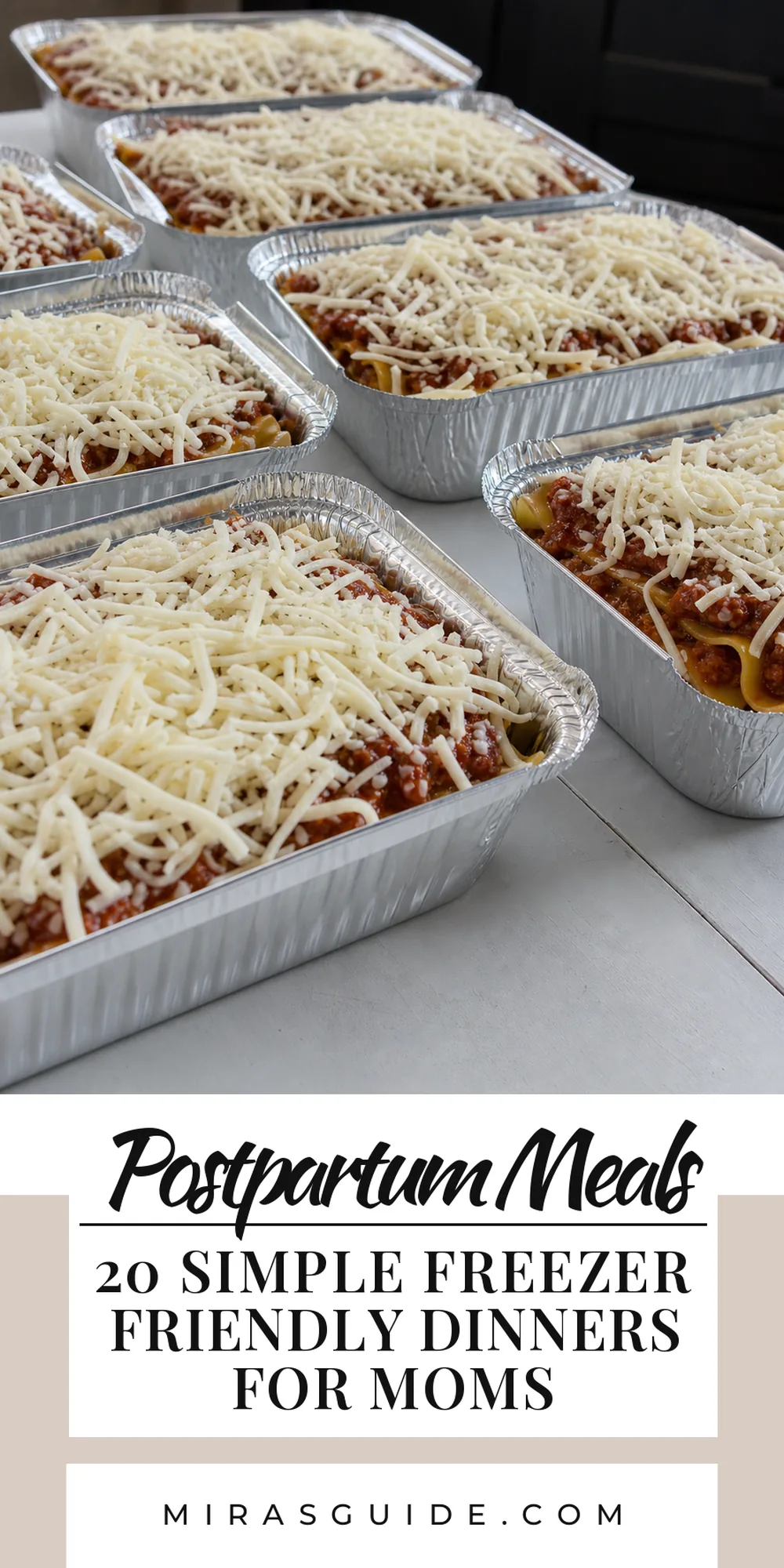
Postpartum freezer meals are dinners built for the weeks after birth, when cooking stops being a task and becomes an obstacle. These twenty are chosen for a specific set of constraints: soft textures that are easy to eat when you’re sore and tired, iron-rich ingredients for recovery, mild seasoning, and a reheat that takes two minutes or less because someone else will be doing it.
Why These Twenty 🍼
- Iron and protein first — the two nutrients most depleted and most needed after birth and blood loss.
- Soft, warm, easy textures — no crusty bread, no tough meat, nothing that requires chewing effort.
- Mild by default — seasoning that won’t pass through to a sensitive newborn.
- Helper-proof instructions — anyone can reheat these correctly with a marker note on the bag.
- One-handed friendly — bowls, mugs, and handhelds rather than plated dinners.
- Twenty meals = about four weeks — the realistic length of the hardest stretch.
Recipe at a Glance
Assembly: 4 hours for 20 meals
Yield: 20 dinners, 2–4 servings each
Freezer life: 3 months for best quality
Best made: Weeks 35–37 of pregnancy
Difficulty: Easy
Method: Freezer bag and tray assembly
The Recovery Framework 🛒
Recovery is not the week to cook.
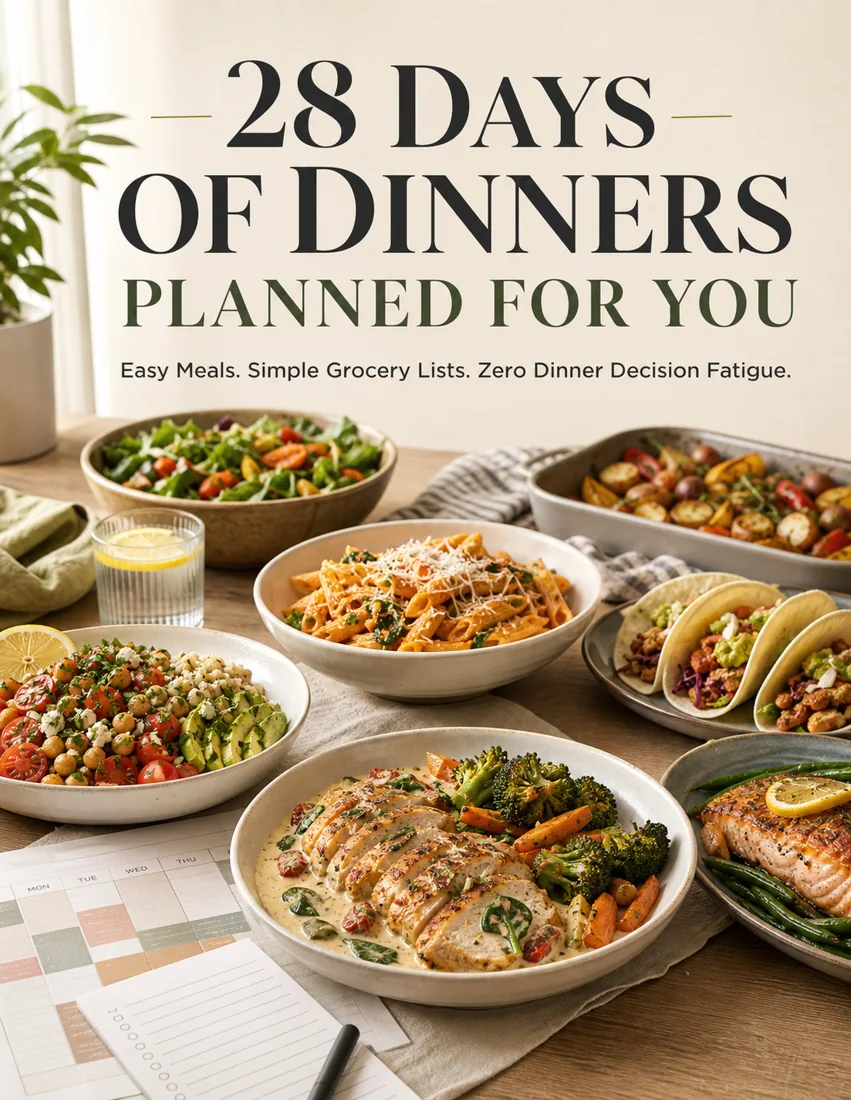
28 Days of Dinners Planned for You hands you a month of weeknight dinners with the shopping list already written—no more 5pm decisions.
Iron is the priority nutrient
Blood loss during birth depletes iron stores, and iron is what rebuilds them. The most absorbable form — heme iron — comes from red meat, so several meals here use beef, and the rest pair plant iron (lentils, beans, spinach) with vitamin C from tomatoes or citrus, which substantially increases absorption. That pairing isn’t a nutritional footnote, it’s a real effect: the same lentils eaten with a tomato-based sauce deliver meaningfully more usable iron than lentils alone.
Protein at every meal
Aim for 20g+ per serving. It supports tissue repair and, if you’re nursing, it’s a meaningful part of what your body is using daily. Every meal below hits that target.
Soft textures, minimal chewing
After birth, particularly after a caesarean, sitting upright at a table for a full meal can be uncomfortable. Soups, stews, mashed bases, and soft casseroles get eaten when a steak wouldn’t. That’s not a compromise — it’s the correct engineering for the situation.
Keep it mild
Strong spice, heavy garlic, and large amounts of cruciferous vegetables can unsettle some babies through breast milk. Freeze everything mild and let whoever is eating add heat at the table. It’s easy to add; it’s impossible to remove.
Freeze in single portions, not just family bags. Make half of these in single-serving containers. Eating happens in shifts, and a single portion that reheats in ninety seconds is the one that actually gets eaten at 3pm.
Add fat at serving time. A spoon of olive oil, a knob of butter, or a scoop of avocado turns a modest portion into an adequate one. Fat is calorie-dense and easy to add to a hot bowl with one hand.
Write the reheat instructions in marker. Whoever is helping you — partner, parent, friend — needs “microwave 2 min, stir, 1 min” on the bag, not a recipe.
Equipment
- Freezer bags, quart and gallon
- Wide-mouth glass jars for soup portions
- Disposable foil pans for casseroles
- Muffin tin for egg cups
- Marker and masking tape
- Two sheet pans for flat-freezing
The 20 Meals 👩🍳
Beef — iron-rich (5 meals)
- Beef and barley stew — chunks of chuck, carrots, celery, barley. Soft, warm, iron-dense. Reheats perfectly.
- Shepherd’s pie — ground beef and vegetables under mashed potato. Freeze in ramekins for single portions.
- Beef chili — mild chili with kidney beans; the tomato base boosts iron absorption. Top with cheese and avocado.
- Beef and vegetable soup — a thin, drinkable soup in mug portions for the days when nothing solid appeals.
- Meatballs and sauce — soft meatballs in a mild tomato sauce, served over pasta cooked fresh or over polenta.
Chicken — lean protein (5 meals)
- Chicken and rice casserole — creamy, soft, mild. Freezes in squares and reheats in 2 minutes.
- Chicken noodle soup — freeze the broth and chicken; add noodles fresh so they don’t go soft.
- Chicken and vegetable stew — mild, thick, easy to eat from a bowl.
- Shredded chicken tacos — mild salsa chicken; serve in soft tortillas (not crunchy) for one-handed eating.
- Chicken pot pie filling — freeze the filling, top with a biscuit or puff pastry on the day if you have help, or just eat it as a stew.
Plant protein — iron plus fiber (5 meals)
- Lentil soup — high in iron and fiber, freezes beautifully, and the flavor actually improves.
- Black bean and sweet potato chili — mild, filling, plant iron paired with tomato for absorption.
- Split pea soup — thick, warm, and drinkable from a mug. Very high in protein for the cost.
- Butternut squash and red lentil soup — smooth, sweet, gentle on the stomach, very easy to eat.
- Chickpea and spinach curry — mild curry; the spinach adds iron and the coconut milk adds fat.
Soft, easy, handheld (5 meals)
- Black bean and cheese burritos — wrap individually, freeze, microwave 90 seconds. The single most useful item on this list.
- Breakfast burritos — eggs, cheese, potato. Freeze individually; these work as dinner too.
- Baked ziti — soft pasta, mild tomato sauce, cheese. Freezes in squares, reheats fast.
- Mashed potato and vegetable bake — soft, comforting, mild.
- Egg and vegetable muffins — protein in a handheld form; reheat two in 45 seconds.
Assembly notes
Freeze stews and soups in a mix of single jars and family bags. Flatten burritos and muffins individually on a sheet pan for two hours before bagging — otherwise they fuse into one block. Label everything with the meal name, the reheat time, and the date, in large letters.
Why the Technique Works
Postpartum freezer cooking fails most often for a packaging reason rather than a recipe reason. A four-serving bag of stew is technically four meals, but it assumes a sit-down dinner at a table with plates — which is not what the first month looks like. The realistic eating pattern is fragmented: a window of a few minutes, often one-handed, often interrupted. Food only gets eaten if the effort barrier is near zero, and the biggest determinant of that barrier is portion size and container shape. A shallow single portion in a wide container heats through in about 90 seconds; the same food frozen as a dense quart block takes six to eight minutes with stirring and still heats unevenly. That’s why the guidance here is about packaging as much as cooking — same recipes, portioned and shaped for the way the weeks actually go.
Cooking Tips & Expert Advice
- Cook at 35–37 weeks. Early enough to have energy, late enough that the food is good when it’s needed.
- Pair plant iron with vitamin C. Lentils or beans with tomato, citrus, or peppers meaningfully improves how much iron you actually absorb.
- Keep everything mild. Add spice at the table, never in the bag.
- Freeze burritos and muffins individually. Sheet pan for two hours, then bag.
- Write reheat instructions large. “Microwave 2 min, stir, 1 min” on every bag.
- Make a freezer inventory sheet taped to the door so helpers can find meals without reorganizing everything.
- Accept help as specific food. If someone offers, hand them one recipe from this list and a portion size.
- Keep a no-cook shelf — nuts, dried fruit, crackers, and protein bars cover the gaps when even the microwave feels like too much.
- Double the soups. They’re the most forgiving, the easiest to eat one-handed, and the least likely to go uneaten.
Variations & Substitutions
- Vegetarian: keep meals 11–15 and the burritos; swap the beef dishes for extra bean and lentil meals.
- Dairy-free: skip the cheese toppings and use coconut milk in the creamy casseroles.
- Gluten-free: use corn tortillas instead of flour, GF pasta in the ziti, and swap barley for rice in the stew.
- Caesarean recovery: lean harder on soups and casseroles — softer textures and less time sitting upright.
- Small freezer: prioritize burritos and soups; they deliver the most meals per cubic foot.
- Someone else cooking: this whole list works handed to a partner or family member with the reheat notes attached.
Serving Suggestions
Serve in bowls and mugs rather than on plates. Keep bread, pre-washed salad, and shredded cheese in the house — those three items turn any frozen portion into a complete meal in under a minute. Add a spoon of olive oil or a knob of butter to hot bowls at serving time.
Storage, Freezing & Reheating
Freeze flat for up to 3 months at 0°F for quality. Thaw overnight in the refrigerator for the best texture, or reheat from frozen — single portions take 2–3 minutes with a stir halfway. Heat until steaming throughout, 165°F for anything containing meat. Leftovers keep 4 days refrigerated. Never reheat the same portion twice, and don’t leave a reheated bowl sitting out for hours; it’s easy to lose track of food when you’re being interrupted.
Troubleshooting
Why does everything taste flat? Freezing mutes seasoning. Season generously when cooking and add salt, acid, or fat at the table.
Why are my burritos soggy? They were wrapped warm. Cool fillings completely before rolling, and freeze individually before bagging.
Why did my potatoes turn grainy? Raw potatoes don’t freeze well — their cell walls fracture and release water. Use them in dishes with plenty of sauce, or cook and mash them first.
Why is my soup watery after thawing? Starches absorbed liquid in the freezer. Add a splash of broth when reheating.
Why won’t my casserole reheat evenly? It’s frozen as a dense block. Freeze in thinner portions or individual squares so it heats through quickly.
❓ FAQ
How many meals do I actually need? Twenty dinners plus snacks covers about four weeks for most people, which is the hardest stretch. Some families double it; some find fifteen enough.
When should I make these? Around 35–37 weeks. Doing it earlier risks the food sitting longer than ideal; doing it after birth is genuinely unrealistic.
Can family and friends help? Yes — this is one of the best ways to accept help. Send a specific recipe and portion size rather than accepting a vague offer, and ask them to bring it in a labeled freezer bag.
Should I avoid spicy food while nursing? Many people keep meals mild in the early weeks because some babies are sensitive to what passes through milk. Freezing everything mild and adding heat at the table is the safe approach.
What if I don’t have freezer space? Focus on burritos, egg muffins, and soups in jars — they’re the most space-efficient and the most likely to actually get eaten.
Is this medical advice? No. This is general food guidance for a recovery period. Talk to your own healthcare provider about your specific nutritional needs, especially if you’re nursing, anemic, or recovering from a caesarean.
Nutrition, Allergens & Dietary
Most meals here land between 400 and 600 calories per serving with 20–30g of protein, plus the fat added at serving time. Allergens vary by recipe: dairy appears in the casseroles, ziti, and burritos; gluten in the pasta, barley, and flour tortillas; soy in any dish seasoned with soy sauce. Several options are naturally gluten-free or dairy-free with simple swaps. This is general food guidance, not medical or lactation advice — check with your healthcare provider about your specific needs. Nutrition figures are estimates.
Final Thoughts
The goal isn’t a perfect freezer — it’s a freezer where the food actually gets eaten. Soups in mugs, burritos that reheat in ninety seconds, and mild, soft dinners in single portions will carry you further than a shelf of impressive casseroles that require a table and two hands. Build for the way the weeks actually go.
Once these run out, what’s for dinner next month?
When these twenty are gone, 28 Days of Dinners means no one has to think about dinner.
- ✓ 28 weeknight dinners, already chosen
- ✓ Shopping lists done for you
- ✓ Simple, gentle meals
- ✓ Nothing to decide at dinner time