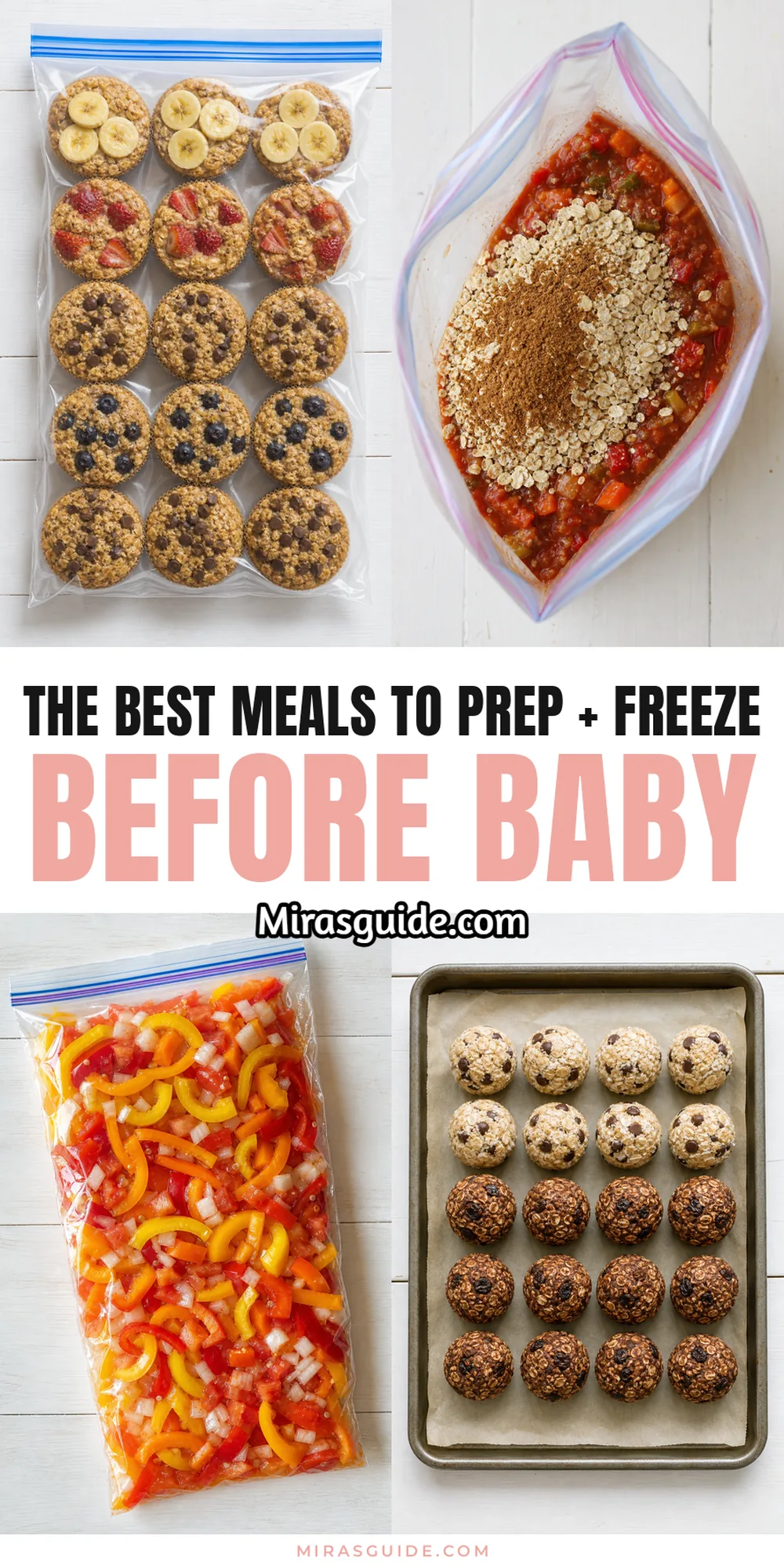
Freezer meal prep for new moms is a different job from regular freezer cooking. It isn’t about efficiency or saving money — it’s about making food that can be eaten one-handed, at room temperature, in four-minute windows, by someone who is exhausted and possibly holding a baby. That changes what you make: nothing that requires a knife, nothing that needs to be plated, and nothing that’s ruined by being reheated twice.
Why This Kind of Prep Is Different 👶
- One-handed food, not plated food — wraps, muffins, and handheld items count more than elaborate dinners.
- Snacks matter as much as meals — eating happens in fragments, not at a table.
- Calorie-dense beats low-calorie — this is not the moment for a diet.
- Someone else must be able to heat it — a partner, a parent, or a friend with no kitchen context.
- Nothing fussy — no garnishes, no plating, no last-minute steps.
- It should be made before baby arrives — after is genuinely too late for a full batch day.
Recipe at a Glance
Assembly: 4–5 hours (split across 2 days if easier)
Yield: 10 dinners + 6 snack batches + 8 breakfasts
Freezer life: 3 months for best quality
Difficulty: Easy — long, not hard
Method: Freezer bags, muffin trays, and jars
The Four Rules for New-Mom Freezer Food 🛒
You’ll want dinner handled before the baby comes.
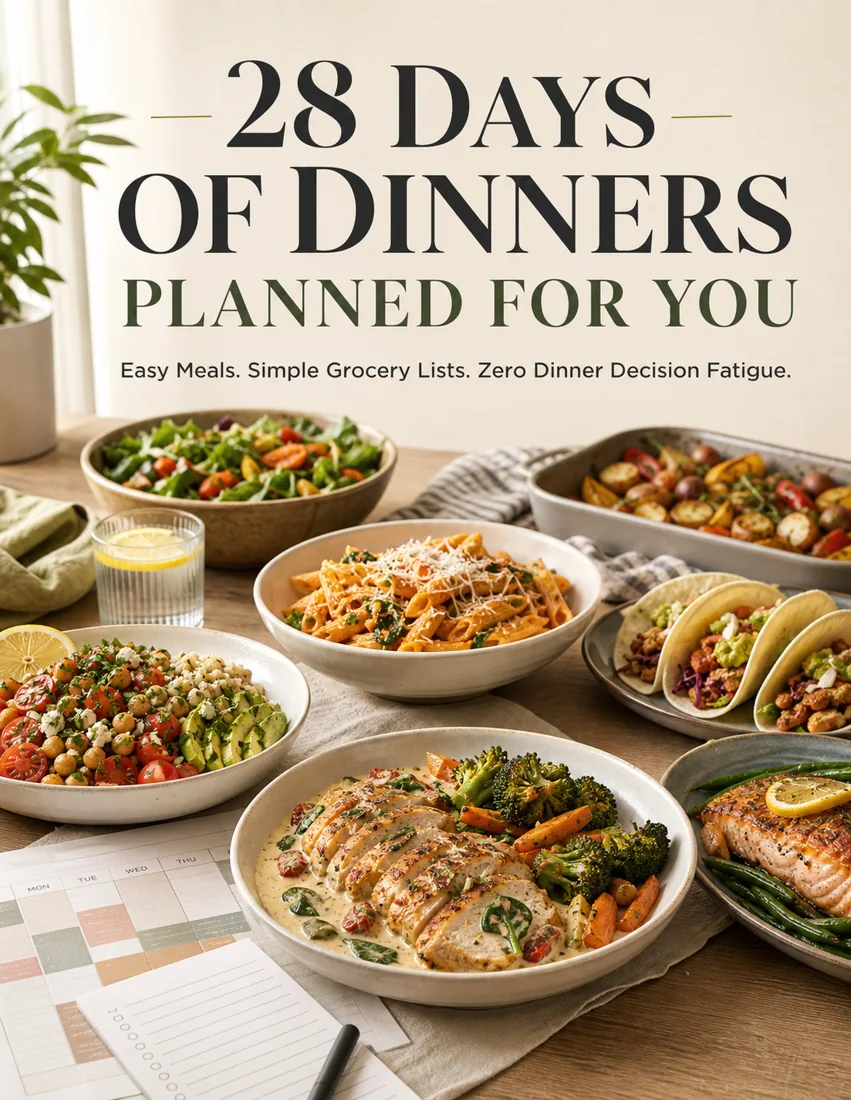
28 Days of Dinners Planned for You hands you a month of weeknight dinners with the shopping list already written—no more 5pm decisions.
1. Everything must be edible with one hand
If it needs a fork and knife at a table, it’s the wrong shape. Prioritize: handheld wraps and burritos, muffins, energy balls, egg cups, and thick soups in a mug. Anything saucy should be served over something with structure — rice, bread, or a tortilla — so it can be eaten from a bowl balanced on a knee.
2. Freeze in smaller portions than you think
A four-serving bag assumes a sit-down family dinner. The reality of the first weeks is eating in shifts, often cold, often standing. Make half the meals in single or double portions that can be reheated in a mug or a small bowl, and keep some family-size bags for the days when someone else is cooking and you’re both actually at the table.
3. Everything must survive a 90-second microwave reheat
Speed matters more than perfection. Foods that reheat well fast: soups, stews, chili, curries, pasta bakes, muffins, egg cups, and burritos. Foods that don’t: anything fried, anything with a crisp crust, and anything that needs to be assembled to work.
4. Label for someone who isn’t you
Write the meal name, the reheat instructions, and the date in large letters. Whoever is heating your dinner at 2am should not have to think or guess.
Energy density beats volume. New mothers often can’t eat a large meal, so the food that works best is nutrient- and calorie-dense in a small package: nut butters, oats, eggs, olive oil, full-fat dairy, avocado. A small bowl of stew with a spoon of olive oil stirred in is more useful than a large bowl of broth.
Protein and iron at breakfast matter most. The morning is usually the hardest window — hunger arrives while both hands are full. Egg cups, oat bars, and overnight oats with nut butter and seeds cover this better than toast.
Nursing-safe flavors. The first weeks are not the time to experiment with intense spice or large amounts of cruciferous vegetables if you haven’t been eating them — some babies are sensitive to what comes through milk. Keep the base meals mild, and let whoever is eating them add heat at the table.
Hydration is genuinely part of the meal plan. Freeze soup in mugs and single portions so one-handed drinking food is always available. A mug of thick soup is often the only thing that gets eaten in a rough afternoon.
Equipment
- Freezer bags in two sizes — gallon for family meals, quart for single portions
- Muffin tins — for egg cups and oat cups, and later for portioned storage
- Wide-mouth glass jars — for soup in mug portions
- Parchment paper — for freezing bars and balls separately
- Marker and masking tape — write big; write reheat times
The Prep List 👩🍳
10 dinners (make in a mix of single and family portions)
- Chicken and vegetable soup — freeze in mug portions and family bags. Reheats in 2 minutes.
- Beef and barley stew — calorie-dense, iron-rich, reheats well.
- Turkey chili — freeze in single bowls; top with cheese and avocado at eating time.
- Lentil soup — cheap, filling, high in iron and fiber.
- Chicken and rice casserole — soft texture, mild, easy to eat from a bowl.
- Baked ziti or pasta bake — freezes in squares, reheats fast, filling.
- Shepherd’s pie — freezes in individual ramekins for single-portion dinners.
- Black bean and sweet potato burritos — the single best one-handed dinner on this list. Wrap individually, freeze, microwave 90 seconds.
- Slow cooker pulled chicken — serve in buns or over rice; freeze in single portions.
- Butternut squash soup — thick, warm, drinkable, freezes beautifully.
6 snack batches
- Peanut butter oat energy balls — the highest-value snack here. No plate, no fork, eaten while holding a baby.
- Lactation-style oatmeal cookies — oats, flax, brewer’s yeast if you use it. Make them dense and chewy, not cakey.
- Banana oat muffins — freeze individually, microwave 30 seconds.
- Trail mix — portioned into small bags placed wherever you feed the baby.
- Hard-boiled eggs — freeze poorly, so make these fresh weekly instead; note them as a fridge item.
- No-bake oat bars — cut into squares, freeze with parchment between.
8 breakfasts
- Egg muffins (a batch of 12) — reheat two in 45 seconds.
- Overnight oats, 4 jars — not frozen; made fresh weekly and eaten cold.
- Breakfast burritos (8) — eggs, cheese, potato, wrapped and frozen individually.
- Baked oatmeal squares — cut into 8, freeze with parchment between.
- Smoothie packs (8) — banana, berries, oats, nut butter, spinach. Blend with milk.
- Protein pancakes — cook, cool, freeze in stacks of 3 with parchment between.
- Oat and nut butter bars — same batch as the snacks, portioned for mornings.
- Freezer breakfast sandwiches — egg, cheese, and a lean sausage patty on an English muffin; microwave 90 seconds.
Why the Technique Works
The reason standard freezer meal advice fails new parents is that it optimizes for the wrong thing. Batch cooking normally targets efficiency — big bags, family portions, minimal packaging. But the first weeks after birth are characterized by fragmentation: short windows, one free hand, unpredictable interruptions. Food that takes eight minutes to reheat and requires two hands and a table simply doesn’t get eaten, no matter how good it is. The fix is packaging rather than cooking: the same chili that’s useless in a four-serving bag works perfectly in eight single-serve containers that reheat in 90 seconds. Heat transfer is the other factor — a small portion in a shallow container reaches safe and edible temperature far faster than a dense block, which matters when reheating speed determines whether a meal happens at all.
Cooking Tips & Expert Advice
- Cook before baby arrives. Week 36–37 is the practical window. After is genuinely too late for a batch day.
- Freeze burritos and muffins individually first. Two hours on a sheet pan, then bag them. Otherwise you get one solid block.
- Write reheat instructions on the bag in marker. “Microwave 2 min, stir, 1 min more.” Whoever is helping you will not read a recipe.
- Make half of everything single-portion. Sit-down meals are the exception in the first month, not the rule.
- Keep a “no-cook” shelf. Nuts, dried fruit, crackers, protein bars, and apples need no reheating at all and cover the gaps.
- Add fat at eating time. A spoon of olive oil, a knob of butter, or a scoop of avocado turns a modest portion into a calorically adequate one.
- Accept help in the right form. If someone offers to cook, ask for a specific item from this list rather than a general “sure, anything.”
- Label an inventory sheet on the freezer door so helpers can find things without reorganizing your freezer.
Variations & Substitutions
- Vegetarian version: swap the meat dishes for lentil soup, bean chili, and black bean burritos; keep everything else.
- Dairy-free: use coconut milk in soups and skip cheese in casseroles; most of these adapt easily.
- Gluten-free: use GF pasta, GF oats, and corn tortillas in place of flour tortillas.
- Small freezer: prioritize burritos, egg muffins, and energy balls — these deliver the most meals per cubic foot of space.
- Partner-friendly prep: if someone else is doing the cooking, give them this list and the reheat notes. It’s designed so a non-cook can execute it.
- No freezer space at all: concentrate on the six snack batches and eight breakfasts, which need far less room than dinner bags.
Serving Suggestions
Serve everything in bowls and mugs rather than on plates. Keep a bag of pre-washed salad and a loaf of good bread in the house — those two items turn any frozen portion into a full meal. Sit down when you can, but eat standing up without guilt when you can’t.
Storage, Freezing & Reheating
Freeze meals flat for up to 3 months at 0°F for quality. Burritos, muffins, and bars freeze 2–3 months once individually frozen and bagged. Thaw overnight in the refrigerator for the best texture, or microwave from frozen — most single portions take 2–3 minutes total, stirred once halfway. Reheat until steaming hot, 165°F for anything with meat. Leftovers keep 4 days refrigerated. Never reheat the same portion twice.
Troubleshooting
Why does everything taste bland after freezing? Freezing dulls seasoning noticeably. Season more generously when cooking, and add salt, acid, or fat at the table.
Why did my burritos turn soggy? They were wrapped while warm and sealed with steam inside. Cool the filling completely before wrapping, and wrap tightly in foil or plastic after they’re frozen individually.
Why did my muffins and bars fuse together? They were bagged before being frozen individually. Two hours on a sheet pan first.
Why is my soup watery after thawing? Starches in it absorbed liquid in the freezer. Add a splash of broth or milk when reheating, or thicken with a spoon of instant mashed potato flakes.
Why won’t my egg muffins reheat well? They were overcooked before freezing. Bake them just until set, and they’ll reheat without turning rubbery.
❓ FAQ
When should I start this prep? Around 36–37 weeks is the sweet spot — early enough that you have energy, late enough that the food will be fresh when you need it.
How much food is actually enough? For most people, three to four weeks of dinners plus snacks covers the hardest stretch. Twenty single-portion dinners and two weeks of breakfasts is a realistic target.
What if I don’t have a big freezer? Prioritize burritos, egg muffins, and energy balls — they store densely and cover the moments when food is hardest to manage.
Can I ask other people to make these? Yes, and it’s one of the best ways to accept help. Send them a specific recipe and the portion size rather than a general offer.
Should I avoid spicy food? Keep the freezer meals mild by default. Some babies are sensitive to what comes through breast milk, and you can always add heat at the table — you can’t take it out.
Can I do this in one day? It’s about 4–5 hours of hands-on work. Splitting it across two days is easier, and recruiting one helper cuts it nearly in half.
Nutrition, Allergens & Dietary
These meals are intentionally calorie-dense: most dinners land between 400 and 600 calories per serving with 20–30g of protein, plus the fat you add at serving time. Allergens vary by recipe — dairy appears in the casseroles, pasta bakes, and egg dishes; gluten in pasta, bread, and wheat tortillas; nuts in the energy balls and bars; soy in the tamari-seasoned dishes. Several options are naturally gluten-free or dairy-free with simple swaps. Note that this is general food guidance for postpartum recovery, not medical or lactation advice — check with your own healthcare provider about your specific needs. Nutrition figures are estimates.
Final Thoughts
The measure of a good new-mom freezer stash isn’t how many meals it holds — it’s how many of them actually get eaten. Burritos reheat in ninety seconds. Energy balls need no plate. Soup in a mug can be drunk with one hand. Build around those three ideas and you’ll be eating real food in the weeks when cooking is impossible, which is the entire point.
Once these run out, what’s for dinner next month?
Prepping before baby is a gift to future you. When the freezer empties, 28 Days of Dinners keeps dinners handled.
- ✓ 28 weeknight dinners, already chosen
- ✓ One shopping list per week
- ✓ No 5pm decisions
- ✓ Works around a newborn schedule