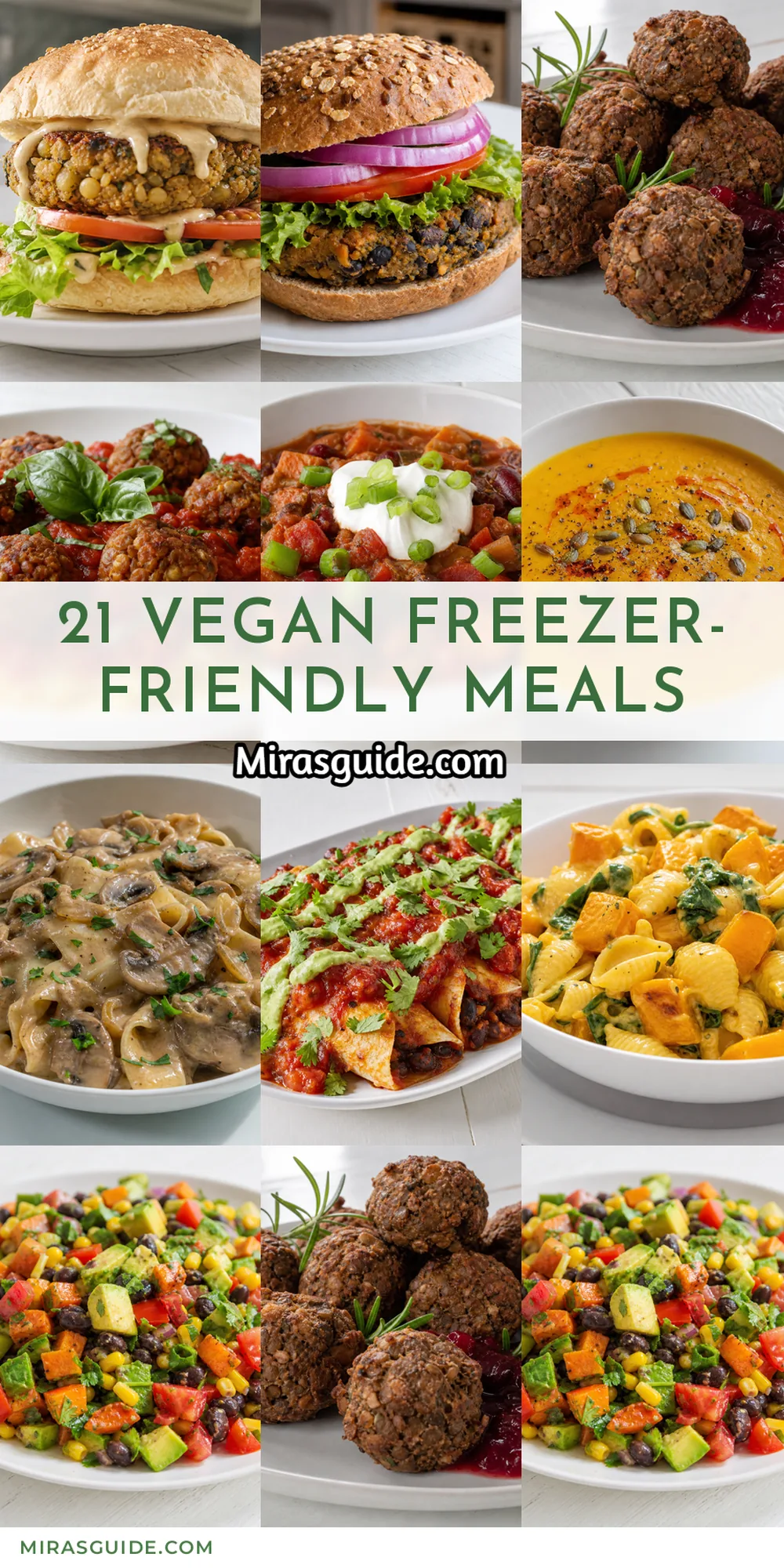
Vegan freezer meals work on a completely different logic from meat-based ones. There’s no protein to overcook and nothing to dry out, which makes them forgiving — but plant proteins absorb far more liquid and freeze differently, so the rules change. This is 21 vegan freezer-friendly recipes plus the freezing principles that keep beans creamy instead of mealy, sauces from splitting, and tofu from turning spongy.
Why Vegan Meals Freeze Beautifully 🌱
- Nothing overcooks — no meat means no window where the main ingredient dries out.
- Cheap by nature — beans, lentils, rice, and frozen vegetables cost a fraction of any protein.
- Lentils and beans actually improve — they absorb seasoning as they sit, so day-three chili tastes better than day one.
- No dairy to split — the most common freezer failure doesn’t apply here.
- Twenty-one recipes, sweet and savory — meals and snacks, all from the same batch day.
- Shelf-stable pantry backbone — most of these come from cans and dry goods, so you can stock up on sale.
Recipe at a Glance
Assembly: 3–4 hours for 21 items
Yield: 15 meals (4 servings each) + 6 snack batches
Freezer life: 3 months for best quality
Cook time: 5–6 hours on low, or 20 minutes on the stovetop
Difficulty: Easy
Method: Vegan freezer bag assembly + baked snack prep
The Three Rules That Decide Everything 🛒
Twenty-one vegan recipes, one afternoon.
28 Days of Dinners Planned for You hands you a month of weeknight dinners with the shopping list already written—no more 5pm decisions.
1. Plant proteins drink liquid — add more than you think
Beans, lentils, and rice absorb liquid as they freeze and again as they thaw. A vegan stew that looks perfectly saucy when it goes into the bag can be dry and stodgy when it comes out. The fix is to add 25–50% more liquid than a meat version would need, and to keep at least a third of the bag’s volume as sauce. Dry beans especially: if you’re using dried lentils, they’ll absorb every drop you give them.
2. Tofu must be pressed and frozen before it goes in
Freezing tofu is a technique, not a side effect. When tofu freezes, the water inside it forms ice crystals that push the protein into a spongier, more porous structure. Thawed, it becomes a sponge that soaks up marinade and sauces — which is excellent for braises and curries. But if you put unpressed tofu into a wet bag, it releases its water into the sauce and turns to slippery curds. Press it for 30 minutes, freeze it in its own bag or pre-frozen as cubes, then add it to the meal.
3. Cashew cream is your dairy, and it must be blended smooth
Soaked raw cashews blended with water make a cream that behaves like dairy cream in savory sauces. Blend for a full two minutes — until you can’t feel any grit between your fingers — or you’ll get a sandy sauce. Freeze cashew cream in the bag; it stays stable because there’s no dairy protein to break. Add it to soups and curries at the end of cooking rather than at the start.
Coconut milk is the other workhorse. Full-fat for richness, light for everyday cooking. Like cashew cream, it doesn’t split in the freezer. Use full-fat in curry and light for soups and grain bowls.
Nutritional yeast adds the savory note that vegan food misses. A tablespoon in a soup or sauce replaces the depth that Parmesan or chicken stock would give. It’s not just for cheese sauce.
Bloom your spices in oil, even for freezer meals. Ground spices are fat-soluble. Heating them briefly in oil before the liquid goes in releases flavors that water alone never extracts — and it survives freezing and reheating far better than sprinkling spices onto cold ingredients.
Equipment
- 15 freezer bags + 6 containers — bags for meals, containers for snacks
- High-speed blender — required for cashew cream
- Tofu press or two heavy plates
- Marker and masking tape
The 15 Meals 👩🍳
Bean and lentil meals (6) — cook 5–6 hours on low
- 1. Smoky black bean chili — black beans, crushed tomatoes, chipotle, smoked paprika, cumin, onion. Finish with lime.
- 2. Coconut chickpea curry — chickpeas, full-fat coconut milk, cauliflower, curry powder, ginger, spinach at the end.
- 3. Red lentil dal — red lentils, diced tomatoes, onion, garlic, ginger, garam masala, coconut milk. Blends silky on its own.
- 4. Three-bean chili — kidney, black, and pinto beans, crushed tomatoes, chili powder, corn.
- 5. White bean and kale stew — cannellini beans, kale, crushed tomatoes, rosemary, garlic.
- 6. Lentil Bolognese — brown lentils, crushed tomatoes, carrot, celery, onion, oregano, tomato paste. Meaty without meat.
Grain and vegetable meals (5) — cook 30 minutes or bake
- 7. Vegetable curry with cashew cream — sweet potato, chickpeas, coconut milk, curry powder, cashew cream stirred in at the end.
- 8. Mushroom stroganoff — mushrooms, onion, cashew cream, Dijon, paprika, vegetable broth. Serve over noodles.
- 9. Stuffed pepper filling — lentils, rice, crushed tomatoes, bell pepper, Italian seasoning. Bake in peppers or eat as a bowl.
- 10. Ratatouille — eggplant, zucchini, bell pepper, tomato, herbes de Provence, olive oil. Best served over polenta.
- 11. Peanut stew — sweet potato, chickpeas, tomato, peanut butter, ginger, cayenne. West African style.
Tofu and tempeh meals (2) — cook 30 minutes
- 12. Tofu tikka masala — pressed tofu, tomato-coconut sauce, garam masala, ginger. Add tofu in the last 20 minutes.
- 13. Tempeh taco filling — crumbled tempeh, taco spices, black beans, corn. Serve in corn tortillas.
Soups (2) — cook 5 hours on low
- 14. Split pea soup — split peas, carrot, celery, onion, vegetable broth, smoked paprika, bay leaf.
- 15. Minestrone — beans, crushed tomatoes, carrot, celery, zucchini, vegetable broth, Italian herbs. Add small pasta fresh.
The 6 Snacks 🍪
- Peanut butter energy balls — oats, peanut butter, maple syrup, chocolate chips. Freeze in a single layer, then bag.
- Oatmeal breakfast cookies — banana, oats, almond butter, flax. Bake, cool, freeze individually.
- Chocolate chia pudding — layer into small jars; freezes fine and thaws overnight in the fridge.
- Banana oat muffins — freeze individually on a sheet pan, then bag so they don’t stick.
- Trail mix bites — dates, nuts, cocoa, coconut, blitzed and rolled.
- Frozen smoothie packs — banana, berries, spinach, and protein powder portioned into bags. Add liquid and blend.
Why the Technique Works
Plant proteins behave differently in the freezer than meat for a structural reason. Meat is muscle fiber bundled with water; freezing ruptures those cells and the water leaks out on thawing, which is why reheated chicken can taste dry. Beans and lentils have already been cooked through, so their cell walls are set and their starch is gelatinized — freezing doesn’t damage a structure that’s already collapsed. What does change is moisture: the starch network keeps absorbing liquid as it sits, even frozen, which is why vegan freezer meals thicken noticeably over weeks and why you add extra liquid up front. Tofu is the exception that proves the rule — its water is held in a loose protein matrix, and freezing that matrix deliberately creates the porous structure that makes frozen-then-thawed tofu so good at soaking up sauce. In other words: freezing ruins meat’s texture and improves tofu’s.
Cooking Tips & Expert Advice
- Add 25–50% more liquid than feels right. Beans and lentils drink it. If a reheated meal is too thick, loosen it with broth or water rather than starting over.
- Press tofu for 30 minutes. Unpressed tofu waters down the whole bag.
- Blend cashew cream for a full 2 minutes. Gritty cashew cream ruins an otherwise excellent sauce.
- Bloom spices in oil before adding liquid. It survives freezing; dry spice sprinkled on top doesn’t.
- Season more boldly than you would fresh. Freezing mutes flavors, and there’s no evaporation to concentrate anything.
- Cook pasta and noodles separately. Both turn gummy in the freezer — boil fresh on serving day.
- Keep snack items whole and separate. Freeze them on a sheet pan first, then bag, so they don’t fuse into a block.
- Finish with acid. Lime, lemon, or vinegar at the end restores the brightness that hours of cooking destroys.
Variations & Substitutions
- Nut-free: replace cashew cream with blended silken tofu or full-fat coconut milk; replace peanut butter with sunflower seed butter.
- Soy-free: swap tempeh and tofu for extra beans, lentils, or seitan (if you eat gluten) or jackfruit for texture.
- Oil-free: sauté vegetables in vegetable broth instead of oil — the finished dishes are lighter but slightly less rich.
- Gluten-free: all 15 meals are GF as written if you use tamari instead of soy sauce and skip the pasta/noodle suggestions. Check the oats and vegetable broth for cross-contamination.
- Higher protein: add ½ cup of red lentils or a scoop of unflavored pea protein to any meal bag.
- Instant Pot: the meals cook from frozen in 20 minutes under pressure with an extra ½ cup of liquid.
Serving Suggestions
Serve the bean and lentil meals over rice, quinoa, or polenta; the soups with crusty bread; the tofu dishes over rice or noodles cooked fresh. Keep frozen flatbread in the freezer and a bag of salad greens in the fridge, and every one of these becomes a complete dinner in ten minutes. The snacks thaw on the counter in about 20 minutes or overnight in the fridge.
Storage, Freezing & Reheating
Freeze meals flat for up to 3 months at 0°F for quality. Snacks freeze 2–3 months in sealed containers with parchment between layers. Thaw overnight in the refrigerator. Reheat soups and stews gently on the stovetop, adding liquid as needed since they will have thickened. Leftovers keep 4 days refrigerated. Frozen smoothie packs go straight into the blender with liquid — no thawing required.
Troubleshooting
Why is my meal dry after reheating? The plant proteins absorbed the liquid over weeks in the freezer. Add 25–50% more liquid next time, and loosen with broth when reheating.
Why did my tofu turn rubbery? It didn’t freeze long enough to develop the porous structure, or it was added too early and cooked for hours. Freeze tofu overnight, thaw, and add it to curry in the last 20 minutes.
Why is my cashew cream grainy? Not blended long enough. Two full minutes in a high-speed blender, and soak the cashews at least 4 hours or boil them for 15 minutes.
Why does everything taste flat? Freezing dulls seasoning, and slow cooking mutes dried herbs. Season generously and finish every meal with acid.
Why do my sauces look separated after thawing? Coconut milk separates naturally, especially light versions. Stir it back together over heat — it recombines completely. This is cosmetic, not spoilage.
Why did my frozen bars fuse into one block? They were bagged before freezing individually. Freeze on a sheet pan for 2 hours first, then bag.
❓ FAQ
Can I use dried beans instead of canned? You can, but cook them fully first — dried beans in a slow cooker can take 6–8 hours even after soaking, and acidic ingredients like tomatoes slow that process further. Canned beans are the pragmatic choice here.
Will frozen tofu taste different? It tastes the same but has a much firmer, spongier texture that absorbs sauce better — most people consider it an improvement in braised dishes.
Do I need a high-speed blender? For cashew cream, effectively yes — a standard blender leaves visible grit no matter how long you run it. A food processor works poorly here.
Can I freeze oatmeal and smoothie packs? Yes, and both work well. Oatmeal freezes in individual portions and reheats with a splash of milk; smoothie packs go straight from freezer to blender.
How long do they keep? Three months for good quality. Beyond that, flavors fade and textures thin out even though the food stays safe.
Do I need to thaw before reheating? It’s best. Thawing overnight in the fridge keeps textures intact and reheats evenly. From frozen, add more liquid and more time.
Nutrition, Allergens & Dietary
Per serving, most meals land between 280 and 420 calories with 12–20g of protein and 8–15g of fiber depending on the recipe and portion. All 15 meals plus all 6 snacks are vegan as written. Contains nuts in the cashew and peanut recipes, soy in the tofu and tempeh meals, and gluten only in the optional pasta and noodles. Check oats and broth for cross-contamination if you’re celiac. Nutrition is an estimate.
Final Thoughts
Vegan freezer cooking rewards different instincts than meat-based cooking: add more liquid than you think you need, press your tofu, blend your cashews until they’re truly smooth, and season boldly. Do those four things and twenty-one items come out of one batch day tasting better in week three than they did in week one — which is not something you can say about most leftovers.
Once these run out, what’s for dinner next month?
That covers three weeks of vegan dinners. 28 Days of Dinners covers the week after that.
- ✓ 28 weeknight dinners, already chosen
- ✓ One shopping list per week
- ✓ Built around real weeknights
- ✓ No specialty-store shopping trips