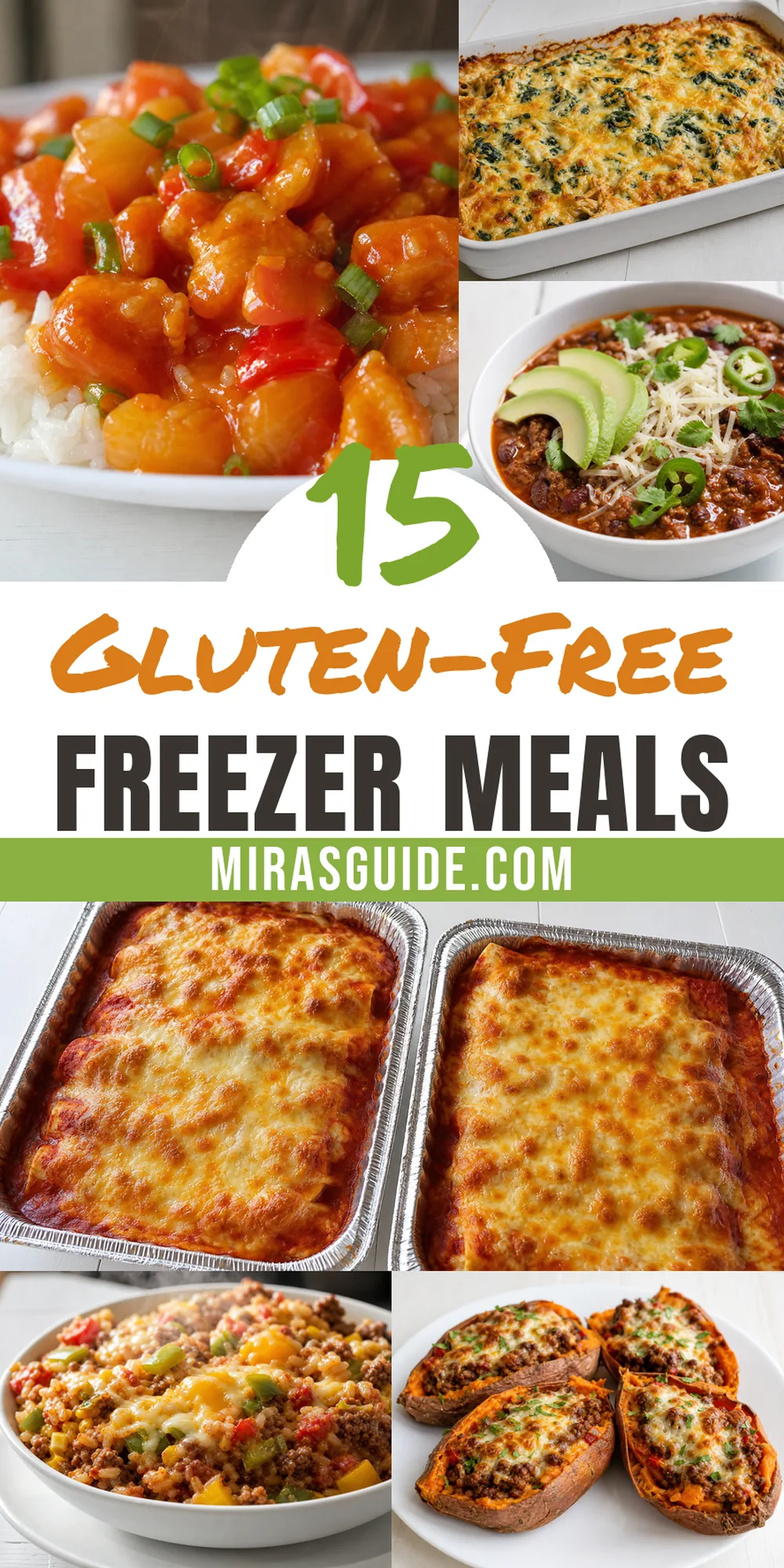
Gluten-free freezer meals solve the hardest part of eating gluten-free: the days when you’re too tired or too busy to cook, and every takeout option carries cross-contamination risk. Fifteen meals built on naturally gluten-free ingredients — rice, beans, lentils, potatoes, corn tortillas, and plain meat — go into the freezer now and come out as safe dinners later.
Why These Meals Work for Gluten-Free Cooking 🌾
- No wheat flour as a thickener — cornstarch, arrowroot, and rice flour do the same job without gluten.
- Naturally GF bases — rice, quinoa, potatoes, corn, and beans rather than GF pasta substitutes that turn to mush.
- Whole cuts of meat, unseasoned — no marinades, no fillers, no hidden wheat in a seasoning packet.
- You control every label — the entire point when cross-contamination is the real risk, not just the ingredient list.
- Fifteen meals from about three hours — same assembly-line method as any freezer batch, with a GF-safe setup.
Recipe at a Glance
Assembly: 3 hours for 15 bags
Yield: 15 meals, 4 servings each
Freezer life: 3 months for best quality
Cook time: 4–8 hours per meal, by protein
Difficulty: Easy
Method: Gluten-free freezer bag assembly
Ingredients 🛒
Eating gluten-free shouldn’t mean 5pm panic.
28 Days of Dinners Planned for You hands you a month of weeknight dinners with the shopping list already written—no more 5pm decisions.
Proteins
- 4 lbs boneless skinless chicken breast
- 2 lbs boneless skinless chicken thighs
- 2 lbs beef chuck, cubed
- 2 lbs lean ground beef
- 2 lbs pork tenderloin
- 6 cans beans (black, kidney, cannellini)
- 2 lbs dried brown lentils
Gluten-free starches
- Long-grain white rice (cooked separately, never in the bag)
- Quinoa
- Potatoes (added fresh on cooking day)
- Corn tortillas
Thickeners and sauces
- Cornstarch
- Arrowroot powder (for acidic sauces — it doesn’t go stringy the way cornstarch can)
- Certified gluten-free soy sauce or tamari
- Tomato paste, crushed tomatoes (no-salt-added)
- Coconut milk
Seasonings
- Ground cumin, chili powder, smoked paprika, oregano, thyme, rosemary, garlic powder, onion powder, bay leaves
- Fresh garlic, ginger, onions
Read every label, including the ones you’re sure about. Wheat hides in places that surprise people: soy sauce (unless it’s tamari or specifically labeled GF), bouillon and broth, spice blends, seasoning packets, some canned soups, and even some shredded cheese (anti-caking agents can contain wheat starch). The single biggest source of accidental gluten in freezer cooking is a broth or bouillon cube. Buy certified GF or make your own.
Cornstarch and arrowroot, not flour — and use them correctly. Neither thickens well if added dry to a hot liquid; they clump. Dissolve either in a tablespoon of cold water first, then stir in at the very end of cooking. Arrowroot is the better choice for acidic sauces like tomato-heavy chili because cornstarch loses its thickening power and turns thin and stringy after a long acid cook. Cornstarch wins for dairy-based and neutral sauces.
Skip GF pasta in the freezer bag. It’s the one GF product that reliably fails here. Gluten-free pasta is already softer than wheat pasta, and freezing plus reheating turns it into a gummy mass. If you want pasta, boil it fresh on serving day and add it to the reheated sauce.
Rice must be cooked separately. Raw rice in a freezer bag absorbs all the liquid during a long cook and leaves you with dry, crunchy grains surrounded by nothing. Cook rice fresh, or freeze cooked rice in its own bags.
Equipment
- A dedicated GF work surface — if you share a kitchen, wipe the counter, use a clean board, and keep your sealed flour container away from the assembly area.
- 15 freezer-safe gallon bags
- Marker and masking tape
- Two sheet pans for freezing flat
The 15 Meals 👩🍳
Chicken (6 meals) — cook 4 hours on low
- 1. Salsa chicken — chicken breast, salsa, black beans, cumin. Serve over rice.
- 2. Lemon oregano chicken — chicken breast, GF chicken broth, lemon juice, oregano, garlic, green beans.
- 3. Coconut chicken curry — chicken thighs, coconut milk, curry powder, cauliflower, onion.
- 4. Chicken and white bean stew — chicken breast, cannellini beans, crushed tomatoes, rosemary, garlic.
- 5. Ranch-style chicken — chicken breast, homemade ranch seasoning (dried dill, parsley, garlic powder, onion powder, salt), carrots, GF broth.
- 6. Teriyaki chicken thighs — chicken thighs, tamari, honey, rice vinegar, ginger, garlic.
Beef (4 meals) — cook 7–8 hours on low
- 7. Beef and vegetable stew — beef chuck, carrots, celery, onion, crushed tomatoes, thyme. Thicken with cornstarch at the end.
- 8. Beef chili — ground beef (browned), kidney beans, crushed tomatoes, chili powder, cumin.
- 9. Italian beef with peppers — beef chuck, bell peppers, onion, crushed tomatoes, oregano, basil.
- 10. Beef taco filling — ground beef (browned), salsa, taco seasoning you mixed yourself, black beans. Serve in corn tortillas.
Pork (2 meals) — cook 5–6 hours on low
- 11. Pork with apples and onions — pork tenderloin, sliced apples, onions, GF broth, Dijon (check the label), rosemary.
- 12. Pulled pork — pork tenderloin, GF barbecue sauce or your own tomato-vinegar-brown-sugar mix, onion.
Meatless (3 meals) — cook 5–6 hours on low
- 13. Lentil vegetable soup — brown lentils, GF vegetable broth, carrots, celery, onion, bay leaf, Italian herbs.
- 14. Three-bean chili — black, kidney, and pinto beans, crushed tomatoes, onion, chili powder.
- 15. Chickpea curry — chickpeas, coconut milk, cauliflower, curry powder, ginger, spinach added at the end.
Assembly order
Protein first, then vegetables and beans, then liquid about a third of the way up, then seasoning scattered on top. Press flat, squeeze out air, seal, and freeze flat on a sheet pan.
Why the Technique Works
Going gluten-free complicates freezer cooking less than people expect, because gluten’s main job in these meals would have been thickening — and the slow cooker’s sealed environment makes thickening almost unnecessary. A slow cooker loses almost no liquid, so the sauce you get at hour six is essentially the sauce you put in, concentrated slightly by whatever the vegetables released. Cornstarch or arrowroot added in the last few minutes does the small amount of tightening needed, and both work at far lower temperatures and in far smaller quantities than a flour roux would. That’s why GF freezer meals are genuinely straightforward: you’re removing an ingredient that was doing structural work you don’t actually need. The real risk isn’t the recipe — it’s the label on the broth, the soy sauce, and the seasoning blend. Control those and the cooking is identical to any other freezer batch.
Cooking Tips & Expert Advice
- Buy a certified GF broth and bouillon. This is the number-one hidden-gluten trap in freezer cooking.
- Mix your own taco and ranch seasoning. Packet blends frequently contain wheat starch or anti-caking agents. It takes two minutes from the spice rack.
- Use arrowroot for tomato sauces, cornstarch for cream sauces. They fail in opposite conditions.
- Never freeze GF pasta in the sauce. Cook it fresh on serving day.
- Cook rice separately. Raw rice steals liquid and produces crunchy grains.
- Keep a separate board and knife if your kitchen isn’t fully gluten-free. Cross-contamination is a real risk, not a theoretical one.
- Label the bags “GF” along with the meal name and cook time — essential if anyone else in the house is cooking from the freezer.
Variations & Substitutions
- Dairy-free: all 15 are already dairy-free if you skip the optional yogurt finishes — coconut milk stands in anywhere cream would go.
- Lower carb: serve over cauliflower rice instead of white rice; swap potatoes for extra non-starchy vegetables.
- Higher protein: increase protein to 2 lbs per bag and finish chicken meals with a spoon of Greek yogurt (check it’s GF — most plain yogurt is).
- Vegetarian and vegan: meals 13, 14, and 15 plus all-bean versions of 1, 4, and 5.
- Instant Pot: cook from frozen for 25–30 minutes under pressure with an extra ½ cup of liquid.
- Ground meat swap: ground turkey or chicken works anywhere ground beef does; brown it first either way.
Serving Suggestions
Cook rice, quinoa, or potatoes while the slow cooker finishes, and keep corn tortillas in the freezer for taco nights. A simple side salad or steamed green beans rounds out most of these. Because these meals are naturally GF, they’re also the easiest option to serve to a mixed group without making anyone’s dinner a special project.
Storage, Freezing & Reheating
Freeze flat for up to 3 months at 0°F for best quality. Thaw overnight in the refrigerator. Leftovers keep 4 days refrigerated, or 3 months frozen. Reheat on the stovetop or in the microwave until steaming hot throughout — 165°F is the target for anything containing meat. If a sauce has thickened in the fridge, loosen it with a splash of GF broth or water.
Troubleshooting
Why is my sauce thin? Cornstarch or arrowroot was added dry instead of dissolved in cold water first, or it was added too early and lost its thickening power over hours of cooking. Add it in the last five minutes.
Why did my sauce go stringy? Cornstarch in an acidic tomato sauce that cooked a long time. Use arrowroot for those, or add the thickener at the end.
Why is the meal bland? Long cooking mutes dried herbs, and there’s no evaporation to concentrate flavor. Season a little more generously, then finish with lemon juice or vinegar.
Why did I react even though every ingredient looked GF? Check the broth, bouillon, soy sauce, spice blends, and any shredded cheese or pre-seasoned meat. Those are the usual culprits. Also check for shared-facility warnings if you’re highly sensitive.
Why is my chicken dry? It cooked past 4 hours. Chicken breast is done at 165°F, which happens well before the 8-hour mark — those long times are for beef chuck and dried beans.
❓ FAQ
Are these meals safe for celiac disease? They are gluten-free by ingredient, and you control the sourcing, which is the advantage over buying prepared GF meals. For strict celiac safety, use certified GF products across the board and keep a dedicated prep surface if your kitchen also handles wheat.
Do I need to brown ground beef first? Yes — both for safety and flavor. Ground meat is the highest-risk protein form and a slow cooker brings it up to temperature slowly.
Can I freeze cooked rice in the bags? You can freeze cooked rice separately, but don’t put it in the meal bag — it turns to paste. Keep it in its own freezer bag or cook it fresh.
Can I cook these from frozen? Yes, adding about 2 hours on low, but thawing first gives better texture. The Instant Pot handles frozen bags well under pressure.
How long do they keep? Three months for good quality at 0°F. They stay safe longer, but texture declines.
Can I use GF pasta in these? In the bag, no. Cook it fresh and add it to the reheated sauce on serving day.
Nutrition, Allergens & Dietary
Per serving, most of these land between 300 and 450 calories with 25–35g of protein, depending on portion and whether you serve them with rice. All of these are gluten-free by ingredient as written. Most are also dairy-free, and meals 13–15 plus all-bean versions are vegetarian and vegan. Watch for soy in the teriyaki and hidden wheat in broth, bouillon, and seasoning blends. Nutrition is an estimate.
Final Thoughts
Eating gluten-free is hardest on the nights you have no plan, and that’s exactly what a stocked freezer fixes. Build these fifteen, label them clearly with the cook time, and keep a pot of rice or a bag of potatoes on hand. The cooking is no different from any other freezer batch — the discipline is in reading labels once, carefully, at the store.

Once these run out, what’s for dinner next month?
You just stocked fifteen gluten-free dinners. 28 Days of Dinners plans the month after this one.
- ✓ 28 weeknight dinners, already chosen
- ✓ Shopping lists done for you
- ✓ Everyday ingredients, no specialty store
- ✓ Weeknight-realistic recipes