

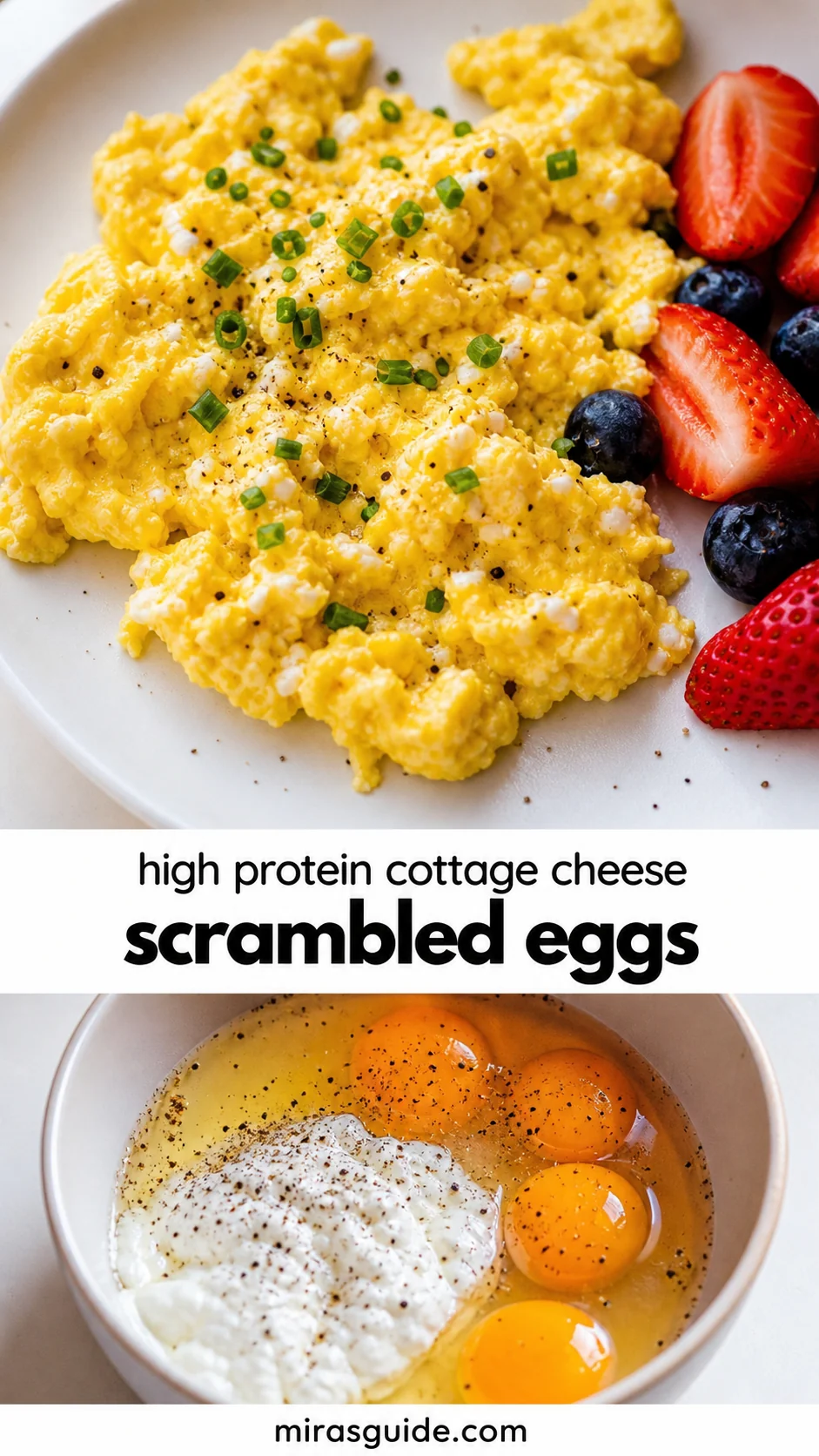
High-protein scrambled eggs with cottage cheese is the 5-minute breakfast that makes every other version of scrambled eggs feel like a missed opportunity. The cottage cheese melts into the eggs as they cook, giving you soft, creamy curds with pockets of melty cheese — and adding about 6 grams of protein per serving on top of the eggs. It’s the kind of breakfast that keeps you full until lunch without any powder, shakes, or complicated prep.
You will love this scrambled eggs with cottage cheese recipe for the texture alone: low and slow heat turns the eggs silky, and the cottage cheese curds disappear into little creamy pools. Ready in about 5 minutes flat, it’s also one of the easiest high-protein breakfasts to make on a busy morning.
Why You’ll Love This Recipe ❤️
- About 25 g protein in one plate: three eggs plus cottage cheese is a serious breakfast, no protein powder involved.
- Ready in 5 minutes: faster than oatmeal, faster than a drive-thru line.
- Fluffy and creamy, not rubbery: the cottage cheese keeps the eggs moist and tender in a way plain scrambled eggs never quite match.
- Low-carb and macro-friendly: about 2 grams of carbs per serving, so it fits keto, low-carb, and high-protein plans alike.
Want More Easy High-Protein Breakfasts Like This?
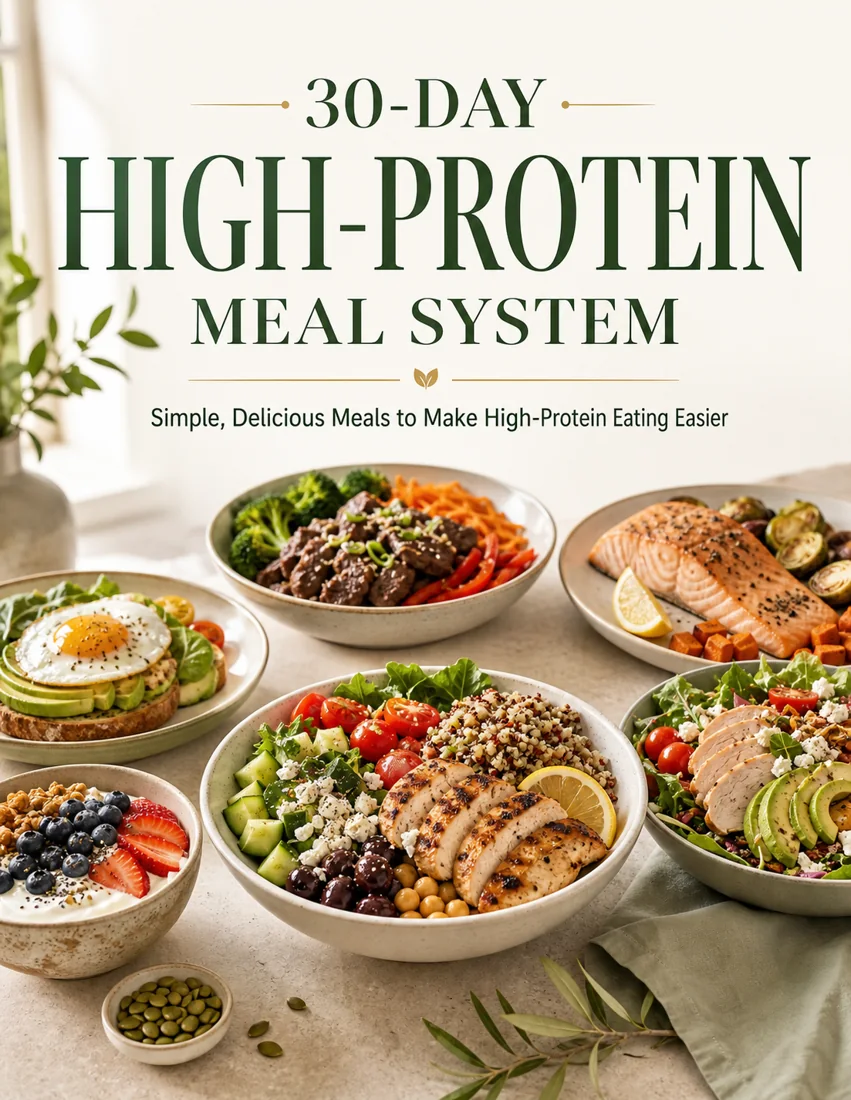
The 30-Day High-Protein Meal System gives you a full month of planned breakfasts, lunches, dinners and snacks—including high-protein breakfasts that keep you full through the morning.
Ingredients You’ll Need 🛒
- 3 large eggs — the base. Use the best eggs you can find; they’re the star here.
- ¼ cup cottage cheese (2%) — this is the sweet spot ratio: 1 to 2 tablespoons of cottage cheese per egg. Too much and the eggs turn watery; too little and you lose the creaminess. Full-fat cottage cheese adds richness, fat-free trims calories.
- 1 teaspoon butter or olive oil — for the pan. Butter adds flavor; oil works if you prefer.
- Salt and freshly ground black pepper, to taste
- Optional toppings: chopped chives, fresh dill, everything bagel seasoning, hot sauce, or a few slices of smoked salmon on the side.
A quick note on cottage cheese: small-curd cottage cheese blends most seamlessly into scrambled eggs, but large-curd works fine too — just give it a quick chop or pulse in the food processor if you want it to disappear completely. And whatever brand you choose, if there’s visible liquid sitting in the container, give it a stir or drain it before measuring, since extra liquid is what makes eggs watery.
How to Make High-Protein Scrambled Eggs with Cottage Cheese 👩🍳
Step 1: Whisk the Eggs and Cottage Cheese
Crack the eggs into a bowl, add the cottage cheese, a pinch of salt, and a few grinds of pepper. Whisk until the mixture is uniform — the cottage cheese won’t fully dissolve, and that’s exactly what you want. Small curds left in the mix melt into creamy pockets as they cook. Don’t oversalt at this stage; you can always add more at the end.
Step 2: Heat the Pan Low and Slow
Place a nonstick skillet over medium-low heat and add the butter. Let it melt and barely sizzle — if it browns or smokes, your heat is too high. Low heat is the single most important detail in this recipe; it’s what keeps the eggs soft instead of rubbery.
Step 3: Pour and Fold Gently
Pour in the egg mixture and let it sit undisturbed for about 20 seconds until the bottom just begins to set. Then, using a silicone spatula, gently push the cooked edges toward the center, tilting the pan so the raw egg flows to the edges. Keep folding slowly and continuously for 2 to 3 minutes.
Step 4: Stop While They Look Slightly Wet
Here’s the trick: pull the pan off the heat while the eggs still look glossy and a little soft — they’ll finish cooking from their own residual heat. Eggs that look “done” in the pan are already overcooked on the plate. Season with a final pinch of salt and pepper, add your toppings, and eat immediately.
Recipe Variations 🔄
- Spinach and herbs: wilt a big handful of baby spinach in the pan for 1 minute before adding the eggs (a method we love from nutrition experts), then fold in fresh chives at the end.
- Smoked salmon: serve the eggs topped with smoked salmon slices and a sprinkle of dill — an easy way to push the protein toward 30 grams.
- Everything bagel: sprinkle everything bagel seasoning over the finished eggs and serve on toasted sourdough or an English muffin.
- Egg-white boost: use 2 whole eggs plus ¼ cup liquid egg whites for a leaner version with even more protein and less fat.
- Tex-Mex: stir a spoonful of salsa or pico de gallo into the eggs right before they finish cooking.
- Meal-prep version: if you like this flavor combo but want grab-and-go, our cottage cheese egg bites bake the same ingredients into portable bites you can reheat all week.
What to Serve With This 🍽️
These eggs are a complete breakfast on their own, but they pair beautifully with a slice of whole-grain toast, half an avocado, or a handful of berries. For a bigger spread, serve them next to a jar of high-protein overnight oats — that combination is basically a full day of protein before 9 a.m. If you’re planning out a whole week of breakfasts, this recipe fits naturally into a meal planning breakfast rotation alongside other quick morning staples. On busy mornings, you can even prep the egg-and-cottage-cheese mixture the night before — store it covered in the fridge and just whisk once more before pouring it into the pan.
Storage & Shelf Life ❄️
Honestly, scrambled eggs are best eaten the moment they’re cooked — they’re a 5-minute recipe, so make them fresh. If you must reheat leftovers, warm them gently in a skillet over low heat with a splash of water or milk to restore moisture; microwaving turns them rubbery. They’ll keep in the fridge for up to 2 days in an airtight container, but the texture won’t be the same.
Pro Tips for Success 💡
- Low heat is non-negotiable: every rubbery batch of scrambled eggs I’ve ever made came from rushing the heat. Medium-low, patience, done.
- Use a silicone spatula: it folds the curds without scratching your pan or tearing the eggs.
- Remove from heat early: glossy and slightly soft in the pan means perfect on the plate. Carryover cooking finishes the job.
- Season at the end: salt early can draw moisture out of the eggs and make them weepy. A little in the bowl, the rest on top.
- Don’t blend the cottage cheese unless you want it invisible: blended cottage cheese makes the eggs uniformly creamy; unblended leaves melty pockets. Both are great — it’s a texture preference, not a rule.
Common Issues & Fixes ⚠️
- Watery eggs: too much cottage cheese or heat that’s too high. Stick to ¼ cup for 3 eggs and cook low and slow.
- Rubbery curds: overcooked. Pull the pan off the heat while the eggs still look soft, and use lower heat next time.
- Eggs stick to the pan: your pan wasn’t hot enough when the butter went in, or it’s not truly nonstick. Let the butter melt gently and coat the whole surface.
- Curds too large: you’re stirring too rarely. Keep the eggs moving with slow, continuous folds so they form small, tender curds.
Common Questions ❓
How much protein is in scrambled eggs with cottage cheese?
About 25 grams with 3 large eggs and ¼ cup of 2% cottage cheese. The eggs contribute roughly 19 grams and the cottage cheese adds about 6. Swap in fat-free cottage cheese for nearly identical protein with slightly fewer calories.
What’s the right cottage cheese to egg ratio?
Use 1 to 2 tablespoons of cottage cheese per egg. For 3 eggs, that’s ¼ cup — enough to add creaminess and protein without making the eggs watery. This ratio is the one that consistently produces the best texture.
Can I use egg whites instead of whole eggs?
Yes — 3 whole eggs plus ¼ cup of cottage cheese works great, or go with 2 whole eggs and ¼ cup liquid egg whites for a leaner, higher-protein plate. Whole eggs give a richer flavor and creamier texture, though.
Will the cottage cheese curds be visible in the finished eggs?
Small curds mostly melt and disappear into the eggs as they cook; larger spoonfuls can leave creamy white pockets. If you prefer zero visible curds, blend the cottage cheese smooth before whisking it in — the eggs stay just as creamy.
Is this breakfast keto-friendly?
Yes — about 2 grams of carbs per serving. The 2% cottage cheese adds a small amount of lactose, but it fits comfortably within a standard keto day. Full-fat cottage cheese works too if you want more fat.
Can I make this for more than one person?
Easily — scale 1:1 per person (3 eggs and ¼ cup cottage cheese each). Cook in batches rather than overcrowding one pan; eggs cook unevenly when the pan is too full. A single batch cooks in about 3 minutes, so cooking two batches back-to-back barely takes longer.
Can I add vegetables to the eggs?
Yes — wilted spinach is the classic addition: sauté a handful in the pan for a minute before adding the eggs. Diced bell peppers, mushrooms, or tomatoes also work; just cook them first so they release their moisture before the eggs go in, otherwise you’ll end up with watery scramble.
Nutrition Facts 📊
Per serving (3 large eggs, ¼ cup 2% cottage cheese, 1 teaspoon butter), approximately: 270 calories, 25 g protein, 3 g carbohydrates, 18 g fat, 480 mg sodium. Skip the butter and you save about 35 calories; add smoked salmon and expect roughly 60 more calories and 6 more grams of protein. These are estimates — egg size, cottage cheese brand, and toppings all move the numbers, and published versions of this dish range from about 230 to 300 calories.
Final Thoughts ❤️
High-protein scrambled eggs with cottage cheese might be the easiest protein upgrade in your entire kitchen — it takes the same 5 minutes as regular scrambled eggs and quietly adds 6 grams of protein plus a creaminess you can’t get any other way. Start your morning with these, keep the baked version for meal-prep days, and your breakfast protein problem is officially solved.
Stop figuring out your protein meals one day at a time
This recipe solves today. The 30-Day High-Protein Meal System solves the whole month—planned, shopped and prepped for you.
- ✓ 30 days of high-protein breakfasts, lunches & dinners
- ✓ Weekly grocery lists & meal-prep guidance
- ✓ High-protein snacks and treats with big flavor
- ✓ Simple ingredients, clear steps, built-in variety



Pingback: 25+ High-Fiber High-Protein Meals for Satiety
Pingback: Healthy Blender Pancakes (Oats, Yogurt, Banana)
Pingback: Avocado Toast (6 Easy Recipes)