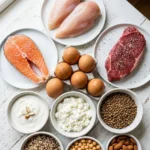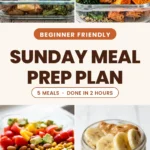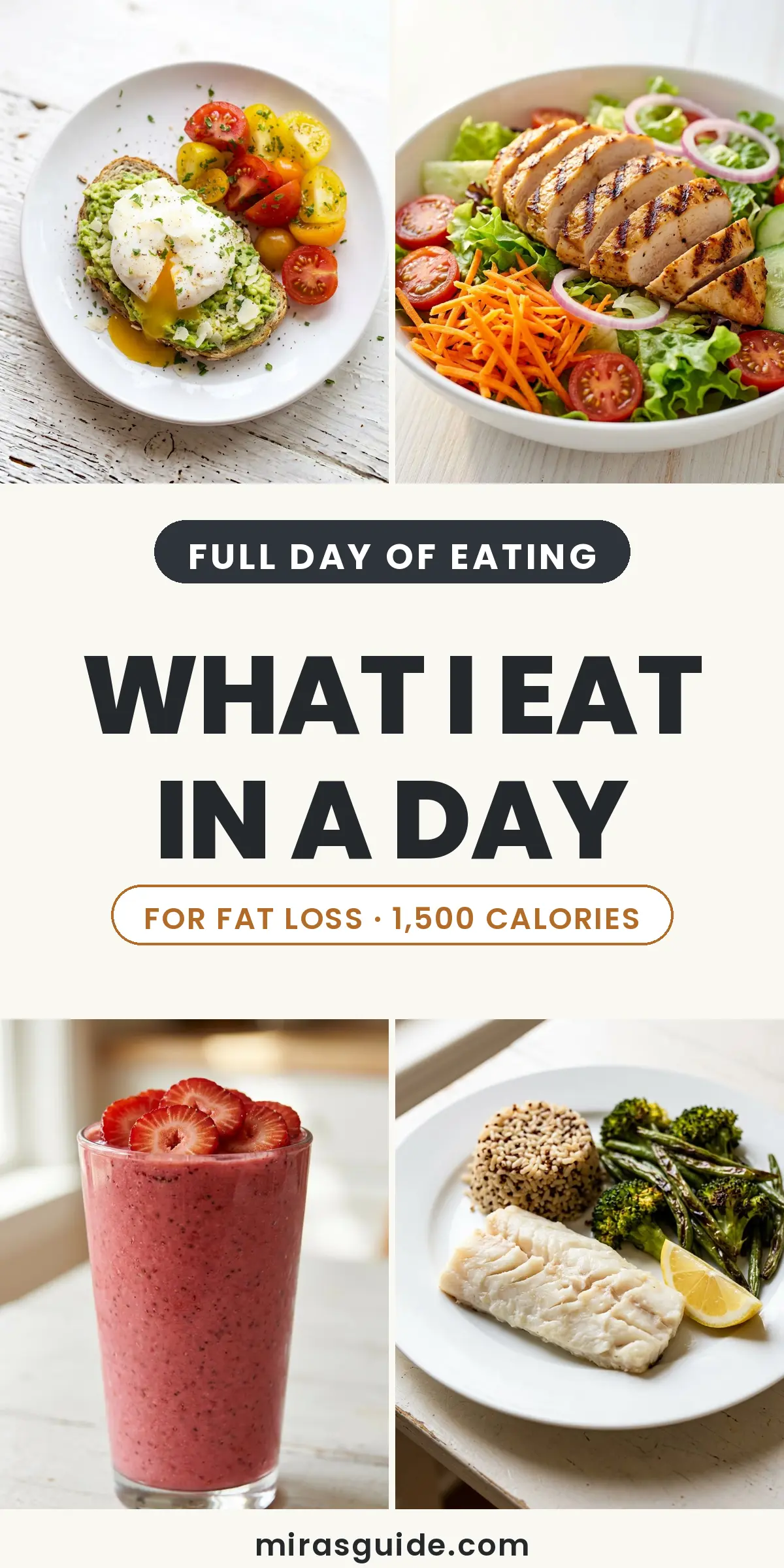
“What I eat in a day for fat loss” is the high-protein, no-dieting approach that makes losing fat feel sustainable — a full day of satisfying, protein-forward meals that keep you full, hit your macros, and never leave you feeling deprived.
The trick isn’t cutting everything out; it’s building each meal around protein and vegetables so you naturally eat well without obsessive tracking or hunger.
Want More Easy High-Protein Meals Like This?
The 30-Day High-Protein Meal System gives you a full month of planned breakfasts, lunches, dinners and snacks—including high-protein meals that are simple, satisfying and family-friendly.
Here’s a realistic, delicious day of eating for fat loss, roughly what the macros look like, and why it works — no crash dieting required.
Why This Approach Works ❤️
- High protein keeps you full — so a calorie deficit doesn’t feel like starvation.
- No foods are “banned” — building meals around protein leaves room for balance.
- It’s sustainable — real, satisfying food you can actually stick with.
- It protects your muscle — losing fat, not muscle, is what changes how you look.
The Approach in a Nutshell 📋
Fat loss comes down to a moderate, sustainable calorie deficit — but how you fill those calories determines whether it’s miserable or easy. Prioritizing protein (roughly 30–40g per meal) and filling half your plate with vegetables keeps you full on fewer calories, so you’re not white-knuckling through hunger. You don’t need to “diet” in the restrictive sense; you need to build smart, satisfying meals. Here’s a realistic day.
A Full Day of Eating 🍽️
Breakfast — high protein overnight oats (High-Protein Overnight Oats)
Creamy, ~40g protein, and prepped the night before. Starts the day full and steady (~440 cal).
Morning snack — Greek yogurt with berries
Cool, sweet, ~17g protein to bridge to lunch without a crash.
Lunch — high protein chicken enchilada bowls (Chicken Enchilada Bowls)
Creamy, cheesy, and 39g protein for just 344 calories — proof fat-loss food can taste indulgent.
Afternoon snack — cottage cheese or a protein shake
~15–20g protein to carry you to dinner and prevent the pre-dinner snack spiral.
Dinner — blackened air fryer salmon bites (Blackened Salmon Bites) over greens or rice
Lean, flavorful, ~34g protein for 251 calories, plus omega-3s. Add veggies to fill the plate.
If you want dessert — a high-protein pudding or Greek yogurt bark
A satisfying sweet finish that still fits your macros.
Rough daily total: around 1,500 calories and 130g+ protein — a realistic fat-loss day that keeps you full.
Why It Doesn’t Feel Like a Diet 💡
Protein at every meal. Anchoring each meal with 30–40g of protein is the single biggest factor in staying full on fewer calories.
Volume from vegetables. Filling half your plate with veggies adds food, fiber, and fullness for very few calories.
Nothing is off-limits. Leaving room for a treat or dessert makes the whole thing sustainable — deprivation is what causes bingeing.
Prep makes it automatic. When your protein-forward meals are ready to go, eating for fat loss becomes the default, not a daily battle.
Hydration and sleep count. Staying hydrated curbs false hunger, and good sleep keeps cravings and appetite hormones in check.
Common Questions ❓
Q: How many calories should I eat for fat loss?
A: It depends on your body, activity, and goals — a moderate deficit (often around 1,500 for many adults, but individual) works best. A calculated plan takes the guesswork out.
Q: Do I have to track everything?
A: Not necessarily. Building each meal around protein and vegetables naturally controls calories. Tracking can help you learn portions, but the habits matter more.
Q: How much protein for fat loss?
A: Roughly 0.7–1g per pound of body weight is a common target — enough to stay full and preserve muscle. For many people that’s around 120–150g a day.
Q: Can I really lose fat without cutting out carbs or sugar?
A: Yes — fat loss is about the overall calorie deficit, not banning specific foods. High protein just makes that deficit far easier to sustain.
How to Adjust This for Your Own Calories 📊
A day of eating is only useful as a template — the amounts should match your body and activity, not mine. The structure is what transfers: protein at every meal, vegetables for volume, and enough carbohydrate to actually train and function.
- To eat less: reduce the starch portions first (rice, potato, bread) and keep the protein and vegetables where they are. This is what preserves fullness.
- To eat more: add to the carbohydrate and fats — a bigger grain portion, nuts, olive oil, avocado. Adding more protein past a point does not help much.
- Keep protein roughly constant at 25–35g a meal regardless of the calorie target. It is the part doing the work for satiety.
- Adjust in small steps and give any change two weeks before judging it.
An honest note: I am a home cook sharing what works for me, not a dietitian. Calorie needs vary enormously with size, activity, age, and health conditions. If you have a medical condition, are pregnant, or have a history of disordered eating, please talk to a qualified professional rather than copying anyone’s day of eating.
Snacks That Actually Keep You Full 🥜
Most snacking problems are really protein problems. A snack with 15g+ of protein behaves completely differently from one without.
- Greek yogurt with berries — around 20g protein
- Cottage cheese with cucumber and black pepper — around 25g
- Two boiled eggs — 12g, and portable
- Edamame — 18g per cup, plus fibre
- Turkey slices with cheese — fast, no prep
- A protein shake with a banana — when you genuinely have no time
There are twenty more in my high-protein snacks list.
What I Do on Busy Days ⏱️
The days that derail people are not the planned ones. My rule is that a bad day should still have protein and something green in it, and everything else is negotiable.
In practice that means keeping a few things permanently stocked: rotisserie chicken, pre-washed salad, frozen vegetables, eggs, Greek yogurt, and microwave rice. Any two of those is a meal in four minutes. Batch-cooking on the weekend removes the decision entirely — my beginner Sunday meal prep plan is the simplest version.
Mistakes That Quietly Stall Progress 🚩
- Drinking your calories. Juice, lattes, and alcohol add up fast and do nothing for fullness.
- Under-eating early, overeating late. A tiny breakfast almost always means a large evening.
- Cutting fat too low. It makes food unsatisfying and is unnecessary.
- Weighing yourself daily and reacting to noise. Weight swings 2–4 lbs on water alone. Look at weekly averages.
- Treating one off-plan meal as a failed week. It is one meal out of twenty-one.
How Long Before You See Changes ⏳
Honestly: longer than most content suggests. Water weight shifts within days, but visible change generally takes several weeks, and it rarely moves in a straight line. Weight can hold flat for two weeks and then drop suddenly for reasons that have nothing to do with what you did that morning.
The measures worth tracking are how your clothes fit, your energy through the afternoon, and whether you are hungry all evening. Those tell you more than the scale does.
Final Thoughts ❤️
A high-protein “what I eat in a day” for fat loss proves you don’t need crash dieting or banned foods to lose weight — just protein-forward meals, plenty of vegetables, and enough flexibility to keep it sustainable.
Anchor each meal with 30–40g of protein, fill your plate with veggies, prep ahead so it’s automatic, and leave room for a treat. That’s how fat loss stops feeling like a diet and starts feeling like a habit.
If you want your exact fat-loss calories and protein calculated for your body, plus a full week of meals mapped out, my Macro Method does the math for you.
Macro Method — hit your protein and calorie goals without the math. Inside: a calorie/protein calculator for your goals, macro-friendly meal templates, and a full library of high-protein recipes. Get it here.
This is general guidance, not personalized or medical nutrition advice — adjust to your own needs and consult a professional for individual guidance.
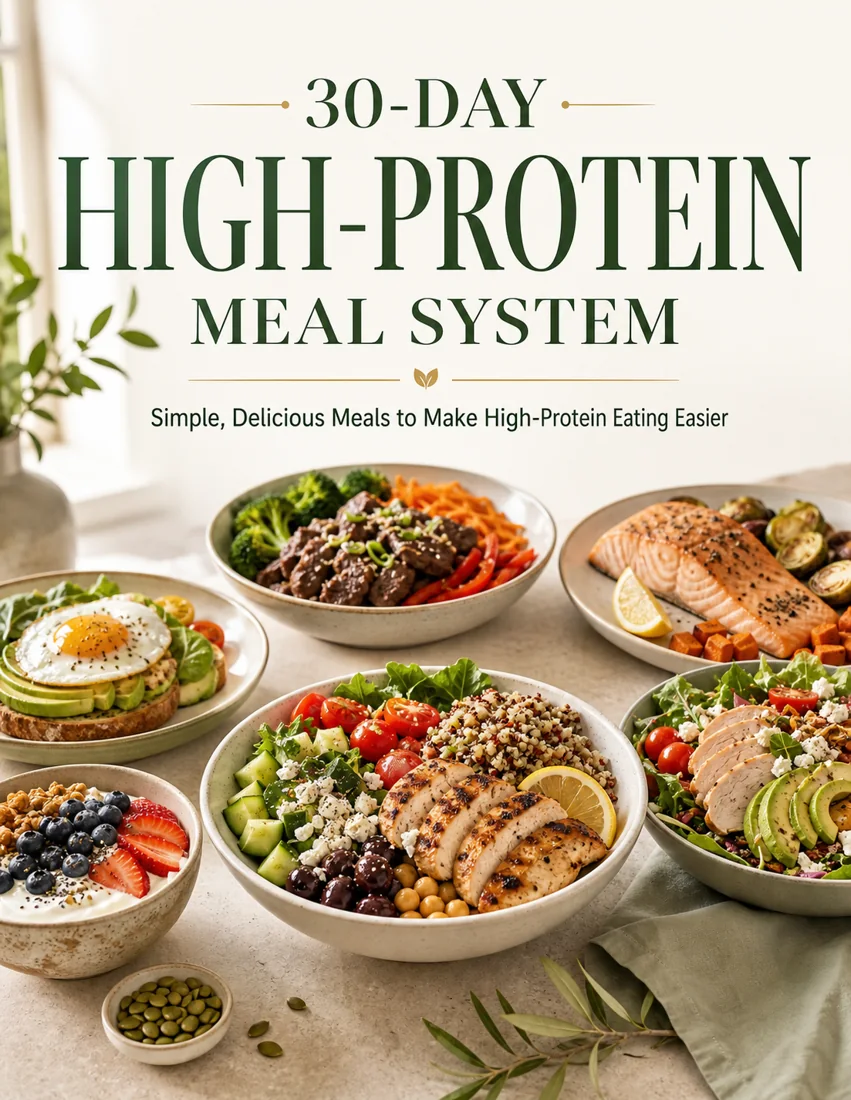
Stop figuring out your protein meals one day at a time
This recipe solves today. The 30-Day High-Protein Meal System solves the whole month—planned, shopped and prepped for you.
- ✓ 30 days of high-protein breakfasts, lunches & dinners
- ✓ Weekly grocery lists & meal-prep guidance
- ✓ High-protein snacks and treats with big flavor
- ✓ Simple ingredients, clear steps, built-in variety