

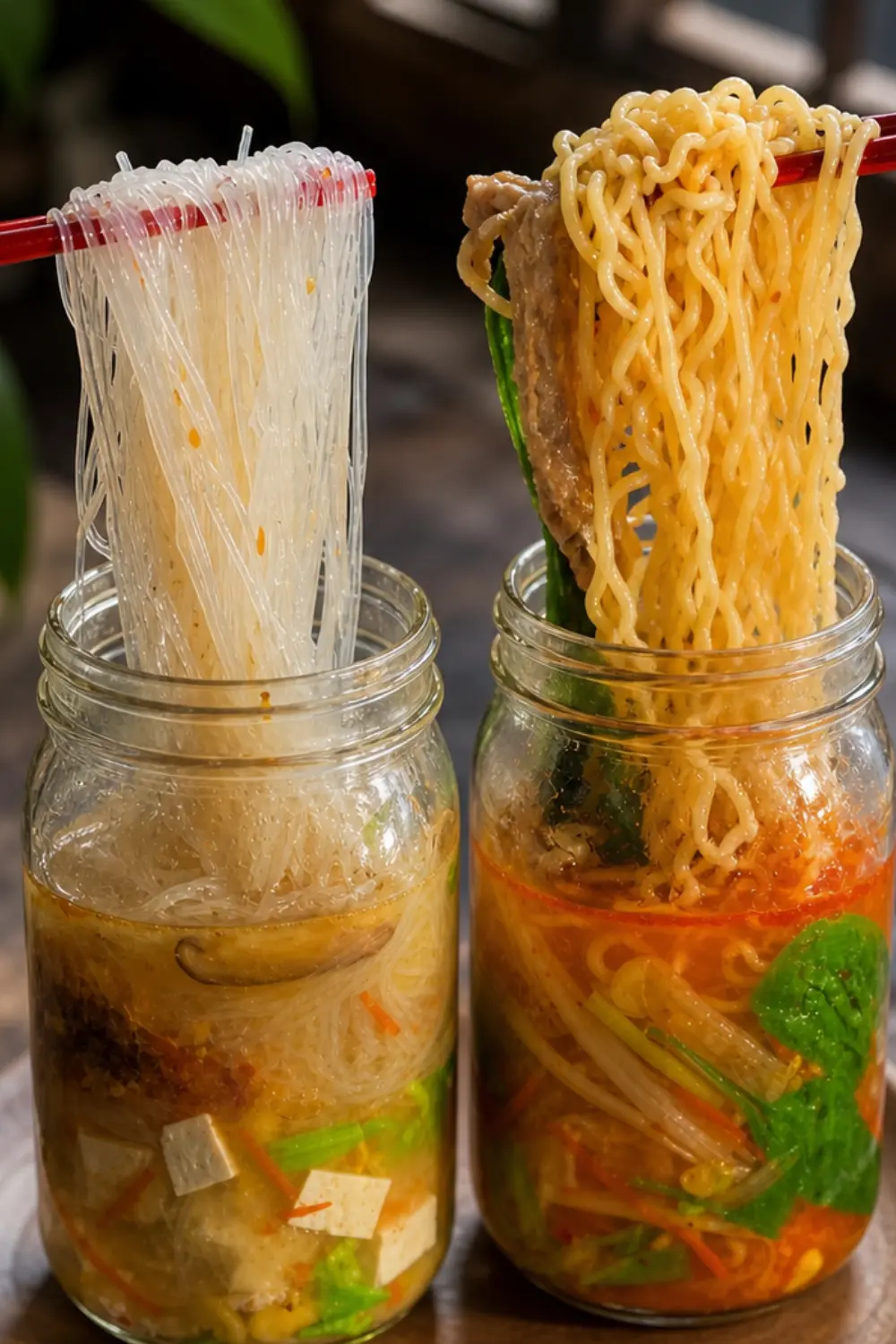
Mason jar noodle soups are the make-ahead lunch that finally solves the soggy-noodle problem — you layer everything dry, then just add boiling water when you’re ready to eat.
Think of them as a homemade instant noodle cup: a savory flavor base, quick-cooking noodles, crisp veggies, and your protein of choice, all packed into a jar and ready in about 5 minutes at your desk.
Don’t Want to Plan Every Dinner Yourself?
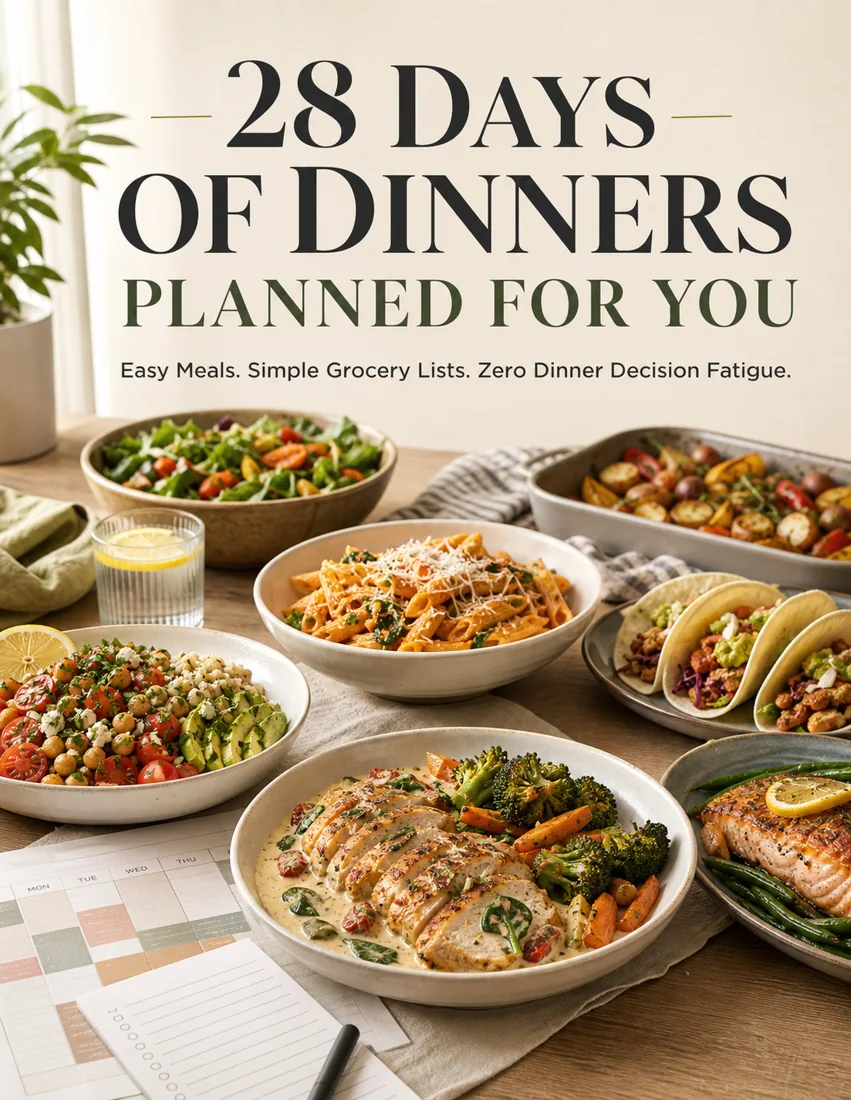
28 Days of Dinners Planned for You gives you 28 days of dinners, grocery lists and prep guidance already organized for you.
Here’s exactly how I build five different flavors so the noodles cook fresh every time and never turn to mush.
What Makes These Special ✨
- Never soggy — the noodles stay dry in the jar until hot water hits them, so they cook fresh each day.
- Ready in 5 minutes — just pour in boiling water, wait, and stir. No stove, no microwave-explosion.
- 5 flavors from one method — learn the layering once and you can build any soup you want.
- The best way to use up veggies — a handful of whatever’s in your fridge turns into lunch.
Cozy, better-than-instant flavor 🍜
These taste worlds better than a sodium-bomb packet because you control the base — real miso, ginger, garlic, and chili crisp instead of a mystery powder.
Built for busy weeks ⚡
Assemble four or five jars on Sunday, keep them in the fridge, and lunch is handled — no reheating containers, no soggy leftovers.
What You’ll Need 🛒
The single most important rule is to use quick-cooking noodles — rice vermicelli, thin ramen (ditch the seasoning packet), soba, or glass/mung-bean noodles all rehydrate in hot water in a few minutes. Thick noodles that need boiling won’t work here. Pint or quart mason jars are ideal, and your protein should be pre-cooked (shredded chicken, cooked shrimp, or tofu) since the hot water only warms it, not cooks it.
The master jar formula (per jar):
- 1–2 tablespoons flavor base (see the 5 combos below)
- 1 teaspoon aromatics (grated ginger, minced garlic, or sliced green onion)
- 2–3 oz pre-cooked protein (shredded chicken, shrimp, or cubed tofu)
- 1 cup quick-cooking veggies (spinach, shredded carrot, corn, snap peas, mushrooms, bok choy, bean sprouts)
- 1 portion quick-cooking noodles (about 2 oz dry — rice vermicelli, thin ramen, or soba)
- Boiling water, to serve
How to Build Your Jars 🔧
The order of the layers is the whole trick — heavy, saucy stuff on the bottom, delicate noodles on top so nothing gets crushed or waterlogged in the fridge.
- Base on the bottom. Spoon your flavor base and aromatics into the bottom of the jar. This sits under everything and dissolves into broth the moment you add hot water.
- Protein next. Add your pre-cooked protein on top of the base. Keeping it near the bottom means the hot water reheats it thoroughly.
- Then the veggies. Pack in the quick-cooking vegetables. Sturdier ones (carrot, corn, mushrooms) can go lower; delicate greens (spinach, bok choy) go higher so they just wilt rather than overcook.
- Noodles on top, and keep them dry. Nestle the noodles at the very top. This is the no-soggy secret — they never touch liquid until you’re ready to eat, so they cook fresh instead of sitting and swelling.
- Seal and refrigerate. Screw on the lid and store upright. Do not add water before storing — the jar goes into the fridge completely dry.
- To serve: Pour boiling water into the jar until everything’s just covered, set the lid on loosely (or tip it into a bowl), and let it sit 3–5 minutes. Stir well so the base dissolves, and eat. That’s it.
The 5 Flavor Combinations 🍜
Each combo uses the same layering method — just swap the base, protein, and veggies.
1. Classic Chicken Ramen. Base: 1 tablespoon white miso + 1 teaspoon soy sauce + grated ginger. Protein: shredded cooked chicken. Veggies: corn, spinach, sliced green onion. Noodles: thin ramen.
2. Spicy Miso Tofu. Base: 1 tablespoon miso + 1 teaspoon chili crisp or gochujang + minced garlic. Protein: cubed firm tofu. Veggies: mushrooms, bok choy, shredded carrot. Noodles: ramen or soba.
3. Thai Coconut Curry. Base: 1 tablespoon red curry paste + 1 teaspoon coconut milk powder + a squeeze of lime. Protein: cooked shrimp or tofu. Veggies: snap peas, shredded carrot, spinach. Noodles: rice vermicelli.
4. Sesame Garlic Veggie. Base: 1 tablespoon soy sauce (or tamari) + 1 teaspoon sesame oil + minced garlic. Protein: edamame. Veggies: shredded carrot, spinach, green onion. Noodles: soba.
5. Pho-Inspired Beef. Base: 1 tablespoon beef bouillon + a thin slice of ginger + 1 teaspoon fish sauce. Protein: thinly sliced cooked beef. Veggies: bean sprouts, green onion, fresh basil. Noodles: thin rice noodles.
Pro Tips for Success 💡
🥢 Always leave the noodles on top and store the jar dry. The entire “no soggy” promise depends on the noodles never sitting in liquid — the second you add water in the fridge, you’ve made a regular soggy soup. Assemble dry, add boiling water only when you eat (this is the game-changer).
🍜 Use genuinely quick-cooking noodles. Rice vermicelli and thin ramen soften in about 3 minutes of hot water; thicker wheat noodles stay hard because a jar of water isn’t a boiling pot. If your noodles are still firm after 5 minutes, they were too thick for this method.
🧄 Grate your aromatics small. Ginger and garlic release the most flavor when they’re finely grated or minced, so a little goes a long way once the hot water pulls it into the broth.
🍗 Pre-cook your protein and cool it first. Shredded chicken, cooked shrimp, and tofu all reheat safely in the hot water, but they need to go into the jar already cooked and cooled — the water warms them, it doesn’t cook raw meat through.
💧 Boil the water genuinely hot. Lukewarm tap water won’t rehydrate the noodles or dissolve a miso base. Use freshly boiled water from a kettle for the best texture and a broth that actually tastes like broth.
Common Issues & Fixes ⚠️
Noodles still hard after adding water. They were too thick, or the water wasn’t hot enough. Use thin, quick-cooking noodles and freshly boiled water, and give it a good stir so the noodles separate and soften evenly.
Watery, bland broth. You added too much water or too little base. Fill the jar only until the ingredients are just covered, and don’t skimp on the miso, curry paste, or bouillon — that’s where all the flavor lives.
Veggies overcooked or mushy. Delicate greens were packed too low or left too long. Layer sturdy veggies deeper and tender greens near the top, and eat within a few minutes of adding water rather than letting it sit.
Storage & Shelf Life ❄️
Store the sealed, dry jars in the fridge for up to 4 days. Per USDA FoodSafety.gov, cooked chicken, shrimp, and beef are safe refrigerated for 3–4 days at 40°F or below, so plan your jars around that window. Because there’s no water in the jar, the noodles and veggies stay in great shape — just keep the lid tight and the jar upright.
These aren’t ideal for freezing, since the fresh veggies lose their texture and the whole appeal is fresh, crisp jars. If you want to prep further ahead, freeze just the cooked protein separately for up to 2 months and add it to a freshly built jar. For grab-and-go lunches, a 4-day fridge batch is the sweet spot.
Ways to Customize These 🔄
Bump the protein by adding a jammy soft-boiled egg (add it fresh when serving), extra tofu, or a scoop of edamame — great if you want a more filling, higher-protein jar like my High-Protein Corn Chicken Rice Bowls
Make it gluten-free by using rice vermicelli or 100% buckwheat soba and swapping soy sauce for tamari. Make it vegan by using tofu or edamame and a miso or veggie-bouillon base instead of chicken or beef.
Add more veggies to use up whatever’s in the crisper — thinly sliced cabbage, baby corn, bell pepper, or mushrooms all work. Finish with fresh toppings when you eat: cilantro, lime, chili crisp, or a sprinkle of sesame seeds. For a heartier, no-cook lunch option on busy days, try my Taco Meal Prep Bowls
What to Serve With This 🍽️
These jars are a light, cozy lunch on their own, but a side of steamed edamame or a couple of gyoza rounds it out nicely. A simple cucumber salad adds crunch and freshness against the warm broth. For a bigger appetite, pair it with a no-reheat option like my Adult Lunchable Bento Box Ideas To drink, green tea or sparkling water with lime keeps it light.
Common Questions ❓
Q: Can I make these mason jar soups ahead of time?
A: Yes — that’s the whole idea. Build the jars dry (no water) and refrigerate up to 4 days. Add boiling water only when you’re ready to eat, and the noodles cook fresh every time.
Q: How do I keep the noodles from getting soggy?
A: Store the jar completely dry with the noodles layered on top, and add hot water only at serving time. Soggy noodles happen when they sit in liquid, so keeping the jar dry until you eat is the entire secret.
Q: What noodles work best?
A: Thin, quick-cooking noodles — rice vermicelli, thin ramen (no seasoning packet), soba, or glass noodles. Thick wheat noodles won’t soften properly in just-boiled water.
Q: Can I use raw meat in the jar?
A: No — always add pre-cooked, cooled protein like shredded chicken, cooked shrimp, or tofu. The hot water reheats it but won’t fully cook raw meat, which isn’t food-safe.
Q: Can I microwave the jar instead of using boiling water?
A: It’s safer to transfer everything to a microwave-safe bowl first (never microwave a sealed jar). But honestly, a kettle of boiling water poured in and stirred is faster and gives you better noodle texture.
Nutrition Facts 📊
Here’s the approximate nutrition for one representative jar (chicken ramen combo — base, ~2 oz chicken, veggies, and thin ramen), calculated from USDA food-composition values using Atwater factors. (Estimated — varies by flavor combo; verify in WP Recipe Maker before publishing.)
- Calories: ~320 kcal (estimated)
- Protein: ~20g (estimated)
- Carbohydrates: ~40g (estimated)
- Dietary Fiber: ~4g (estimated)
- Total Sugars: ~4g (estimated)
- Total Fat: ~9g (estimated)
- Saturated Fat: ~2g (estimated)
- Sodium: ~900mg (estimated — depends heavily on your base; use low-sodium broth/tamari to cut it)
- Cholesterol: ~35g (estimated)
Macro Breakdown (% of calories)
- Protein: ~25%
- Carbs: ~50%
- Fat: ~25%
Math check: (20×4) + (40×4) + (9×9) = 80 + 160 + 81 = 321 ≈ 320 ✓
Diet Tags
This recipe is: Dairy-Free. Easily made Vegan, Vegetarian, or Gluten-Free (use tofu/edamame, and rice noodles + tamari).
Allergens
Contains (typical): Wheat (ramen, soy sauce) and Soy (soy sauce, tofu, miso). May contain, by variation: Fish (fish sauce), Shellfish (shrimp), Egg (egg noodles), Sesame (sesame oil), Peanut (peanut-based sauces).
Nutrition Notes
These jars are a light, veggie-forward lunch; protein and calories scale with how much chicken, shrimp, or tofu you add. The main thing to watch is sodium — broth bases, miso, and soy sauce are salty, so reach for low-sodium versions if you’re keeping an eye on it. Values are estimates and vary widely by flavor combo.
Why This Recipe Works ✅
The genius of mason jar noodle soups is that they separate storage from cooking — everything waits dry in the fridge, and the soup only comes to life when hot water hits it. That’s why the noodles stay springy and the veggies stay crisp instead of drowning all week like a pre-made soup would. Layer the base low and the noodles high, use genuinely quick-cooking noodles, and you’ve got a 5-minute lunch that tastes homemade and costs pennies compared to takeout. Once you’ve built these five, you’ll start inventing your own combos from whatever’s in the fridge. If you want a full week of easy lunches like this planned and portioned for you, my Weekly Meal Planner Bundle does the work for you.
Weekly Meal Planner Bundle — a full week of meals planned and portioned so lunch is never a question. Inside: printable weekly menus, a categorized grocery list, and a Sunday prep schedule built for real life. Get it here.
Nutrition is an estimate and varies by brand and portion.
Stop wondering what’s for dinner
This recipe covers tonight. 28 Days of Dinners Planned for You covers the next 27—decided, shopped and prepped.
- ✓ 28 dinner recipes for real weeknights
- ✓ 4 weekly grocery lists, done for you
- ✓ Simple prep guidance for smoother evenings
- ✓ Leftover strategy & emergency dinners


Pingback: High Protein Tomato Soup (Creamy, 24g Protein)